UAE MOHRE warns against deepfake scams targeting job seekers and employees
Ministry urges the public to verify messages, videos and links through official channels to avoid fraud and data theft
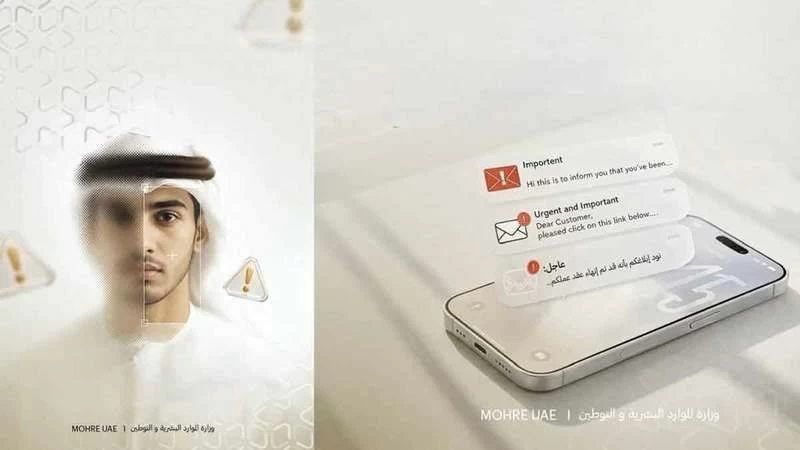
Dubai: The Ministry of Human Resources and Emiratisation (MOHRE) has warned the public about fraud attempts using deepfake technology, including messages that appear genuine and may claim, for example, that an employment contract has been terminated.
The ministry said fraudsters may impersonate MOHRE or its officials and employees to deceive customers into sharing personal or banking information or transferring money.
MOHRE urged community members not to trust any video, audio recording, image or message simply because it appears authentic. It called on the public to use official channels to verify any request or advertisement and to avoid sharing personal or banking data in response to unverified messages or calls.
The ministry also advised people to verify the authenticity of links before clicking on them.
According to MOHRE, fraudsters may use deepfake technology to create videos, audio recordings, images or messages containing urgent requests that appear to have been issued by the ministry or its officials and employees, potentially making customers vulnerable to electronic fraud.
Through its digital platforms, the ministry advised anyone with doubts about a message or request not to respond and instead contact its call centre to verify the authenticity of the communication or the identity of the sender.
The ministry stressed that verification through official channels remains the safest way to ensure the accuracy of information and requests.
Mohammed Saqr Al Nuaimi, Undersecretary for Support Services, said artificial intelligence has become an integral part of the present and a key driver for enhancing services, efficiency and productivity.
He said the ministry continues to use modern technologies and artificial intelligence to improve services, simplify procedures and enhance the experience of employers and employees.
Writing in the latest issue of the ministry's magazine, Labour Market, Al Nuaimi noted that the growing use of technology has been accompanied by increasing challenges related to awareness of misuse risks, particularly deepfake technology, which can create or manipulate images, audio and videos in ways that make fabricated content appear genuine.
He said the danger of the technology lies in its potential use for impersonation, spreading misinformation and carrying out fraud attempts targeting individuals and institutions, particularly in relation to personal data, financial transactions and official procedures.
Al Nuaimi said the safe and responsible use of technology requires verifying sources of information, avoiding responses to sensitive or financial requests received through unverified channels, referring to the ministry's official channels when in doubt and exercising caution when dealing with unfamiliar digital content.
He said building a secure digital environment is a shared responsibility between institutions and individuals, adding that digital literacy remains essential to maximising the benefits of modern technologies while reducing associated risks and enhancing trust in the digital environment.