CNN founder Ted Turner dies at 87, leaving legacy that transformed global news
Media pioneer who launched 24-hour news and built a global empire passes away surrounded by family
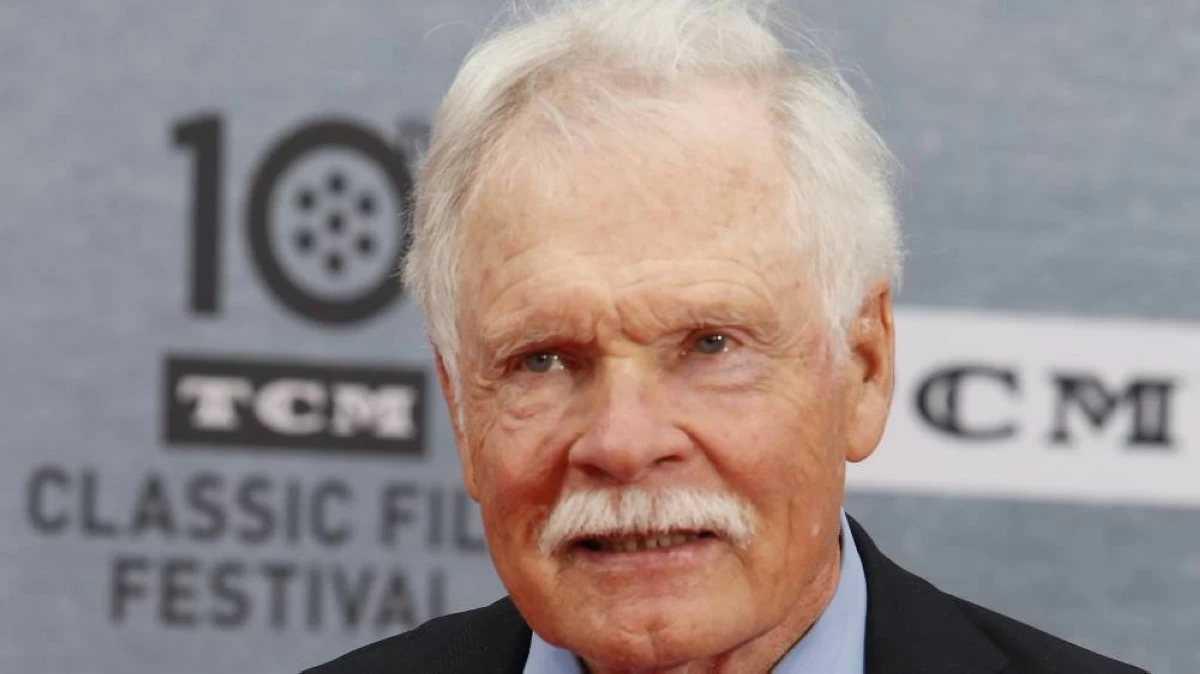
New York: Ted Turner, the brash and outspoken television pioneer who created a media empire and transformed the news business by launching CNN and introducing the 24-hour cable news cycle, died Wednesday. He was 87.
He died surrounded by his family, according to Turner Enterprises, the company that oversees his extensive businesses and investments.
Turner was the driving force behind Cartoon Network, TNT, and Turner Classic Movies. His interests, however, extended far beyond media — owning professional sports teams in Atlanta and vast stretches of land in the American West, where he supported conservation efforts through habitat restoration and endangered species initiatives.
He donated $1 billion to United Nations charities and was also an accomplished yachtsman, winning the America’s Cup in 1977.
Turner married actor Jane Fonda in 1991, the same year he was named Time magazine’s Man of the Year. By then, he was a celebrity in his own right, earning nicknames such as “Captain Outrageous” and “The Mouth of the South.”
He once remarked, “If only I had a little humility, I’d be perfect.”
In later years, Turner was slowed by Lewy body dementia. Long removed from the television business, he focused on philanthropy and managing his more than 2 million acres (800,000 hectares) of land, including the nation’s largest bison herd.
His garrulous personality sometimes overshadowed a driven, risk-taking business acumen. By the time he sold Turner Broadcasting System to Time Warner Inc. in a 1996 media megadeal, he had transformed his late father’s billboard company into a global conglomerate that included seven major cable networks, three professional sports teams, and two successful movie studios.
President Donald Trump, reacting to Turner’s death, called him “one of the greats of all time.”
“Whenever I needed him, he was there, always willing to fight for a good cause!” Trump posted on social media.
Turner’s signature achievement was the creation of CNN, the first 24-hour all-news television network, launched in 1980. At a time when news is instantly available everywhere, the idea of allowing viewers to choose when to access news was once revolutionary.
In part, Turner’s own frustration with traditional television news inspired him. He often worked late after network newscasts had ended and was in bed by the time local stations aired their news.
He took a risk by launching the operation — sometimes derided as the “chicken noodle network” — in the early days of cable television, even living in an apartment above its Atlanta office.
“I was going to have to hit hard and move incredibly fast, and that’s what we did — move so fast that the (broadcast) networks wouldn’t have time to respond, because they should have done this, not me,” Turner recalled in a 2016 interview. “But they didn’t have the imagination.”
CNN’s breakthrough came during the Gulf War in 1991, when the network stood alone in Baghdad as other journalists fled, broadcasting dramatic live coverage of the conflict’s opening moments.
“Ted’s first love was family — he had five children — but very close behind, he always said his greatest achievement was CNN,” Tom Johnson, CNN’s president from 1990 to 2001, told The Associated Press.
Turner was promised a continued role in CNN after the $7.3 billion sale to Time Warner but was gradually pushed out, a development he later regretted.
“I made a mistake,” he said. “The mistake I made was losing control of the company.”
That same year saw the launch of Fox News Channel, led by rival Rupert Murdoch. Turner once compared Murdoch to Adolf Hitler, though the two later reconciled over shared environmental concerns.
Warner Bros. Discovery CEO David Zaslav called Turner a visionary and trailblazer.
“Ted’s entrepreneurial spirit, creative ambition, and willingness to take risks changed the media industry forever,” Zaslav said.
Robert Edward Turner III was born on November 19, 1938, in Cincinnati. He later moved to Savannah, Georgia, and, after being expelled from Brown University, joined his father’s billboard business in Atlanta.
Following his father’s death in 1963, Turner took over the company. In 1970, he purchased a struggling UHF television station. In 1976, he began beaming its signal nationwide via satellite, creating the TBS SuperStation.
“It was the start of something bigger than we ever imagined,” Turner said in 1996.
Turner expanded into sports, acquiring the Atlanta Braves and helping turn them into a nationally recognized team. He also built a vast media library through acquisitions, including MGM, which supported the launch of TNT and Turner Classic Movies.
His influence extended into animation through the acquisition of the Hanna-Barbera library, which led to the creation of Cartoon Network.
“He sees the obvious before most people do,” NBC’s former CEO Bob Wright once said. “We all look at the same picture, but Ted sees what others don’t.”
Turner was also known for his philanthropy, most notably a $1 billion pledge to the United Nations in 1997. He supported numerous humanitarian causes, including nuclear disarmament efforts through the Nuclear Threat Initiative.
Despite his achievements, Turner’s outspoken nature often sparked controversy. He later apologized for remarks that offended religious and civil rights groups.
In his own words, Turner viewed life as an adventure: “You just want to see if you can do it — period. There’s no thought of gain other than your own satisfaction.”
He is survived by his five children.