World
Trump arrives in China with CEOs including Nvidia’s Jensen Huang for high-stakes trade talks
US president seeks economic gains as negotiations with Xi Jinping focus on trade, technology, and geopolitical tensions
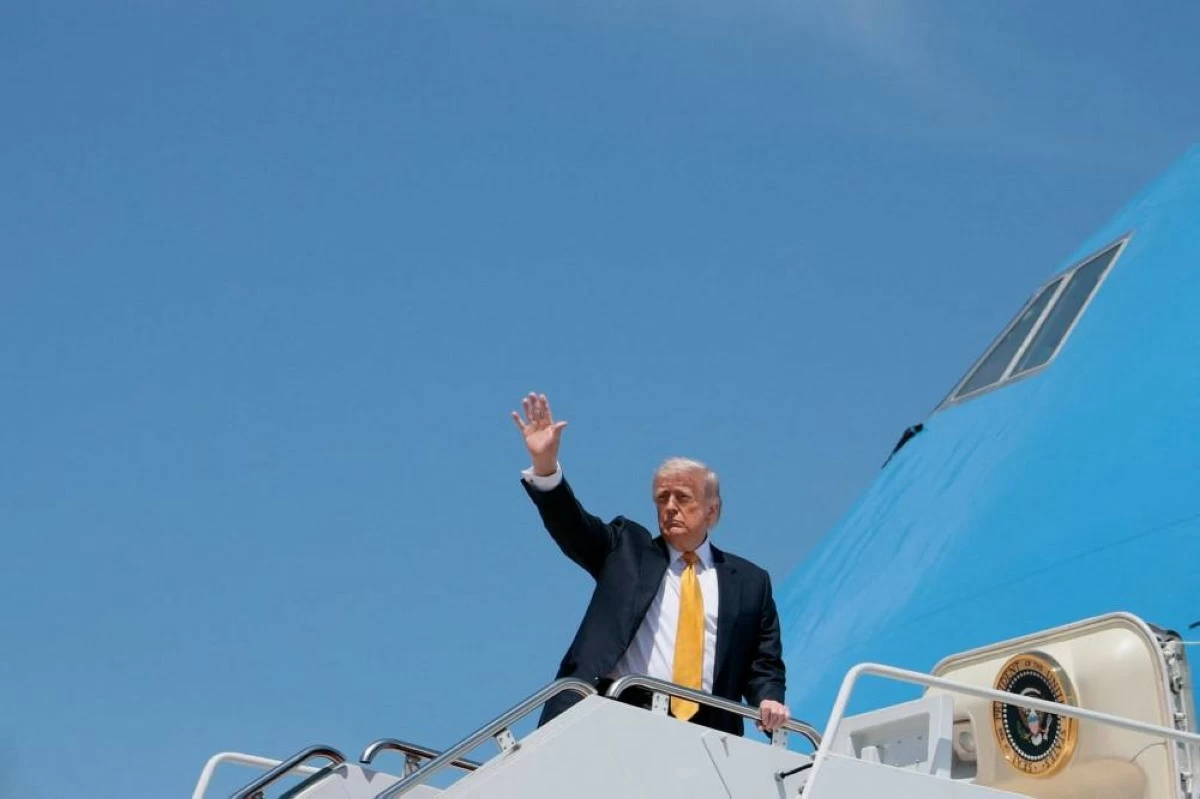
U.S. President Donald Trump gestures as he boards Air Force One for a trip to China, at Joint Base Andrews, Maryland, U.S. REUTERS
Beijing: U.S. President Donald Trump arrived in China on Wednesday for a high-profile visit aimed at securing economic gains and strengthening trade ties, accompanied by a delegation of business leaders that includes Nvidia CEO Jensen Huang.
Trump, making the first visit by a U.S. president to China in nearly a decade, said he would urge Chinese President Xi Jinping to “open up” the Chinese market to American businesses. The two leaders are scheduled to hold talks on May 14 and 15 in Beijing, with discussions expected to cover trade, technology, and broader geopolitical issues.
The inclusion of Huang, whose company has faced regulatory barriers in selling advanced artificial intelligence chips in China, underscores the importance of resolving business challenges as part of the mission. Trump added Huang to the delegation at the last minute, according to a source familiar with the matter.
The trip comes as Trump seeks to boost domestic approval ratings amid pressures linked to foreign conflicts and economic concerns. At the same time, U.S. Treasury Secretary Scott Bessent is holding parallel trade talks with Chinese officials in South Korea to preserve a fragile agreement reached last year between the world’s two largest economies.
That agreement saw the United States suspend steep tariffs on Chinese goods, while China refrained from restricting exports of critical rare earth materials. Both sides are now expected to explore mechanisms to support trade and investment, alongside potential deals involving U.S. exports such as aircraft, agriculture, and energy.
China, for its part, is pushing for the easing of U.S. restrictions on semiconductor technology and chipmaking equipment. However, Trump’s negotiating position is seen as weakened by legal constraints on tariffs and rising domestic inflation pressures linked to global tensions.