World
WHO says cruise ship hantavirus outbreak is not a pandemic risk
WHO reassures public as countries trace MV Hondius passengers and confirm limited human transmission
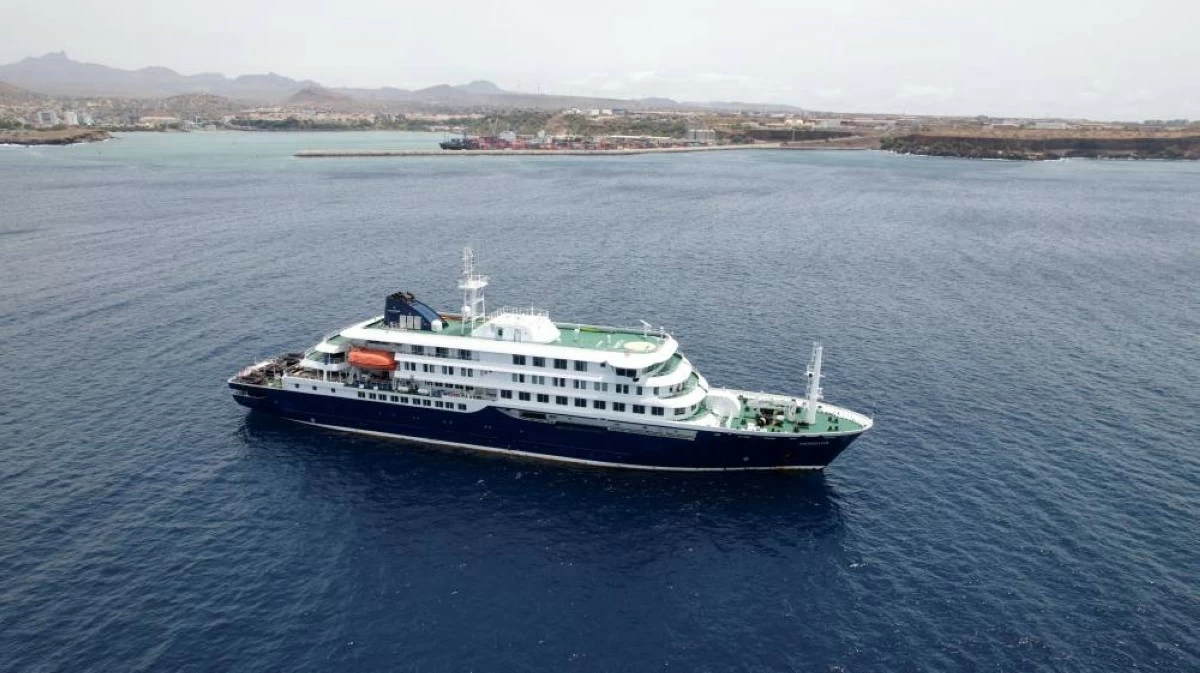
A drone view of the cruise ship MV Hondius, carrying passengers suspected of having cases of hantavirus on board, as it prepares to leave Praia, Cape Verde, May 6, 2026. REUTERS
Amsterdam/Geneva: An outbreak of hantavirus on board a cruise ship is not the start of a pandemic, the World Health Organization (WHO) has said, as global health authorities step up efforts to trace passengers and contain the spread.
Maria van Kerkhove, an infectious disease epidemiologist at the WHO, told a news briefing that the situation differs significantly from the COVID-19 pandemic, emphasizing that hantavirus spreads primarily through "close, intimate contact".
“This is not coronavirus; this is a very different virus,” she said. “This is not the same situation we were in six years ago.”
Outbreak details and confirmed cases
The outbreak occurred on the Dutch-operated cruise ship MV Hondius, which departed Ushuaia, Argentina, on April 1 and is expected to arrive in Spain’s Canary Islands around May 10.
According to the WHO, five of eight suspected cases have been confirmed, while three people have died, including a 69-year-old Dutch woman who tested positive for the virus. Her husband and a German woman also died, with their cases still under investigation.
The ship initially carried around 150 passengers and crew from 28 countries, raising concerns about international exposure.
Global contact tracing underway
Countries worldwide are now working to trace passengers who disembarked before the outbreak was identified, particularly those who left the vessel in St. Helena on April 24.
Authorities have contacted travelers from multiple countries, including the United States, the United Kingdom, and several European nations, and are monitoring individuals who may have been in close contact with infected passengers.
Health agencies, including the U.S. Centers for Disease Control and Prevention (CDC), have described the risk to the general public as extremely low, while continuing surveillance and precautionary monitoring.
Rare human-to-human transmission
Hantavirus is typically spread through exposure to infected rodents, but the WHO confirmed that, in this outbreak, human-to-human transmission has been documented in rare cases, linked to the Andean strain of the virus.
Despite this, experts stress that such transmission remains uncommon and requires prolonged close contact, limiting the likelihood of widespread contagion.
Monitoring, evacuations and testing
Several passengers are under observation across multiple countries, including the United States, Canada, and European nations. Most individuals being monitored are asymptomatic, according to health authorities.
Three patients were evacuated from the ship for medical treatment, with cases being assessed in hospitals in the Netherlands, Germany, and Switzerland. Additional testing is ongoing to determine the extent of infections.
Crew members and passengers who had close contact with confirmed cases are undergoing daily health checks, while authorities continue to reconstruct passenger movements since late April.
WHO guidance and next steps
The WHO is preparing step-by-step guidance for handling the ship’s arrival in the Canary Islands, including protocols for safe disembarkation and return travel.
Officials emphasized that none of the remaining passengers currently show symptoms, further supporting the assessment that the outbreak is contained.
Reassurance amid global concern
While the deaths and confirmed cases have prompted international vigilance, the WHO has reiterated that the situation is not comparable to a global health emergency.
With limited transmission, targeted contact tracing, and ongoing monitoring, health authorities remain confident that the outbreak can be contained without escalating into a pandemic.
- With inputs from agencies