- City Fajr Shuruq Duhr Asr Magrib Isha
- Dubai 04:20 05:42 12:28 15:53 19:08 20:30

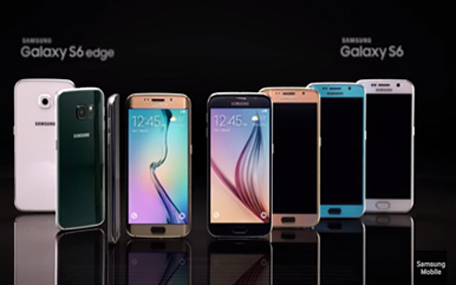
Samsung continued to remain in the number one spot although its share declined over 7.7 per cent during the last quarter. (File)
The number of mobile devices in the Middle East and Africa grew by a massive 19.6 per cent in 2014 with feature phones continuing to dominate sales, although at a much reduced margin.
Overall, smartphones accounted for 41.9 per cent of all mobile handset shipments to the region in 2014, up from 27 per cent in 2013. Feature phone shipments saw a drop of almost 4.5 per cent year on year in 2014.
According to the latest figures released by International Data Corporation (IDC), the last quarter of 2014 saw smartphone shipments to the Middle East and Africa increase by 83 per cent compared to the same period the previous year.
This was greatly influenced by the cheaper smartphones (under-$100) followed by dual SIM models.
The share of premium category devices (price range of ($250-$500) actually dropped by about 5 per cent during the last quarter.
Samsung continued to remain in the number one spot although its share declined over 7.7 per cent during the last quarter, which could be attributed to the launch of the iPhone 6 and 6 Plus into the market and an influx of cheaper Android models, mainly from China.
Huawei and Apple stood in the second and third position and its sales increased by 5.1 per cent and 2.7 per cent.
Overall the budget phones registered a 20 point growth in 2014 compared to the previous year.
The market share of smartphones in the $100–200 price bracket increased eight percentage points.
The last quarter sales, which includes the Gitex Shopper and year-end holiday season, is crucial for retailers in the region.
During the last three months, the mid-segment devices saw its market share increase from 25 per cent in Q3 2014 to 33 per cent in Q4 2014. Meanwhile, smartphones priced in the higher-end $250-$500 bracket have seen their share of the overall market fall from 23 per cent in Q3 2014 to 18 per cent in Q4 2014.
"Many new vendors have been eager to get into the region's burgeoning smartphone space, with a number of them launching phones in this growing price band," says Nabila Popal, IDC's research manager for handsets and display solutions in the Middle East and Africa. "This strategy of targeting the mid and low end of the market has contributed significantly to the success of vendors like Huawei and Lenovo."
The growing popularity of dual-SIM smartphones is also helping shape the market, with shipments of such devices increasing 34 per cent year on year in Q4 2014. "Vendors such as Samsung and HTC launched variants of their flagship S5 and HTC One M8 models with dual-SIM capabilities," says Isaac T. Ngatia, a senior research analyst at IDC Middle East, Africa, and Turkey. "Demand for such devices stems from the fact that a growing band of consumers want to enjoy cheap cross-network calls and offers from multiple telcos and therefore retain more than one SIM card for their personal use."
The majority of the growth in the smartphone category was witnessed in countries that have larger populations but previously had low penetration rates. For example, smartphone shipments to Nigeria and Kenya increased 135 and 112 per cent, respectively, year on year in 2014, while Pakistan saw growth of 105 per cent over the same period.
"The increased appetite for smartphones in Pakistan is being driven by a combination of the deployment of 3G networks across the country and the wider availability of more affordable devices," says Popal. Meanwhile, the more mature GCC smartphone market expanded 31.8 per cent year on year in 2014, contributing to the region's penetration rate reaching an impressive 72.6 per cent.
The overall handset market's vendor dynamics also changed by the end of 2014. Although Samsung maintained its number-one position in MEA, its smartphone share fell from 51.5 per cent in 2013 to 43.8 per cent for 2014. Huawei and Apple followed in second and third place with shares of 8.9 per cent and 7.8 per cent, respectively. The same trend can be seen quarter on quarter, with Samsung's share dropping 7.8 points from Q3 to Q4 2014, while Huawei and Apple saw their shares increase 5.1 points and 2.7 points, respectively, over the same period.
The MEA market witnessed a massive 58 per cent increase in the shipment of iOS devices in Q4 2014 compared to Q3 2014. Android shipments increased by only 3.8 per cent over the same period, while Blackberry OS continued its declining trend after a temporary increase in Q3 2014.
"Apple's growth is primarily due to the incredible success of its iPhone 6 and iPhone 6 Plus models, which finally placed the vendor in the large screen size segment that had previously been dominated by Samsung," says Popal.
"Many users that had made the switch from Apple to Samsung specifically for the larger screen sizes have now started to switch back. Meanwhile, Huawei has experienced a wave of growth in the mid to low-end segment, with its Honor 3 and Ascend Y series enjoying great success. The vendor has struck the right balance between quality and price, particularly in some of the region's more emerging markets where it is even killing the local competition."
 Follow Emirates 24|7 on Google News.