- City Fajr Shuruq Duhr Asr Magrib Isha
- Dubai 04:20 05:42 12:28 15:53 19:08 20:30

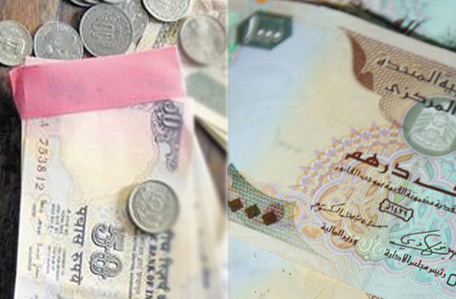
The Indian rupee is trading excitingly close to the 14-mark versus the UAE dirham this afternoon as it drops to the lowest in two months on dollar demand by oil exporters.
Indian expats are hoping for a rerun of the most favorable exchange rate ever they received last December as the rupee is trading at exactly Rs14 to Dh1 at 1.12pm UAE time (9.12am GMT) on March 26, 2012 – its weakest showing since January 16, when it traded above the 14-mark.
After achieving a lifetime low of Rs14.62 versus Dh1 on December 15, 2011, the rupee appreciated to a high of Rs13.23 against the UAE dirham on February 5, 2012, but has since lost 5.75 per cent of its value in the seven weeks since then.
The Indian rupee has lost about a third of its value against the UAE dirham since 2008, when it traded at Rs10.72 against Dh1 on January 1, 2008. “Anecdotal reports from money transfer companies suggest that remittances from the GCC countries surged in the third and fourth quarters of 2011 because of the weak rupee,” the World Bank said in its report on remittances, quoting Emirates 24/7 as a source.
The dollar, and in effect the UAE dirham, has surged more than 5 per cent in March after remaining lackluster in February. After remaining below the Rs13-mark for almost a couple of years, the UAE dirham first broke the Rs13-barrier in September last year, and then surged past the Rs14-mark on November 21, peaking to an all-time high of Rs14.62 (end of day) on December 15.
With 2011 remittances estimated at $58 billion by non-resident Indians (NRIs) across the world, India emerged as the largest recipient of foreign remittances, followed by China ($57bn), Mexico ($24bn), and the Philippines ($23bn).
“After several years of appreciation, the sharp depreciation of the currencies of some major recipients relative to the US dollar – and the currencies in remittance source countries in the GCC that are linked to the dollar – in recent months is creating a ‘sale effect’ in the assets of the countries of origin,” it pointed out. “The higher purchasing power of each dollar of remittances may increase the incentive to remit, to take advantage of the higher purchasing power in the home country,” the World Bank report said.
 Follow Emirates 24|7 on Google News.