- City Fajr Shuruq Duhr Asr Magrib Isha
- Dubai 04:20 05:42 12:28 15:53 19:08 20:30

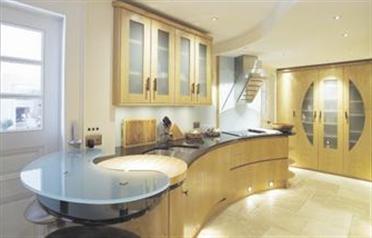
The units of the RWK Lavia comfort kitchen can be adjusted at the touch of a button to match the height of an individual. (SUPPLIED)
Ergonomics is the science of making things comfortable and efficient. Products that have been designed with ergonomic principles make life easier for us by making it simpler to carry out tasks.
Although commonly used in office design, ergonomics is also integral to shaping home interiors. It helps owners to create spaces that fit around them, complementing their lifestyle and making proper use of space.
If you have doors that swing the wrong way, out of reach cupboards and underused spaces, they are telltale signs that your home needs an urgent ergonomic make-over. Imagine the time and energy you could save if you weren't battling these irritations every day.
The theory of ergonomic interior design is basically this – practicality comes first. Only when we understand how we use our homes can we create our ideal space.
Get the ergonomics right and harmony will follow.
MAKING LIGHT WORK OF COOKING
Ergonomic design won't make you a better chef, but it will make it easier to work in the kitchen. With smart storage solutions, lifting is kept to a minimum, and careful planning cuts down journeys around the room.
An ergonomic kitchen is based on a "working triangle" room plan, linking the major areas involved in cooking a meal – the oven, fridge-freezer and sink. Building on an accessible layout, cabinet sizes, door swings, worktop heights and storage systems can be adapted to make the room work more effectively.
Blum, a specialist in fitting systems for kitchens, has developed a planning concept called Dynamic Space, which organises storage into five zones: consumables, non-consumables, cleaning, preparation and cooking.
Michael Powell, Managing Director at Blum UK Ltd, explains: "The theory is that everything you need for a task is stored in the right place and can be easily reached when it's needed."
IN THE COMFORT ZONE
The ideal bedroom scheme is more about comfort than efficiency, but ergonomics still comes into play. Clever storage systems in wardrobes, beds, dressing tables and side-tables mean that everything has its place – and dressing and grooming become effortless pleasures.
In the bathroom, it's not essential oils and bubble bath that provide the key to relaxation, but well-positioned furniture and fittings. In confined areas, the emphasis is on de-cluttering and making the most of space, while saving time traipsing about the room is the priority in large spaces.
Ergonomic showering zones maximise access and freedom of movement – the best are door-less walk-ins, wet rooms or enclosures with low-level trays. Other design elements, such as integrated drying areas, well-placed shelves and shower baskets, make for a user-friendly experience.
An ergonomic kitchen
-Use the "working triangle" rule for planning
-Choose full extension drawers that make contents easy to see
-Store products in an area they will be used
-Organise drawers and cupboards so everything's easy to find
-Opt for soft-close doors and drawers to make opening less strenuous
-Place ovens and dishwashers at a height that doesn't strain your back
-Utilise awkward spaces with well-designed corner and larder units
-Make sure the cooker hood is positioned at the right height for you
Useful information
-If you're looking for an interior designer, visit www.interiorsuae.com where you can find listings for suppliers within the UAE design industry
-If you're considering a new kitchen, bedroom, bathroom or home office, get your hands on a copy of The KBSA's free Consumer Guide. Order or download a copy from www.kbsa.org.uk
-Read Chris Adams' guide to ergonomics at www.about.com. Chris is an industrial designer and an expert on the impact of good design on health, comfort and efficiency
 Follow Emirates 24|7 on Google News.