- City Fajr Shuruq Duhr Asr Magrib Isha
- Dubai 04:20 05:42 12:28 15:53 19:08 20:30

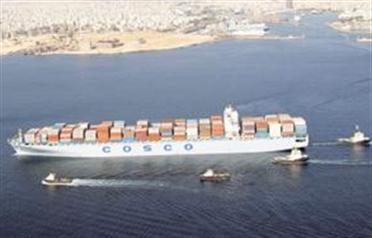
Operations of shipping firms in the region have been fairly unscathed. (FILE)
Despite the current slowdown in the global shipping industry, which has impacted operations, regional shipping companies will continue to retain their staff, said senior industry players.
Major international shipping companies have already announced more than 3,000 job cuts in an effort to reduce costs in the wake of the increasing financial crisis that continues to adversely affect shipping operations.
However, shipping companies based in the Middle East are yet to tread the same path since their operations have not been hit hard.
"It is true that no one will escape the impact of the current financial crisis, but I do not see any companies in the region downsizing staff as a cost cutting measure at the moment," said Abdullah Al Shuraim, Chairman of Gulf Navigation Holding (GNH).
"No one knows when the crisis will end but we are lucky in the region that its impact is still minimal."
Neptune Orient Lines, the biggest shipping firm in Singapore and South East Asia's largest container transport company recently announced 1,000 job cuts come amid conditions described by its chief executive as unprecedented in the industry's history.
The move followed the sharp decline in freight rates because of dwindling consumer demand in the United States and Europe, and as the letters of credit (LOCs) that formed the lifeblood of trade financing throughout Asia lost their power to deliver the goods.
According to Ahmed Essa Hareb Al Falahi, CEO of Gulf Energy Maritime, it will be difficult for companies in
the region to downsize their staff especially that there has been a shortage even before the crisis.
"The biggest challenge for the industry even before the financial crisis set in was the acute shortage of marine staff, especially when new and bigger vessels started entering the market," said
Al Falahi.
He said the industry was in shortage of more than 100,000 marine staff given the huge tonnage that was expected to enter the market by 2010.
"I think the current slowdown should be good news for the industry since the need to recruit more staff is declining. I believe companies will take it as an opportunity to consolidate and improve skills of their staff rather than sack them."
James Wheeler, a shipping analyst in Dubai pointed out that shipping being a cyclical industry, it would not be wise for companies to cut down staff as they might be needed during an upturn in business.
"It takes several years to train good marine staff and once they leave, it is not easy for companies to find a replacement. Unless a company is winding up its operations, it does not make sense to get rid of your good staff," said Wheeler. He said that the many companies in the dry bulk and container sectors were at the verge of bankruptcy following the persistent decline in freight rates, but added that the tanker market will continue to be healthy.
The Dry Bulk index, which measures average rates in the short-term spot market to charter ships to carry iron ore, coal and other bulk commodities is almost reaching its 1986 low.
The index reached 763 points last week, 93.5 per cent down from the all-time record high of 11,793 points hit on May 20.
Rates for the largest ships, known as Capesizes, are down 98.8 per cent from the record $233,988 (Dh858,735) per day set on June 5 to $2,773 last week. According to a JPMorgan report, the funding burden borne by global shipping because of the new vessels ordered between now and December 2011 amounts to $504 billion, which could have damaging knock-on effects for those banks who arranged financing.
 Follow Emirates 24|7 on Google News.