- City Fajr Shuruq Duhr Asr Magrib Isha
- Dubai 04:20 05:42 12:28 15:53 19:08 20:30

(EB FILE)
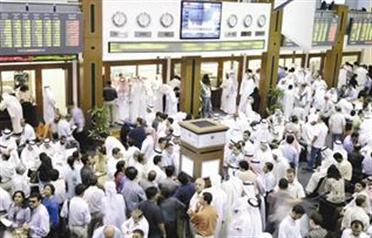
All seven Gulf Arab markets fell, with Dubai hardest hit. Qatar lost 2 per cent, Abu Dhabi slipped 1.2 per cent and the others fell less than 1 per cent. Egypt dropped for a fourth day.
Dubai's benchmark fell 4.1 per cent in a rout that saw all 22 active stocks decline, with nine of them losing more than 4 per cent.
"Unfortunately, we are now in a situation where there are very little big ticket foreign institutions in the market," said Julian Bruce, EFG-Hermes director of institutional equity sales.
"So with global markets coming off a little bit and oil prices weakening, it does not take much for everyone to stampede for the exit. When a market is dominated by retail investors these sorts of moves are always exaggerated."
Emaar Properties and Arabtec were among Dubai's major losers, falling 6.9 and 6.5 per cent respectively.
"The market is extremely fragile and so it's difficult to forecast any kind of trend, because stocks are not moving according to fundamentals or technicals," said Ayman el-Saheb, Darahem Financial Brokerage director of operations.
"People are saying we've fallen because US markets are down, but if that's the case why didn't we track their recent upward moves more closely?"
The answer may lie with troubled Saudi conglomerates Saad Group and Ahmad Hamad Algosaibi Bros. The pair are restructuring billions of dollar of debts and a number of court cases have been filed by different parties over alleged financial irregularities.
"Other emerging markets have rallied strongly of late, whereas Gulf markets have moved up much more slowly in spite of the support from higher oil prices and better visibility from improved corporate earnings," said Jithesh Gopi, head of research at SICO, a Bahrain based investment bank.
"Although there are other factors in play such as the usual summer trading lull and Ramadan, defaults by Saad and Algosaibi groups have undoubtedly had an effect."
Youssef Kassantini, head of discretionary portfolio management at Rasmala Investment Saudi, said investors were afraid other family companies face similar problems, while rising caution was restricting corporate lending.
"What effect is this having on companies that want to borrow, but can't?," added Kassantini.
Banks were among the biggest losers regionally, with 11 of the largest lenders dropping by more than 2 per cent.
Oil prices fell nearly 1 per cent to below $69 a barrel in early Wednesday trading, extending a four-session slide as doubts resurfaced over the pace of economic recovery. World stocks fell on similar concerns. Crude later rallied, but this was after all Gulf markets had closed, except Saudi Arabia.
In Kuwait, Zain fell 7.3 per cent as investors booked profits from the previous day's 10-month high amid confusion over the company's future.
On Tuesday, the telecoms operator called an extraordinary meeting for August 31 in what some analysts say could lead to a takeover. Earlier this week, a Kuwaiti newspaper said key shareholders were in talks with an unidentified Asian group to sell more than 40 per cent of the firm.
"There has been a lot of speculation around Zain -- initially the talk was that Zain would sell some assets, but this has changed to expectations there will be stake sale in the company itself," said a Kuwait analyst who declined to named.
Investors expect Zain's shares to rise to any bid price, with the buyer likely to pay a large premium on the current share price, the analyst said. "This is what happened when Qtel (Qatar Telecom) took over Wataniya (National Mobile Telecommunications)," he added.
Qtel bought a controlling stake in Wataniya in 2007.
Keep up with the latest business news from the region with the Emirates Business 24|7 daily newsletter. To subscribe to the newsletter, please click here.
 Follow Emirates 24|7 on Google News.