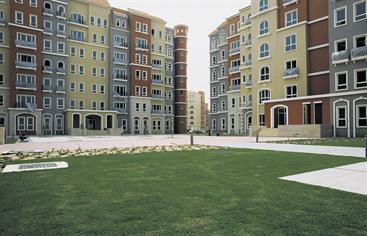
Middle-income housing is all set to become the flavour of the year in the GCC countries, with real estate experts advising developers to start paying more attention to this segment. In response to questions sent by Emirates Business, Craig Plumb, Head of Research, Jones Lang LaSalle Mena; Andrew Goodwin, Director, DTZ UAE; Billy Rautenbach, Director (Operations), Better Homes; Adel Hamaizia, Sales and Marketing Director, RE/MAX Abu Dhabi and Safeena Rangooni Lakdawala, Senior Manager Research, Investment Boutique, said the bulk of the demand currently is for mid-income housing and developers will try to "match and meet" this demand. And to succeed in 2010, experts said, developers will have to adopt realistic, transparent and customer-centric methods. Do developers need to change their strategies to survive this year? Plumb: This clearly depends upon the position of the individual developer but there are a number of general strategies that developers are likely to increasingly adopt in 2010, these include: - Focus on asset management rather than asset creation. The market is shifting from a focus on creating more product to one in which more attention will need to be given to the retention of the value of completed assets. - New sources of funding: shift from the previous 'off plan' sales model to one where funding is sought from the new breed of long- term investors seeking opportunities. This will require a broadening in the consideration of 'exit strategies', with more developers probably choosing to build and retain product to create a long-term cash flow, rather than simply building for sale. - Increasing focus on working closely with the end-users and tenants. As the market continues to move in favour of the tenant/occupier, developers will need to react with more creative strategies to attract and retain occupiers in the face of increased competition. Goodwin: The developers committed to schemes need to set out clear deliverables and proceed with realistic pricing. Getting pricing right and reassuring customers is going to be absolutely critical. Rautenbach: Developers, who have managed their affairs properly, should be as transparent as possible and let their investors know what is going on. Only then will they get the co-operation they need from their clients. Existing payment plans should be made flexible. Discussions with banks should be initiated to assist in arranging end- user financing to help those investors who may have cash-flow problems. The developer should be working with Real Estate Regulatory Agency and the Land Department to ensure their projects are as credible as can be to provide the investors with peace of mind. The investors will have a tough time contesting their payment obligations if the developer is conducting its affairs properly. Most importantly, developers with projects in the works should respect the time lines of development and where they cannot be met; and provide the investors with credible explanations. Hamaizia: Newer, realistic, transparent, customer-centric approaches are crucial for all developers alike in 2010. Customer-friendly payment terms, discounts or price reductions alongside re-segmenting and re-shaping one's business model are imperative to maintaining and creating business, and ultimately survival and success. There are fundamental distinctions among GCC realty markets, with differing supply and demand trends paramount to the restructuring and changes developers make. The shift towards asset management rather than asset creation is currently and will continue to be a wise trend to follow, with many developers creating and fostering departments and subsidiaries that are responsible for everything from leasing to facilities management. Lakdawala: Developers need to devise strong, long-term strategies with sustainable business models as their focus. Brand- building needs to be worked on, especially in case of companies that have been on the receiving end of bad press due to frauds, delays and investor grievances. Detailed and accurate market research is the need of the day and developers should not make any move before understanding the market in depth. Which market in the GCC will offer the best return to investors in 2010 and why? Plumb: This depends entirely on what investors are looking for. Once again there is no single "one size fits all" answer. Respondents to Jones Lang LaSalle's latest Real Estate Investor Sentiment survey picked three markets they were most interested in – Saudi Arabia, Abu Dhabi and Dubai. These markets offer very different attractions to potential investors. Saudi Arabia offers the largest and most stable real estate market in the GCC, with a particular undersupply of affordable residential accommodation. Abu Dhabi currently faces a shortage across all sectors of the market and therefore offers strong short-term opportunities. Dubai has seen the greatest adjustment in pricing of any market across the region and therefore pr