- City Fajr Shuruq Duhr Asr Magrib Isha
- Dubai 04:20 05:42 12:28 15:53 19:08 20:30

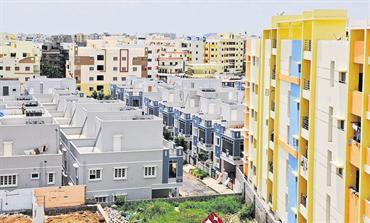
The time-share concept globally has about 5,425 resorts. (AFP)
Even as the Indian property sector appears to have borne the brunt of the slump, there is a new niche in the leisure real estate space that offers exciting opportunities.
There is considerable interest among industry players – both real estate and hospitality – in shared ownership, which has been fairly insulated, thanks to the long-term commitment of consumers. Shared ownership, simply put, has all the strappings of a luxury accommodation minus the responsibilities and inconveniences of owning and managing a second home. It offers developers a chance to use existing infrastructure to generate extra income.
There are other pay-offs too: faster return on investment, higher "resilience" against market volatility, expanded customer base, brand loyalty.
Lots of interesting trends are emerging, suggesting that the concept is here to stay, and, in fact, innovate.
While the waters are being tested out, there seems to be interest from resort developers and hospitality companies in fractional properties – a slightly modified version of the time-share model.
The time-share concept globally has about 5,425 resorts, with 6.7 million owners. It has done well in India with a CAGR of 18 per cent. The timeshare industry in India has 4,640 timeshare units and 1,46,450 members.
According to a report by real estate consultants Cushman & Wakefield and Group RCI, a player in vacation exchange and vacation rentals, while the timeshare industry is skewed towards the West (Mumbai, Pune, Ahmedabad, Surat), the concept is credited with "opening up new destinations such as Coorg and Munnar [in the South] to tourists in India".
The report said the demand for timeshare in India will grow at 16 per cent per annum from 2006-2015. Indications are that other models of leisure real estate would also do well in India, "since Indians are now open to buying fractional products or second homes", Radhika Shastry, Managing Director, Group RCI, India, told Business Line.
Fractional properties are typically a condominium, attached townhouse or smaller standalone homes (such as a cottage or villa), which are sold to buyers whose main objective is to own and use a second home.
The usual share size is 1/4 share with 12-13 weeks of use per year per owner.
These weeks can be gifted, rented or exchanged through a third party company. The properties fall in the three and four-star categories and are two or three-bedroom luxury apartments or family houses in the urban areas, beach or mountains. They offer longer ownership periods vis-a-vis a regular timeshare, which is bought in one-week increments.
"Whether they are farm houses or vacation homes, the concept of holiday homes is already known here. Lots of people, especially the super rich, will look at fractional homes because when you invest in a second home you need to spend considerable time, energy and money on maintaining it through the year.
"The headache of maintaining it through the year is a real challenge. Hence they would not mind investing in a fractional property," said Shastry. But the concept is still in its infancy and the product is in an early "establishment phase".
An industry study is being conducted to understand the model.
But there is considerable interest from resort developers and hospitality companies and potential consumer demand for high-end private residences and fractional properties, said RCI.
According to a report by RCI, pre-paid commitment of consumers has "significant value proposition for developers since it drives cash flows even during tough recessionary times. The model lends itself to flourish during the good times and an opportunity to succeed in challenging times".
However, the legal structure of fractional properties is yet to be worked out completely. Fractional property has over-the-life-period membership. As it is a deeded property, once it is sold out, the developer has very little involvement.
The maintenance cost is charged to the customer. "Some legal challenges need to be worked out. For instance, unlike time-share, fractional properties are deeded and there will be 12 customers registered for one property. We are working on getting the legal structure formulated," said Shastry.
Apart from fractional properties, other emerging models are catching consumer interest, be it the condo-hotels, destination clubs or private residence clubs – all on the shared ownership idea.
Keep up with the latest business news from the region with the daily Emirates Business 24|7 newsletter. To subscribe to the newsletter, please click here.
 Follow Emirates 24|7 on Google News.