- City Fajr Shuruq Duhr Asr Magrib Isha
- Dubai 04:20 05:42 12:28 15:53 19:08 20:30

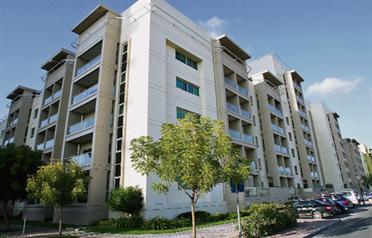
Demand for residential property is currently being driven by end-users and long-term investors. (EB FILE)
About 75 per cent of the expected 20,000 new residential units in Dubai have been completed as of September.
But not all of these properties have been released into the market due to handover delays, according to a Jones Lang LaSalle (JLL) report.
The expected hand over of the 20,000 units this year will bring the total residential stock across the emirate to around 276,000.
The majority of new supply comprises units on The Palm Jumeirah, in Business Bay, Motor City and Jumeirah Lake Towers, the global real estate consultancy said in a report titled "Dubai City Profile October 2009".
"Those expected to be completed in the fourth quarter are also likely to experience similar delays and a rollover of supply into the first quarter of 2010 is anticipated," Craig Plumb, Head of Research – Mena, JLL, said in the report.
"Our current forecast of 20,000 completions for 2009 has been reduced from our previous estimate of 22,000 in the second quarter, given the delivery delays."
In February, JLL estimated 90,000 residential units would enter the market between 2009 and 2011, which was less than half of the announced figures. Projects continue to be delayed, put on hold, or cancelled. According to ProLeads, about $24 billion (Dh88bn) worth of residential projects have been either put on hold, or cancelled across Dubai.
"Such conditions have resulted in a further 27 per cent downward revision in our supply estimates. We now foresee 66,000 units being released into the residential market over the next three years," the report said.
With speculative buyers almost entirely out of the market, demand for residential property is currently being driven by end-users and long-term investors.
Banks and a select number of mortgage lenders have eased financing restrictions, yet the majority of potential buyers are still unable to purchase property. Cash buyers are able to find good deals since they can negotiate prices down considerably.
Most sales transactions are taking place for completed units as demand for off-plan property is close to nil, given the uncertainty surrounding project cancellations.
Data from the Dubai Land Department revealed a 55 per cent decrease in transactional volume between the third quarter of 2008 and the third quarter of 2009.
"Transactional volumes have, however, began to stabilise, with only a modest decline of nine per cent reported during the third quarter, pointing to a possible return of confidence among investors. This may not result in any real improvement in market conditions as many potential buyers remain constrained by the lack of available mortgages (although some easing of lending has been reported in recent weeks, with some banks now willing to finance multiple unit purchases again)," said Plumb.
According to JLL, there have been reports of prices stabilising and even increasing in some locations in recent months. "Our data suggests a continued decline in average prices in respect of both apartments and villas during the third quarter. While the market is continuing to undergo a price correction, the rate of decline has slowed," the report.
Another sign of stabilisation is that asking prices and achieved prices have started to converge. Since the second quarter of 2008, achieved prices have been 20 per cent lower than asking prices, but this gap narrowed to seven per cent in the second quarter of 2009.
Asking prices have fallen an average of 49 per cent from their peak in the third quarter of 2008, and are currently Dh900 per square foot, whereas achieved sale prices are down by about 40 per cent from their peak to Dh800 per sq ft.
The rate of decline appears to have eased in the third quarter, with transactions data released by the Dubai Lands Department for August and September suggesting an average decline of around 10 per cent between the second quarter and the third quarter of 2009.
Rental rates have declined by less than sale prices during 2009 as the leasing market has remained relatively active. One major real estate broker has reported August has been their busiest month.
The average rent for a typical two-bedroom apartment in selected residential areas declined by around 15 per cent in the second quarter of 2009 compared to 22 per cent in the first quarter of 2009. Apartment and villa rents declined by an average of 35 per cent from the fourth quarter of 2008 to the second quarter of 2009 and saw a quarterly decline of 18 per cent from the first quarter to the second quarter of 2009.
"Transactional activity and pricing have continued to decline in the Dubai residential market but the rate of decline has definitely eased, suggesting the market is approaching stability. There are, however, significant levels of new supply likely to enter the market over the final quarter of 2009, which we expect to place further downward pressure on prices over the rest of the year," the report said.
Dubai's residential market is becoming more competitive as both buyers and tenants have a large pool of projects to choose from. Even if all of the expected units for 2009 are not completed and handed over in time, Dubai's residential market will experience something of a supply "overhang" and prices are not expected to recover before the second half of 2010 at the earliest, JLL said.
The total stock of completed office space amounted to 34 million sq ft as at the end of the second quarter of 2009. JLL expected an additional seven million sq ft is likely to be completed by the year end, which will take the total number to 41 million sq ft – a doubling of the office space over a two-year period.
Development pipeline figures from the middle of the last year indicated upwards of an additional 100 million sq ft could have been delivered by the end of 2012 as "mega-projects" such as Jumeirah Garden City, Downtown Jebel Ali, Nakheel Tall Tower and Waterfront were planned.
Such "mega-projects" have since been substantially scaled back, delayed or cancelled as a result of the worldwide economic situation, ensuring that the huge potential over-supply situation previously envisaged will not be as great.
Metro impact
The immediate or pre-operating impact of the Metro on sale and rental prices has been limited, but the development of a comprehensive public transit system based on an enlarged Metro network is likely to have a much more significant impact in shaping the direction of the Dubai real estate market over the next five-10 years, JLL said.
This impact will be felt at both the micro (individual project) level and also at the macro (citywide) level. At the micro level, the Metro offers the hitherto unachievable potential to create transit oriented developments (TOD) in Dubai. TODs can be defined as integrated mixed-use real estate developments focused on transit hubs. They involve high density development adjacent to the Metro station or other transit hubs, with densities declining in line with distance from the station.
"The extent to which this will happen in Dubai is unclear as there are no real TODs being built around the Metro stations," Plumb said in the report.
Keep up with the latest business news from the region with the Emirates Business 24|7 daily newsletter. To subscribe to the newsletter, please click here.
 Follow Emirates 24|7 on Google News.