- City Fajr Shuruq Duhr Asr Magrib Isha
- Dubai 04:20 05:42 12:28 15:53 19:08 20:30

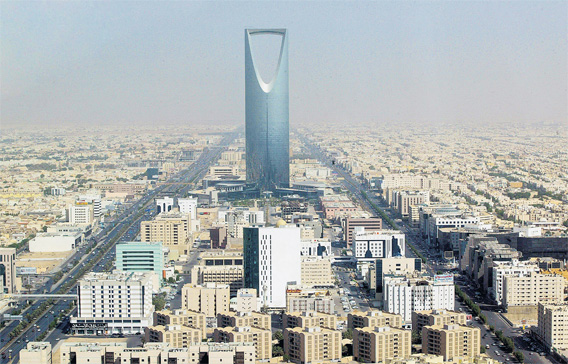
Saudi Arabia's real estate sector is facing a shortage of housing units, with the demand increasing due to a rising indigenous population. (SUPPLIED)
Rasmala Investments, a Dubai-based investment banking firm, will launch a closed-end real estate fund in the range of $75 million (Dh275.25m) and $100 million in August, targeting mid-end residential developments in Saudi Arabia, a top company executive said.
Tamer Bazzari, CEO, Rasmala Investment Bank, told Emirates Business: "The fund will target specific middle-income residential projects in Saudi Arabia with the primary focus being developments in Riyadh. This is where we believe the 'sweet spot' of real estate investments in Saudi Arabia is, given the demographics and growing population.''
The fund, which was to be launched earlier this year, will use the proceeds for land acquisition and construction/development-related costs. "We are finalising on the land right now in Saudi Arabia," Bazzari said.
The fund will be open to investors across the GCC and will be privately placed. It will not be listed, with the sponsors of the fund contributing to about 10 per cent seed capital.
Rasmala expects the average internal rate of return (IRR) to be about 20 per cent per annum on the fund.
According to Rasmala, there are other real estate funds in the pipeline to be launched in the GCC and Egypt. "We will be looking to launch other funds in the GCC and Egypt if we identify good opportunities in these markets," said Bazzari.
According to Jones Lang LaSalle's recent report, Saudi Arabia's real estate sector is currently facing a shortage of housing units with demand for housing increasing due to an increasing indigenous population.
Nicholas Maclean, Managing Director, CB Richard Ellis, Middle East (CBRE), said: "The opportunity in Saudi Arabia is interesting, especially for the residential sector. The unsatisfied demand for residential properties in Saudi Arabia is probably one of the highest within the GCC."
He added that this was mainly due to the changing demographics within the country with an increased demand coming from the youth looking to set up nuclear amilies in the country.
Maclean said residential prices in Saudi Arabia only changed a little bit, and pricing alone was not responsible for the increased attractiveness for the residential sector in the kingdom.
He believes there is going to be an increased demand for high-quality office space, which currently lacks in the market.
"Saudi Arabia is looking to do businesses and it needs accommodation. If the real estate funds entering the real estate market in Saudi Arabia can understand how the business is done in the country, then the funds can be successful in the market.
"It is not the easiest market to open businesses there. However, that in itself provides increased opportunities," said Maclean.
According to the JLL report, the outlook for the Saudi Arabian economy is looking positive with the gross domestic product expected to increase by 4.4 per cent this year and almost five per cent in 2011.
Inflation has fallen from 10 per cent in 2008 and is forecast by local economists to be in a range between four and five per cent for the next two years.
There are also signs that banks will start lending in the country again on new real estate projects, although on conservative levels.
Distressed funds fall
There has been a decline of institutional distressed funds in the region since there currently are a few distressed sellers, according to Jones Lang LaSalle (JLL) executive.
"The ones being launched now are focussing more on stable income generating assets as that is what investors want," said Gaurav Shivpuri, Head of Corporate Finance Advisory, JLL, Mena. "There are limited foreclosures taking place and there are few investors seeking to off-load assets on a wholesale basis with few owners willing to sell below the market value. Hence, with respect to distressed funds, mostly from Dubai, I don't think any of them really took off.
"Distressed sales transactions are taking place, but on an individual basis between private buyers and sellers on a smaller scale. There are, however, no 'institutional' distressed sellers and, hence, there are limited opportunities to buy on a large scale level that would be normally required by funds."
Shivpuri said most of these were closed-ended funds. It had to be, as unless the assets recovered a part of their values, the fund manager would not have wanted the investors to exit.
He said: "None of the distressed real estate funds launched in 2008/ 2009 in the Middle East has taken off. The launch of new real estate funds was already declining in the Middle East and North Africa (Mena) region by early 2008 as fund-raising had become difficult. However, some new real estate funds were announced [at least four] in 2009 to take advantage of the drop in real estate values."
Shivpuri said while the concept of distressed funds was appealing to investors initially, investors were not sure if the 'market bottom' had been achieved.
"Some of the firms managing these funds did not have the track record of delivering. Investors were also weary about developers selling their own assets within a distressed fund concept," he said.
 Follow Emirates 24|7 on Google News.