Salya Developments is planning to launch "affordable" boutique homes across the UAE by leveraging its long-term relationships with top European designer brands.
"The idea is to hit the mid-price segment through affordable boutique properties and not just restrict ourselves to the high end," said Salya Developments Managing Director Dr Rakesh Chandola. "We will be able to contain the costs because of our relationship with the top brands across Europe and will pass these benefits on to customers."
Salya Developments – the Dubai arm of UK-based Salya Corporation – has sold out the Dh300 million Giovanni Boutique Suites project in Dubai Sports City and will soon launch Mario Valentino Boulevard, a mixed-use project in Downtown Jebel Ali. It plans to invest Dh5 billion in 15 projects by 2010 and build boutique resorts on the Finland and Brunei islands on The World.
The company has several other projects planned over the next four years, which include locations such as Dubai Marina, Bawadi, Tecom, Dubailand and Abu Dhabi.
The Salya Group of companies is composed of seven international firms with interests in investments, real estate development, asset management and global trade.
Chandola spoke to Emirates Business about the Dubai property market and the company's future growth strategy.
—What differentiates Salya Developments from other developers?
—It is common knowledge that designer properties tend to appreciate in value twice as fast as routine bare-bones residences. We bring something special to the table – a unique understanding of the boutique industry from a property perspective. This not only includes researching, creating and running such property programmes but also doing so in the most innovative and cost-efficient ways. Branded boutique properties are outrageously priced because the costs associated with boutique brands are outrageous. We leverage our relationships with the brands and combine it with our experience and market knowledge to bring such properties within easy reach of the common man. We may not be able to sustain the low prices for too long but our initial offerings are designed to offer superb value.
—How are boutique properties different from branded properties?
—Genuine value differentiates the two. You could market a property by having, say, a celebrity lend his or her name to it but how this translates into genuine benefits for the end-user remains to be seen. The boutique brands we use don't just give their name to our buildings, their work is reflected in the concept, project planning and interiors. The effective management and maintenance of such properties need to match the high standards associated with quality boutique brands.
—Is inflation affecting the local real estate market and has it hit your bottom line?
—In Dubai the current inflation rate is touching the 12-per cent mark. High rental and energy costs as well as services such as education and healthcare are behind this high inflation rate. At the same time UAE interest rates are tied to US rates set by the Federal Reserve. Typical mortgage finance costs about seven per cent in Dubai. The local inflation exceeds the cost of borrowing. You could, therefore, argue that borrowing is literally free. The outlook for Dubai property owners looks bright. Under these circumstances property is a useful place to have your money parked. Inflation is a global side effect that often accompanies progress and there is no escaping it. However, we try to minimise the effect of inflation through intelligent planning, leveraging established relationships with brands, project managers, consultants and contractors early on in the planning stages. The result is a minimal impact on the investor and end-user.
—Do you believe the global slowdown will affect the local property sector?
—The economic storm started in the US, engulfed Europe and has now reached Asia, but thankfully it has spared the GCC so far. The reasons are not hard to find – high oil prices, political stability as well as robust economies. International investors are now looking for greener pastures where they can invest. The only international green pasture currently available is this region. The outlook looks particularly positive for cities such as Dubai that are investing heavily in infrastructure. Dubai Inc is expected to beat all the odds and emerge as the trend-setting capital of the region.
—There is talk of a hard landing. Will this apply in Dubai?
—Real estate markets move in cycles. What goes up has to come down one day. However, a short-to-medium-term crash in property prices, or a hard landing, is not foreseeable. A phased slowdown over an extended period, or a soft landing, looks more probable. Inflation can protect the nominal value of an investment and if the housing market slows down at a time of high inflation then unit prices tend to stay unchanged. This was the scenario observed in the mid-to-late 1970s in the UK when high inflation ravaged the economy but left house prices untouched.
—Does Dubai property offer fair value now or have the prices gone over the top?
—Freehold in Dubai is barely five years old. There is a long road ahead. Once Dubai achieves critical mass it will be a highly competitive international location and property that is cheap now in comparison to Hong Kong or Shanghai will possibly be on a par. In terms of rental yields Dubai property at present offers one of the best returns available globally.
—What changes do you see happening in the property sector?
—It has been amazing to see the market transform itself in front of our very eyes within the last couple of years. Investors and end-users are now better informed and more aware of their rights and demand value for money. Better regulation, tightening controls and a more aware and educated customer are all good news for value-focused real estate developers like us who are in for the long haul.
—Are you happy with the financial services offered by the local market?
—To be honest it is a bit unfair to compare an emerging young five-year market such as Dubai with Europe or other markets that have been established for a century. Of course, there is a long road ahead for the banks to design lending programmes that remain sufficiently secure for them yet are more forward-thinking and that accommodate the needs of developers. End-user finance, on the other hand, is rapidly catching up and in just a few short years it will match the world's best.
—Do you believe there is an urgent need for the UAE to harmonise property laws?
—It is logical for all the emirates to have uniform regulations. This has started with the announcement of escrow accounts. In fact, this shows the emirates is open to ideas and I believe harmonisation will eventually happen.
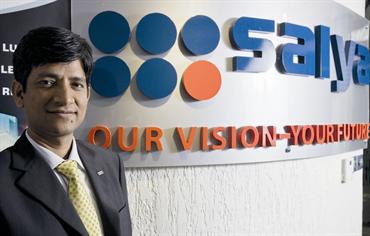
PROFILE: Dr Rakesh Chandola, Managing Director of Salya Developments
Having identified the "affordable boutique" niche, Chandola intends to focus his energy in building and then dominating this brand new market segment. As Partner and Managing Director, he is responsible for turnkey operations of the real estate development operations.
Besides this, Salya Developments has established a real estate department arm, which is engaged in identifying real estate investment opportunities and ensuring profitable returns for investors.
Chandola has more than 15 years of experience in international markets in senior management capacities. He has lived and worked in Canada, the US, India, Oman, Bahrain apart from the UAE and has conducted profitable business in 22 countries.
He did his Bachelor's in physics from Loyola College (India), Masters in business administration from South Eastern University (US) and PhD in counselling from the University of Metaphysics, California, US.
 Follow Emirates 24|7 on Google News.