- City Fajr Shuruq Duhr Asr Magrib Isha
- Dubai 04:20 05:42 12:28 15:53 19:08 20:30

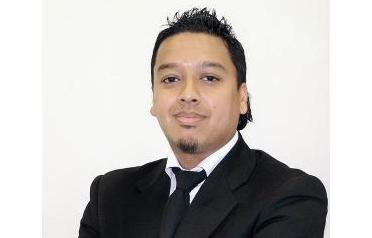
Tareque Choudhury
BT is ramping up its security offering for Middle East companies on the back of a growing awareness of the need to fortify existing IT networks and to protect sensitive data. The firm is introducing measures to identify critical flaws in computer networks and will suggest what steps must be taken to prevent attacks from sources such as hackers.
As the need for risk management takes hold among UAE businesses, BT also plans to include consultations as part of its security drive.
Gone are the days of simply guarding against web-based threats, Tareque Choudhury, head of Security Practice at BT, told Emirates Business.
"People need to first determine their risk to be able to manage that risk; security's not just about technology anymore. We're seeing a lot of risk engagements and we'll also be launching operational risk management very shortly," he said.
The Network Security Quick Start and Business Continuity Quick Start products are targeting the expected $9.3 million (Dh34.1m) IT spend in the region by 2009.
Who is most vulnerable to security breaches?
Financial organisations, because they're high-value targets. A lot of people target them because of the potential monetary value that can be gained by compromising those sorts of organisations. We're also seeing a lot of attacks and vulnerability go towards the oil and gas sector.
What's the extent of this in the UAE?
It's very small in comparison to the rest of the world. We're talking about less than three to four per cent compared to the rest of the world. But when you compare the UAE to the rest of the Gulf, it is much higher.
What pressures are chief information officers in Middle East companies facing?
Quite a few companies are multinational and their growth has been exponential in such a short time. The business is growing, but technology and security processes are not growing along at the same pace. So the CIOs and chief security officers are [under] pressure to make sure their processes, policies, technologies are in pace with the growth of their businesses.
Why is there an increased threat to companies' IT systems in the UAE?
More and more companies in the UAE are starting to come online. They're going multinational; they're getting a better name for themselves. Because the names are becoming global, they become more of a target. And that's not just in the UAE but any company that has a worldwide name becomes a target.
Can you tell us a bit about BT's upcoming plans to launch security solutions to the Middle East?
We've just launched our Network Security Quick Start and our Business Continuity Quick Start, which are five to 10 day engagements that we offer to customers, where we come in and assess their network security. It's a short-term, short-cost engagement where companies can see where they are in comparison with the industry. In a few months we'll be launching operational risk management – this will be a quick-start risk management, which falls under security.
What types of businesses are you targeting in the UAE?
The sectors that we're targeting are obviously the financial and telco sectors, as well as oil and gas and government.
What revenues can Middle East companies expect from investment in these plans?
Our products give companies a firm grounding on where they are from the ground up with regards to people, processes and technology. That allows them to grow organically, so if an event does occur then they can minimise the damages. Therefore, they don't have to spend money later on. It's more like forecasting yourself on your investment. The timeframe for an average return on investment depends on the size of the organisation. With an organisation of 10,000 employees, it could be anywhere from six to 18 months. For a company with 200-300 employees, you can see return in maybe six months.
Any plans to grow your footprint in the Middle East?
Yeah, absolutely. I've doubled my team internally in the UAE in the past three months. And we're hiring more because of the amount of projects that we're getting. As for security, we're looking to increase it by more than 100 per cent from what we did last year.
What challenges do you face in the coming year?
Educating the customer base in the market on these issues. A lot of people in the region are in the learning phase with regards to information security. Many are still in the mindset that information security is fixed with technology, when really it's the processes, people and education that are far more important.
PROFILE: Tareque Choudhury, Head of BT's Security Practice for Middle East and Africa
Tareque has been head of security practice at BT for the past six months.
Prior to this he held positions with Secure Computing CyberGuard, AT&T Canada and IBM Canada.
He holds a Masters in Information Security and is a Certified Information Systems Security Professional (CISSP).
Choudhury is a seasoned public speaker at security conferences such as IDC.
He is also a guest lecturer at The University of Westminster in London, where he tells post-graduate students about firewall and VPN technologies.
 Follow Emirates 24|7 on Google News.