- City Fajr Shuruq Duhr Asr Magrib Isha
- Dubai 04:20 05:42 12:28 15:53 19:08 20:30

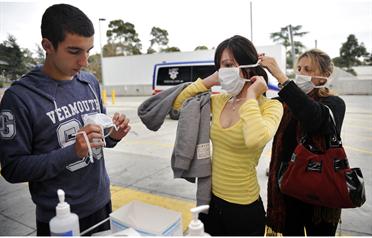
A file picture taken on June 3, 2009, shows young people putting on masks as they arrive at Melbourne's Austin Hospital. Australia's swine flu cases topped 10,000 on July 15, 2009, as officials in the worst-hit Asia-Pacific country reported two more deaths and warned the virus "preferred young people." Health Minister Nicola Roxon said patients' average age was 19, adding that doctors and health workers had been told to watch for young people with trouble breathing
The H1N1 influenza has killed 21 people in Australia so far and there are 10,387 confirmed cases, according to data compiled by Australia's health department.
"We could expect around 6,000 deaths across the country," Roxon told local radio. "That is the really worst case scenario that is being projected at the moment."
Each year a few thousand Australians die from influenza.
The World Health Organization has confirmed 429 deaths and 94,512 cases of H1N1, declared a pandemic last month. But these numbers represent only a fraction of the real cases.
Swine flu is the dominant flu in Australia this southern hemisphere winter and authorities say they have ordered 21 million doses of swine flu vaccine still under development.
They say that should be enough for half the 21 million population with multiple doses.
The US Centers for Disease Control and Prevention says at least a million people have been infected with H1N1 and the virus is spreading out of control.
Disease control experts say the death rate from H1N1 is similar to the death rate from seasonal influenza, which kills anywhere between 250,000 and 500,000 people globally each year.
Keep up with the latest business news from the region with the daily Emirates Business 24|7 newsletter. To subscribe to the newsletter, please click here.
 Follow Emirates 24|7 on Google News.