- City Fajr Shuruq Duhr Asr Magrib Isha
- Dubai 04:20 05:42 12:28 15:53 19:08 20:30

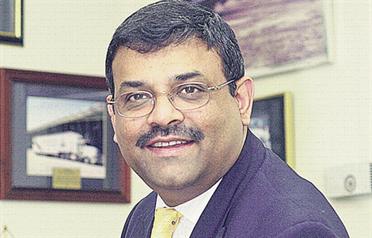
Ram C Menen Divisional Seniior Vice President, Cargo, Emirates. (SUPPLIED)
Though airfreight volumes in the third quarter are up 10 per cent compared to December 2008, the real recovery will start only when the automotive industry begins recovering, said a senior airline executive.
"We rely a lot on the automotive industry," said Ram C Menen, Divisional Senior Vice-President, Cargo, Emirates.
In an interview with Emirates Business, he said: "It is good to see that some of the big US automotive companies have started to recall the people they had retrenched. That is a good sign for us.
"At the end of the day, we keep an eye on the financial markets and their effect on the consumer industry," he said.
What are the new trends in the airfreight business?
The entire air cargo industry has changed in the past seven to eight months, as the cost of inventory management has shifted to vendors. Inventory management has evolved in such a way that shippers do not want to hold inventory on their books. So they are opting for vendor-managed inventory, which helps them shift the cost of the inventory on the vendor. They can then draw on it when they require.
How long will it take for the air cargo industry to recover and what are the key issues involved in a recovery?
This crisis is a blip in the growth trend of air cargo. Actually, we have lost three years in actual growth terms. We rely a lot on the automotive industry. Unfortunately, it is taking a hit, which has also affected our traffic levels – they use a lot of semi-conductors, and components traffic is huge. There is also a huge debate going on between the forces of globalisation and localisation. Hopefully the globalisation process, which started a few decades back, would be strong enough to continue. And the current crisis will not have much of an impact on the globalisation of the manufacturing process.
North America is basically the consumer; Europe is more for design, services and marketing, while the factories are east of here. The two major economies that we benefit from are next to us: India and China. I don't think anybody can match them in terms of cost efficiencies that they can bring into the manufacturing process.
What are your growth plans in the short term?
The growth of Emirates SkyCargo is linked to the growth of the airline itself. Emirates will be opening two new routes – Luanda and Durban.
What are the new trends in air cargo?
The main commodity you will see in the future, which will be a driver of globalisation, is electronics. The life cycles are shorter and the advancement in technology is such that everything has to be replenished. Suddenly time becomes a critical part of the supply chain management. And this is why air cargo is growing at the pace that it is.
Which are the markets that Emirates SkyCargo is very strong in?
East of Dubai contributes 53 per cent of our business. China has always been a very big market for us. India is also becoming a big market.
What is your market share?
In terms of pure volume, we are probably the fourth largest international cargo airline in the world. In terms of the freight tonne kilometre measure, we were number six in 2008.
Do you notice any new trends in the way airfreight is being carried?
There is more focus on cool chain initiatives, as the world is getting stricter about the need for temperature-sensitive storage for some cargo such as pharmaceuticals. There is more focus in this field. Emirates has done a lot of work in this area, as we carry a lot of pharmaceuticals. We have created facilities such as cool rooms, cool storages and cool dollies on the ramps so we can maintain the cool chain right through.
Emirates specialises in an unbroken cool chain. Foodstuff needs different types of temperatures, and we can cater to that.
About 28 per cent of our business is temperature sensitive. It could be semi-conductors, pharmaceuticals and flowers that need to be temperature controlled.
The flower business has been hit. It has been a bit of a double whammy for them. Consumption has dropped from the levels we have seen in the past, but they also have issues with the weather in several places, especially in Africa, so production is affected quite a bit. But there is a huge market developing in this region.
Do you see the garment business coming back?
The garments business is also coming back. There has been no effect on certain brands. Mostly the higher brands have been affected. The manufacturers in India and China have also stared getting fresh orders. But, then again, there has been over inventory as we went into the crisis that had to be depleted. Usually, what happens is that as the inventory starts getting depleted its replacement comes in. There was no replacement happening for a long while. So inventories were really drawn down. Now they are being restocked worldwide.
Is there a price war in the air cargo business?
In any economic downturn that is a normal thing. It is a blood bath.
Is the sea-air conversion still happening?
It is beginning to pick up again. For a couple of months it had died down quite a bit. We are picking up some of that cargo – ex-Dubai, ex-Singapore and other places too. Sea-air is a part of the planned logistics movement.
What is the difference between this recession and earlier ones?
It is amazing compared to the Great Depression of the 1930s. At that time it took the world about 15 years to get back on its feet. Here one year later, we are already seeing green shoots. However, we are expecting a total recovery at the same speed with which the green shoots have came back. That's not going to happen. It will be a more gradual recovery, and will take two or three years.
This crisis was like a tsunami, which came and just washed away all the liquidity. And without liquidity, the world comes to a grinding halt. The good thing now is that the stock markets are holding steady and not doing anything drastic.
They have been quite steady for the past six months. We do not want to see a spike but a gradual turn upwards. The danger is that it may go into a 'W' kind of a situation, and if we go into a 'W', we are in for trouble.
But, given what is happening and that a lot of people have burnt their hands, I hope sanity prevails as we come out of the crisis.
The advantage this time around, compared to the 1930s, is that information is available in real time, making the thinking process much quicker.
If you look back at the past 20 years, it took the World Bank seven-and-a-half years to stabilise the Mexican peso. Then, in the 1990s, when the Far Eastern crisis happened, the Indonesian currency was propped back in a year-and-a-half. From seven-and-a-half years to a year and a half – this happened because everything is becoming real time, which bodes well for the present recession.
PROFILE: Ram C Menen Divisional Seniior Vice President, Cargo, Emirates
Keep up with the latest business news from the region with the Emirates Business 24|7 daily newsletter. To subscribe to the newsletter, please click here.
 Follow Emirates 24|7 on Google News.