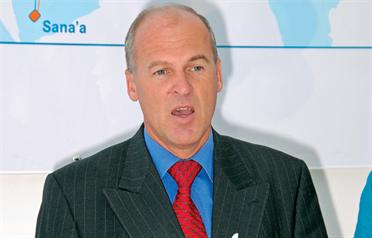
The Kuwait-based Jazeera Airways, formerly a low-cost carrier but now gearing up to become a leading regional network operator, appointed Stefan Pichler as Chief Executive Officer in June this year to deliver this goal. Pichler's reign has already seen the airline add new classes to its aircraft, the addition of new routes and moves to establish a second hub. In this interview with Emirates Business, Pichler lays out his vision for the airline, demystifies low-cost operations and tackles the tougher questions with his characteristic no-nonsense candour. Recently you said you intended to move away from your budget airline roots and add more cabin classes. Can you elaborate on this strategy? We have had a strategic review of Jazeera and are now very clear on the direction to take for the future. This airline is going to become the leading regional network carrier, which means we are not going to compete with the like of Emirates, Qatar Airways and Etihad, which also carry long-haul travellers. We are competing with some national legacy carriers such as Gulf Air and we think we have a very good opportunity to grow and become the leader of this segment. The thinking in low-cost and legacy is very wrong. The airline industry is an asset-driven business, which means it costs a lot of money to buy an aircraft. If you are in an asset-driven business, you always want to have the lowest costs possible. Every airline across the world should strive for the lowest possible unit cost. It is risk mitigation. And every airline around the world should try to get the highest revenues possible. There is some irrationalism in the industry. No customer wants to fly low-cost because he thinks low-cost means less maintenance or whatever. What people want to do is pay low fares. Companies that have better cost structures can offer better fares. Jazeera has a brand new fleet and has the leading on-time performance of all Middle East carriers at 93 per cent, which is great for business travellers. We have a pretty good network not only in the GCC but also in the Middle East and we are expanding. So our ambition to become a leader in this segment is quite rational. Our ambition to always have the lowest costs in this region is rational. And our ambition to get higher revenues, which means focusing on business and government markets, is also very rational. We have to think outside the box. In the end all airlines compete for same customers. The customers who have a preference for schedules, the customers who appreciate service on board and those who spend discretionary income on visiting friends and families and trips. And as all airlines compete for all customers, you will always find all airlines also competing on price. So you can go on the web and maybe today you have the cheapest fare on Jazeera, the next day on Emirates and the day after on Etihad. So there is competition in every segment of the market and on every route. After pulling out of Dubai, are you looking at a new second hub? Yes, but first we are going to become a multi-market segment airline. This means we are not only going to attack leisure travellers but also business travellers. We are very happy that from January 1 Kuwait Government travellers will no longer be restricted to flying with Kuwait Airways. There will be a tender so we can apply for it and get some of this traffic as well. We also have good offerings for corporates in the Middle East. That's our first multi-market segment move. We will announce details of our second hub in the near future. Why not focus on operating out of just one hub? We have consolidated and are working out of Kuwait. We are increasing destinations from Kuwait. We recently announced double daily flights to Abu Dhabi and are starting to operate the winter schedule to Aswan, which is our sixth destination in Egypt. So we are doing all that. But on top of that we are looking at other markets because the Kuwait market is limited with 3.8 million people living there. And it is also an outbound market. It is not a market where tourists come in so we have to try and balance demand. Your aircraft leasing unit, Sahaab Leasing, was due to acquire between 40 and 50 planes this year. How many did it actually acquire and what is on the order book for the next few years? We have 30 additional firm orders for Airbus A320s. Currently we operate 10 and have 30 more to come within the next couple of years. These are firm orders. Looking at this order, we have taken a conservative approach, which means we did not factor in any major strategic movements into our requirements. The delivery schedule is reviewed from time to time to hit the right timing. We have introduced two new aircraft this year. We have the next aircraft coming in January. After that we will decide when we want the next aircraft. What is the value of your order and how have you managed the financing? Aircraft values are always a result of bilateral negotiations between the supplie