- City Fajr Shuruq Duhr Asr Magrib Isha
- Dubai 04:20 05:42 12:28 15:53 19:08 20:30

(SUPPLIED)
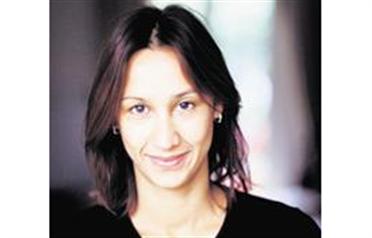
The hotel-restaurant kitchen where Monica Ali (right) sets much of her new novel, In the Kitchen, is a slice of contemporary England: "Every corner of the earth" is represented, "every race, every colour, every creed".
This melting-pot workplace gives the author a handy setting for the theme she wants to drive home, one that has turned up in a number of recent British books and films: the invisibility of the immigrant have-nots, and the horror that overwhelms the native haves when they're shocked into awareness of the hidden suffering.
Ali, whose first novel, Brick Lane (2003), brought her immediate renown, is a talented writer with the skill to capture the finely tuned frenzy of a professional kitchen – the rivalries of the big personalities, the scams on the side, the teamwork offsetting the alienation of deracinated workers. She has done excellent research, and renders the labour involved in sending an elegant meal to the dining room in fascinating detail.
If only she had stayed in the kitchen! But her theme – agenda isn't too strong a word – takes her out into the great, brutal world, and there her book, unmoored from the confines of her shaping microcosm, swells and bloats into a catastrophic mess.
At one point Gabriel Lightfoot, the restaurant's chef, asks a colleague to describe him in three words. The response he gets is 'Tall. White. Male'. 'Straight white male' would have been more precise, since that's what he represents to Ali, and why it falls to him to answer for the sins of that much maligned subcategory of the species.
He's a classic specimen. "Basically, in his heart, where it counted, he was good," Gabriel assures himself, after he has betrayed everybody: his girlfriend, his dying father, his staff, his partners in a new restaurant, a frightened immigrant girl he takes in (charitably, he tells himself) and preys on and, especially, himself. His bad behaviour is less malicious than feckless – and, as time goes on, all-out crazy.
His breakdown develops as he's nearing the peak of success, and since it comes out of nowhere the story is psychologically unpersuasive. Of course, it isn't really out of nowhere – it's motivated not psychologically but politically, and the politics are Ali's. Gabriel is Old England, the smug white liberal tradition collapsing in the face of multicultural change.
Thus, though the novel includes a lot of talk about free will, Gabriel acts as it's determined he must – not because free will is an illusion (as one character argues) but because he's a pawn in Ali's narrative. As the representative white male, he has to do his worst by everyone, even himself.
Why do liberals make such satisfying targets for leftist writers? The book's oiliest villain is, predictably, a liberal politician – a smooth operator without firm convictions who has long since mastered the art of talking out of both sides of his mouth.
But criminals stay on the periphery of In the Kitchen. It's the people who care helplessly, feeling much but doing little, who have to be brought down and humiliated. The worst scoundrels are apparently somebody else's problem – the press's, perhaps.
Keep up with the latest business news from the region with the Emirates Business 24|7 daily newsletter. To subscribe to the newsletter, please click here.
 Follow Emirates 24|7 on Google News.