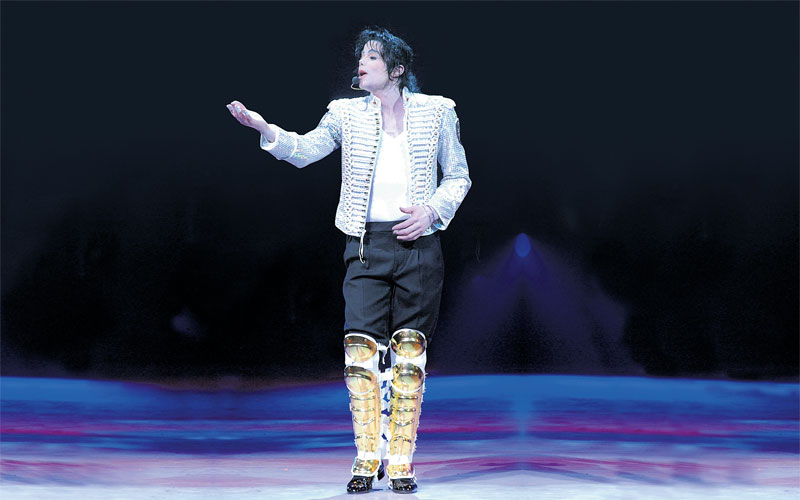
Michael Jackson’s estate has generated at least $1 billion in revenues since the singer died a year ago, thanks in part to a lucrative new record deal with Sony Music and the most Despite his ability to sell out 50 arena dates, when the King of Pop announced in March last year that he would perform a run of 50 concerts at London’s O2 Arena, public perception of him, even by some of his supporters, was as little more than a hallowed oldies act, a performer whose heyday, albeit phenomenal, was more than two decades in the past. To his detractors, though, Jackson was even less than that: either a laughingstock – “Wacko Jacko” – or worse: a freak, a deviant, a pariah. Flash-forward 15 months, and Jackson’s image in the public consciousness has undergone a dramatic revision. Since his death from drug-related cardiac arrest on June 25 last year, a popular reclaiming of Jackson as a beloved, once-in-a-lifetime musical genius took hold. While media pundits endlessly poured over the tawdry circumstances of his demise, millions of fans simply shrugged their shoulders and happily popped in their Thriller CDs. Not wanting to speak ill of the dead is a human and rational desire – once someone is gone, he or she is unable to defend him- or herself. But the changed tone of the conversation surrounding Jackson has done more than just remedy some of the damage inflicted by his years of weird-to-aberrant behaviour; it has also created a series of enormous business opportunities for his estate, opportunities that in all likelihood would not have emerged had Jackson lived. And analysts agree that the public’s perception of Jackson has changed. According to Brand Asset Consulting’s quarterly survey of more than 16,000 Americans, after his death, Jackson’s relevance increased 125 per cent, and his esteem increased 32 per cent from the previous quarter the survey was administered, prior to his passing. The success of the film This Is It helped drive the brand forward by presenting Jackson not as bizarre and spectral recluse, but as talented artist, dancer and workaholic. Closer home, the sight of 11-year-old Paris eulogising her father at the memorial service – “I just wanted to say ever since I was born, Daddy has been the best father you could ever imagine,” she said simply – helped humanise Jackson and counter the perception of him as a neglectful, unfit parent. Prior to his death, only a handful of people had ever seen Jackson’s three children – Paris, now 12; Prince, 13; and Blanket, eight (both pictured, right). But now here were these grieving children who appeared polite, pleasant and normal. In interviews after his death, insiders emphasised that Jackson’s children were well cared for and well raised, and the video and photo evidence released by the family in the past year seems to bear this out. “Anyone who had doubts about Michael’s ability as a parent, those were erased at the memorial,” says Randy Taraborrelli, a Jackson biographer who had known the star since the ’70s. “Seeing those kids gave some people a sense that they had misjudged him, that he was a good parent.” Diane Dimond, a journalist who has covered Jackson for many years and who broke the story of the 1993 molestation allegations against the singer, says Jackson’s family is being savvy about the children’s exposure. “The family is smart to put them out there every once in a while,” she says. “The Jacksons are masters of PR, and it sends a great message to show the world these nice, normal kids.” Jackson’s most damning scandals centred around inappropriate behaviour with children, and thus his own seemingly well-adjusted offspring serve as a sharp rebuke to the allegations of sexual abuse that plagued him for so long. Sarah Churchwell, author of The Many Lives of Marilyn Monroe, says that as with Monroe, death rewrote Jackson’s story. And unlike other gone-too-soon celebrities such as Elvis Presley or James Dean, Monroe and Jackson are seen as victims, unable to defend themselves against a ravenous public appetite for celebrity. “Both Marilyn and Michael, and to a certain extent Princess Diana, are seen as falling prey to the manipulations of others,” Churchwell says. “People see them as being childlike and want to protect them.” She adds that larger power dynamics are also at play. “If Madonna died tomorrow, the grief would be different. She is a woman who is seen as being very powerful and in control – she’s not a tragic figure. If you are sufficiently powerful, the public doesn’t love you in the same way,” she says. But Churchwell cautions that just because people are now treading lightly around Jackson’s death doesn’t mean he’ll get a free pass forever. “Initially, after Marilyn Monroe died, there was a sense of pity,” she says. “It took time for Marilyn to evolve into a symbol and for her reputation to change.” The impending trial of Jackson’s physician, Conrad Murray, on involuntary manslaughter charges might stir things up,