- City Fajr Shuruq Duhr Asr Magrib Isha
- Dubai 04:20 05:42 12:28 15:53 19:08 20:30

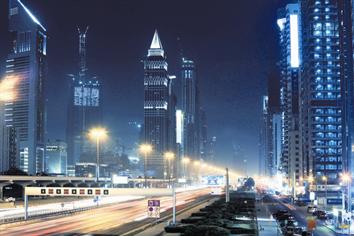
Ranked 27th, Dubai is well ahead of cities such as Munich, Rome, Milan, Copenhagen and Boston. (XAVIER WILSON)
New York, London and Paris – which according to management consultancy firm AT Kearney are the world's most global cities – are facing strong competition from emerging rivals such as Dubai, Beijing, Moscow and Shanghai.
The AT Kearney's Global Cities Index, which provides a ranking of the leading global cities around the world, rated Dubai 14th for information exchange, 19th for human capital and 21st in the doing business category.
But the Gulf Co-operation Council's commercial hub was relatively low in the cultural experience and political engagement lists, ranking 44th in both areas.
Overall Dubai ranked 27th, well ahead of developed cities such as Munich, Rome, Milan, Copenhagen and Boston. Following Dubai is Istanbul at 28th while Egypt ranked 38th. Dubai is the only Middle East city in the top 60 list.
The Global Cities Index, released yesterday, highlights the fact that no city dominates in all areas, suggesting that there is no such thing as a perfect global city. However, a few came close.
New York emerged as the number one global city this year, followed by London, Paris, and Tokyo. The Big Apple beat other global powerhouses largely on the back of its financial markets, through the networks of its multinationals and by the strength of its diverse creative class, says the study, developed by AT Kearney, Foreign Policy magazine, and the Chicago Council on Global Affairs.
Overall runner-up London won the cultural dimension by a mile, with Paris and New York trailing far behind. Quite surprisingly for a city known more for museums than modems, third-ranked Paris led the world in the information exchange category. Number four Tokyo ranked highly thanks to its strong showing in business.
And, though it finished 11th overall, Washington easily beat New York, Brussels and Paris as the leader in international policy.
Although the winners may be the usual suspects, they have plenty of new competition on their heels, says the Chicago-based management consultancy firm.
Buoyed by their strong financial links, Hong Kong and Singapore finished fifth and seventh, respectively. Chicago's strong human capital performance sent it to eighth spot. What's more, several strong performers are emerging from some of the formerly closed societies: Beijing (12), Moscow (19) and Shanghai (20). Dubai (27) is fast catching up too.
"The new, sometimes abbreviated, often state-led, paths to global dominance these cities are treading threaten the old formulas that London, New York, and Los Angeles (number six) followed to reach their high spots," says the report.
According to the study, the most successful global cities have several things in common.
As in the case of New York, global cities are those that excel across multiple dimensions. "Even Shanghai's staggering, decades-long double-digit annual economic growth alone can't make it global," says the report.
The city also must determine how to use that wealth to influence policy, attract the brightest young minds, and accurately portray the rest of the world to its citizens. Global cities continuously adapt to changing circumstances.
London may be the city hardest hit by the global credit crunch but the chances are it will leverage its abundant international financial ties to bounce back.
"Although we can't predict next year's winner, the odds are good that New York will have to fight to stay on top," adds the study.
HOW TO BE A GLOBAL CITY
There is no single correct path a city should tread to become global. But cities can follow any of the tried-and-true models that came before them. Here are some tips from AT Kearney, author of the Global Cities Index:
Open Cities: Large cities with a free press, open markets, easy access to information and technology, low barriers to foreign trade and investment, and loads of cultural opportunities. They often rely on a heavy service industry and are outward looking, rather than focused on domestic affairs.
Lifestyle Centres: Laid-back cities that enjoy a high quality of life and focus on having fun. They attract worldly people and offer cultural experiences to spare.
Regional Gateways: Efficient economic powerhouses with favourable incentives for businesses and easy access to the natural resources of their region. They attract smart, well-trained people from around the world, and they often must reinvent themselves to remain competitive.
National Leaders: Large cities that shape the collective identity of their countries. They usually have homogenous populations, and their new urban policies tend to evoke a shared history. They do well in international business, but not because they are necessarily globally connected. Here foreign firms can find something no other city offers.
Policy Hubs: Cities with outsized influence on national and international policy debates. Their think tanks, international organisations, and political institutions shape policies that affect all people, and they tend to be full of diplomats and journalists from somewhere else.
Platform Cities: Large hubs in typically small countries that attract huge amounts of investment through their strategic locations and international connections.
 Follow Emirates 24|7 on Google News.