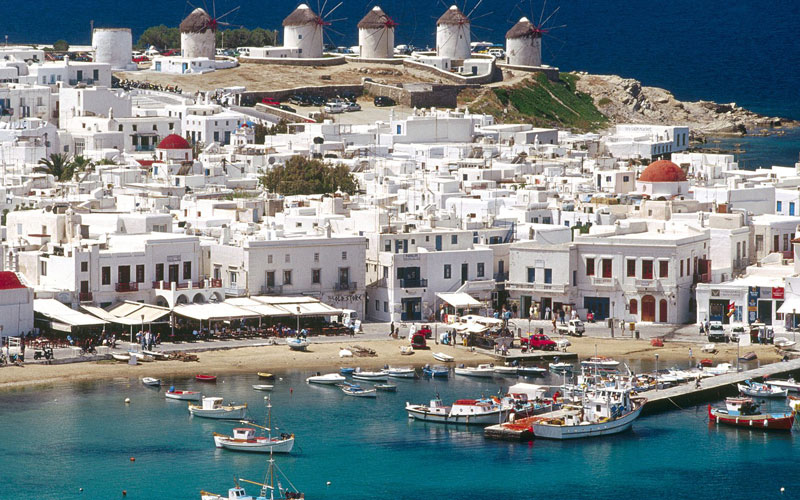
Greece has often called the cradle of civilisation, where Socrates baffled the old world order with his philosophical words, while the great poet and writer Homer enticed others with his epic tales of Iliad and Odyssey. The mystical stories of frivolous Greek gods Zeus, Apollo, Aphrodite and Venus still fascinate centuries later, almost coming alive as you stroll through the ancient temples and uncover secrets of a land that still relives their epic adventures. Our plan was simple; we would spend the first night in Athens and hop on a ferry the following day from the Piraeus Ports terminal, chartering an unknown island destination that held most appeal. But that bubble burst quite soon when we just happenchance discovered that Greece was the proud owner of 1,300 islands. Greek islands are categorically split into seven groups – The Cyclades, The Dodecanese, The Eastern Aegean Sea, The Sporades Islands, The Ionian islands, The Saronic Gulf and The Crete Island – each comprising a cluster of smaller landmasses that are geographically or historically linked. While the larger islands of Crete, Rhodes and Corfu are the star attractions, commuting to them via the ferry (the most common mode of island-hopping transportation) can get a bit cumbersome if you are short on time. Regular flights are also easily accessible, but erratic schedules can dampen a holiday even before it commences. After much debate, we settled for exploring the Cyclades islands – largely due to its close proximity to mainland Athens, and the fact that its nightlife happens to be world famous. Moon over Mykonos Landing at Athens international, we headed to the ports terminal at the crack of dawn, as the ferry (which is known for its delays) can even leave earlier than scheduled – or so we were told. While ferry tickets can be purchased at the terminal, it is always better to book them through your travel agent in advance or via the internet, especially during peak summer season that ends in October in Greece. The ride takes approximately five hours to reach Mykonos, but the scenic vista of the many islands rising in the horizon is breathtaking; farmers heading down donkey trails with the day’s trade, while women drying out their washing and tending to young children paint a quaint little picture of typical island life. The final horn blaring in the breeze alerted us that the final port of call had arrived – Mykonos. The first glimpse of this beautiful island is simply breathtaking. As far as eyes can see, you will find rolling hills potted with simple whitewashed homes and their standard azure-coloured doors and window frames (there are even a few red). Stepping off the cruise and into the sunshine, the first thing we realised was that even if we hadn’t pre-booked, we would have been able to find accommodation aplenty looking at the signs of vacant rooms that hotel reps were flashing away at us. Spotting my misspelled name, we trudged along into a waiting bus and were escorted to our hotel, aptly perched on a hill overlooking Mykonos bay and a stunning sunset. The novelty soon wore off though when we discovered that Mykonos – and every other island – comprises settlements cut into hills. The city is usually nestled in the valley, forcing you to painstakingly trudge up and down steep donkey trails all day and in the dark. As Mykonos is one of the larger islands, it is split up into two sections – one boasting the main city centre, and the other promising the flashy beaches of Paradiso and Super Paradise where the nightlife only begins at 4am. As we skidded down the trail to explore the city centre, the first sight that welcomed us were the rustic windmills that Mykonos boasts. Steeped in simplicity, the windmills are a firm reminder that even though modern amenities have reached the island, Mykonos still hasn’t divorced itself from its humble beginnings. Strolling through the many alleyways unearthed Greece’s own answer to the Arabian souq, where shops offering little trinkets and designer digs are tucked away in every nook and corner. Even though majority of the wares were made in India (globalisation at its best), the island is still a shopper’s delight for those keen on uncovering some little treasure. People on the islands are a lot more receptive to tourists than the mainland, so if you do ever get lost or require a little advice, the Athens chip firmly falls off the shoulder when the cross the Aegean Sea. Dining in Mykonos is a delight, with little street side cafes squeezed into the tiny spaces where the shops haven’t been able to reach. Fares from around the world can be sampled here, as we found a quaint little Italian fine dining restaurant sandwiched between an Arabic and a French eatery. Service is prompt, but no one really expects you to vacate your tables any time soon, as the national pastime seems to involve sipping an afternoon cuppa while watching the waves crash against the pier, and equally nursing a glass of fine gra