- City Fajr Shuruq Duhr Asr Magrib Isha
- Dubai 04:20 05:42 12:28 15:53 19:08 20:30

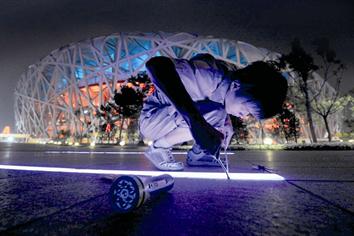
Last night, as billions watched the spectacle of the Beijing Olympics opening ceremony unfold live from the comfort of their living rooms, many in the UAE would have been surprised to know that one Dubai-based power rental systems provider made it all possible.
From the mammoth stadiums to the International Broadcast Centre (IBC), which manages satellite feeds to broadcasters around the world, arranging the power supply and handling an excess of 130 megawatts of energy – enough to power 100,000 Dubai villas – is a painstaking and complex engineering feat. And it is an undertaking that has taken Dubai-based Aggreko two years to execute.
At this moment, more than 200 representatives from Aggreko are currently on site in Beijing to ensure uninterrupted power supply to the 40 official venues. Using generators and channelling power through 2,000 distribution boards with the help of more than 300 km of cable, the process has been well thought out and the result of months of hard work.
"It's been electrifying," says Julian Ford, the company's business development director of the atmosphere in Beijing. "Between rehearsals for the opening ceremony and the tremendous number of media present, there is constant activity all around."
While live Olympic broadcasts only began yesterday, the company's power systems have been fully operational at the venues for almost two weeks now and two months for the IBC.
Transportation of the required equipment and installation began in January 2008 and from the Dubai depot alone more than 60 generators and 40 equipment containers were shipped. A project of this magnitude, says Ford, requires forward planning years before the event.
"We began regular meetings with the International Olympics Committee and the Beijing Olympics Broadcasters almost two years ago," he says. "With power playing an important role in the infrastructure of the Olympics it has been imperative for us to be involved from the initial stages.
"We had to determine the initial expected power requirements for the venues and the broadcasters, which was followed by detailed planning to determine how to best position generator compounds and set up complex distribution networks."
At the European Championships in Austria and Switzerland last June, football fans across the world missed two crucial goals during the semi-finals, thanks to the failure of the back-up power supply at the broadcast centre. Ford, whose company was not involved with this event, says it is his firm's prerogative to make sure similar mishaps do not happen in China.
"We have systems to ensure that the satellite link-ups transmitting the Games will not be interrupted, even for a nanosecond," he says.
American television network NBC, the Olympics' exclusive broadcast rights holder, is also gearing up to provide unfettered coverage of the Games – reinforcing the importance of an almost unlimited power supply. With more than 3,600 hours of coverage from 40 venues and nearly 1,100 HD cameras and an arsenal of digital gadgets, sports, say officials, will not only be more fun to watch, but simpler to grasp.
"For us, it's all about making sports easier to understand," says David Neal, NBC's executive vice-president in charge of Olympics coverage, adding that his network is planning to unleash a barrage of technical wizardry never before seen in sports coverage.
Among those is the Dive-Cam, which consists of an HD camera that moves down a clear plastic tube, plunging alongside a diver as the athlete leaves the platform, and hitting the water at the precise moment as the diver.
The Fly-Cam, another invention by celebrated camera inventor Garrett Brown, will be used to follow rowers and kayakers, while suspended on a cable above the athletes as they paddle along.
"It's like you're in your own little airplane, flying along with these guys, giving you a sense of their power and speed," says Brown.
The network will also put to use a number of virtual enhancements, using GPS and digital course maps to help keep viewers informed.
"Instead of describing the course verbally, we'll use this mapping technology – something that today is instantly recognisable by consumers – to give a clear picture," says NBC's Neal.
But most fun, perhaps, are the "point-of-view" shots taken by tiny HD "lipstick cameras" that place viewers right in the game alongside the athletes.
"There's a camera embedded in the weightlifting platform, shooting up through glass, to give you a 'bottoms up' look at a weightlifter," Neal adds.
Others are located throughout the venues, covering competitions such as field hockey, team handball and the high jump. "With lead athletes, the difference between clearing the bar and just brushing it can be a question of millimetres.
"Having that lipstick camera there can mean the difference between getting a medal and maybe not," says NBC's Neal.
While such technologies provide the "wow factor", it would not be possible without Aggreko's round-the-clock power support.
"The International Broadcast Centre is home to the offices of all broadcasters and manages the satellite feeds that are sent out across the world," says Ford.
"We developed a solution to ensure uninterrupted coverage through use of a back-up power system that provides 100 per cent synchronised redundant power."
Althoug his firm has previously worked at Olympic arenas, including Athens in 2000 and the Winter Olympics in Salt Lake City in the US, Ford says this year's event – the opening ceremony has been dubbed 'the greatest show on earth' – is the biggest event Aggreko has signed up to.
"This is one of the largest sporting events in history we have been involved with," he says. "Our on-site technicians will make sure that everything is running smoothly throughout the duration of the event. For now, there's not much left to do except to sit back and enjoy the show."
 Follow Emirates 24|7 on Google News.