Postpartum depression or ‘baby blues’? Signs new mums should not ignore
Doctors explain how to tell the difference, when to seek help and the warning signs that require immediate care
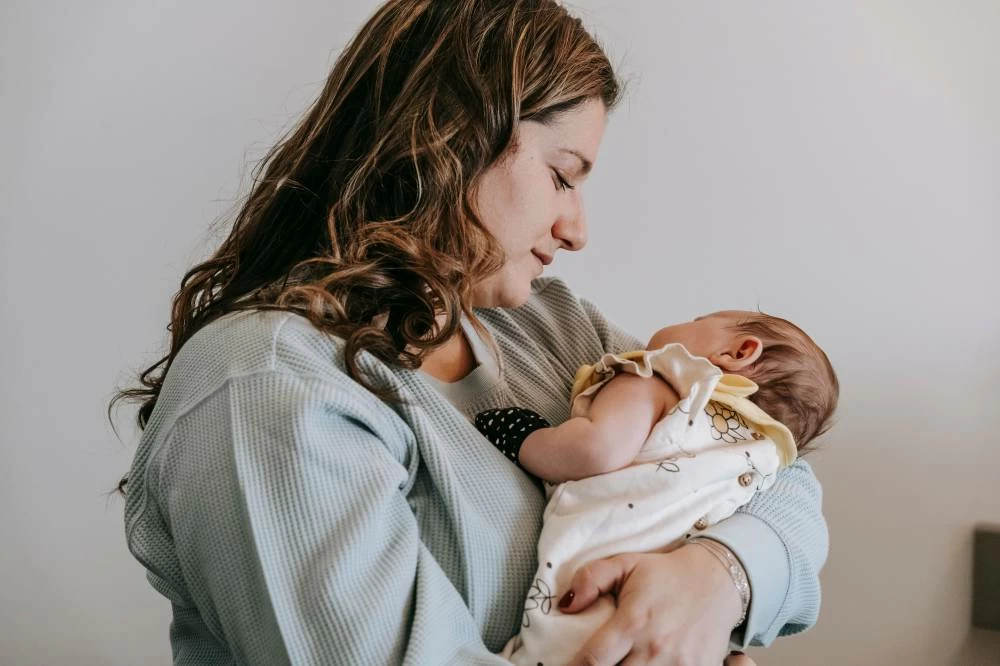
Dubai: It’s been six weeks since you gave birth and on the surface, everything seems in place – you’re feeding the baby, changing nappies and going through the motions of the day. Internally, though, there is a disconnect – a sense of heaviness that just doesn’t quit, watching yourself from the outside, doing everything you ‘should’ as a new mum.
That, according to Dr Dalia Nagui Rizk, Consultant Psychiatry and GCAA Aviation Medicine Specialist at King's College Hospital Dubai, is just one of the ways a more serious challenge for new mums presents itself – postpartum depression (PPD).
“Postpartum depression is a clinical mood disorder, not a personality flaw or a sign of weak character, which can begin during pregnancy or anytime within the first year after childbirth,” she said.
And while the weeks after having a baby are often expected to be exhausting and emotionally overwhelming, there is an important distinction between the commonly experienced “baby blues” and postpartum depression.
Baby blues vs postpartum depression
What is commonly referred to as baby blues has a lot do with the dramatic hormonal shift every woman experiences while going through pregnancy and childbirth. According to Dr Rizk, this affects up to 80 per cent of new mums and can involve tearfulness, mood swings and feeling overwhelmed for anywhere from a few days to two weeks. It is also something that resolves on its own.
PPD, on the other hand, does not follow the same trajectory.
“The baby blues feel like ‘a bad week’. PPD feels like ‘I don’t recognise myself, and it’s not getting better’,” Dr Rizk said.
The World Health Organisation and large-scale meta-analyses place the prevalence of postpartum depression at roughly 10 to 15 per cent of new mothers, according to Dr Rizk.
“So, in a room of 10 new mothers, statistically one or two are likely struggling,” she said.
This percentage can be higher in groups that face additional stressors such as limited social support, financial strain, migration or a previous mental health history, she added.
What causes postpartum depression?
Dr Gregor Kowal, German Board-Certified Consultant Psychiatrist and Psychotherapist and Medical Director of CHMC German Clinic for Psychiatry and Psychology in Dubai, said PPD can be the result of a combination of biological, psychological and social factors during pregnancy and after childbirth.
While hormones do play a role – with levels of estrogen and progesterone falling rapidly after delivery and other hormonal systems involved in sleep, mood and stress regulation changing as well – hormones alone do not explain why one woman develops PPD and another does not.
“Persistent lack of restorative sleep can affect mood, concentration and emotional regulation and may intensify an existing vulnerability to depression,” Dr Kowal said.
Then there are a host of psychological and social demands that come with becoming a mother, according to Dr Kowal – changes in identity, increased responsibility, relationship conflict, lack of practical or emotional support, a traumatic delivery, pregnancy or birth complications, breastfeeding difficulties, financial or occupational stress and social isolation can all contribute to depressive symptoms, he said.
“Postpartum depression is therefore best understood as a multifactorial psychiatric disorder rather than simply a consequence of hormonal changes after childbirth,” he said.
What signs should you look out for?
According to Dr Rizk, PPD can exhibit in any of the following ways:
- Mood: Persistent sadness, emptiness, hopelessness or unexplained crying spells lasting more than two weeks.
- Feeling a disconnect: Difficulty bonding with the baby. For example, going through caregiving tasks mechanically without feeling the emotional warmth one expects.
- Low energy: Exhaustion that isn’t fixed by sleep, appetite changes or physical aches with no clear cause.
- Thinking: Trouble concentrating, indecisiveness or intrusive thoughts, such as: “What if something happens to the baby because of something I did?”
- Self-perception: Overwhelming guilt or feeling like “a failure” as a mother, even when objectively caring for the baby well.
- Anxiety and irritability: Snapping at a partner over small things or experiencing a racing sense of dread.
- Severe warning signs: Thoughts of self-harm or harming the baby. According to Dr Rizk, this is a medical emergency requiring immediate care.
Am I at a greater risk for PPD?
There are certain factors that can increase a woman’s vulnerability to postpartum depression, or more serious conditions like postpartum psychosis.
While PPD can occur after any pregnancy, including among women with no previous psychiatric history, Dr Kowal spoke about how one of the strongest risk factors is a previous episode of depression, whether it was depression during pregnancy or postpartum depression during an earlier pregnancy.
Previous anxiety disorders or significant anxiety during pregnancy may also increase one’s vulnerability towards PPD.
“Risk factors increase probability but do not determine outcome. Postpartum depression can develop without identifiable risk factors, while many women with several risk factors do not develop the disorder,” Dr Kowal said.
When should a mother ask for help?
For Dr Rizk, two weeks provides a useful benchmark.
“If low mood, anxiety, or emotional numbness persists beyond two weeks postpartum, or interferes with basic functioning – sleeping when the baby sleeps, eating, caring for oneself – it’s time to seek professional evaluation rather than ‘wait and see’,” she said.
Speaking to your partner, parent or close friend can reduce isolation, but Dr Rizk stressed that emotional support from loved ones is not, by itself, treatment.
“PPD is a medical condition with an underlying biological basis, like how a broken bone needs a doctor rather than encouragement alone,” she said.
“The first step can be as simple as mentioning symptoms to an obstetrician or paediatrician at a routine follow-up visit. They can refer to a psychiatrist or psychologist,” she added.
However, “if a mother has any thoughts of harming herself or her baby, that is not something to manage privately; it warrants immediate emergency care,” Dr Rizk said.
How are mothers screened for PPD?
Dr Kowal said one of the most widely used tools to diagnose postpartum depression is the Edinburgh Postnatal Depression Scale (EPDS), a short questionnaire designed to identify symptoms that may require further evaluation.
“A high score indicates that further assessment may be appropriate, while a low score does not necessarily exclude clinically significant difficulties,” he said.
However, there is no one go-to test or scan that can conclusively diagnose the condition according to Dr Kowal.
“There is no laboratory test or brain scan that can independently diagnose postpartum depression. The diagnosis is primarily clinical and is based on the pattern, duration and severity of symptoms and their effect on everyday functioning,” he said.
“A psychiatric assessment considers when the symptoms began, including whether they started during pregnancy or after delivery. It also explores mood, loss of interest, energy levels, sleep, appetite, guilt, anxiety and the mother’s ability to function and care for herself and her baby,” he added.
What does treatment involve?
The treatment for postpartum depression may also vary depending on the severity of the condition.
According to Dr Kowal, milder symptoms may sometimes improve with psychological support, psychotherapy and practical interventions, while moderate or severe PPD may require psychotherapy combined with medication.
“Different psychotherapeutic approaches can also be used. Cognitive behavioural therapy (CBT) focuses on patterns of thinking and behaviour that contribute to depression, while interpersonal psychotherapy (IPT) pays particular attention to relationships, role transitions, conflicts and changes in social support,” he said.
“Medication may be considered when postpartum depression is moderate or severe, causes significant impairment, has not responded sufficiently to psychotherapy, or when the patient has a history of recurrent depression,” he added.
Is postpartum depression a modern phenomenon?
While discussions around postpartum depression have gained attention more recently, the phenomenon did not begin with modern motherhood, according to Dr Rizk.
“Historical medical texts describe ‘puerperal insanity’ as far back as the 19th century, but it was heavily under-recognised, stigmatised, and often hidden behind terms like ‘nerves’ or ‘melancholy’,” she said.
What has changed, though, is the social structures that surround the experience of motherhood, with the move from traditional family setups to the modern, nuclear family.
“In a traditional extended family, a new mother was rarely alone with a newborn for long stretches. Grandmothers, aunts, and neighbours shared the caregiving load, and rest was built in,” she said.
“Compare that to a mother today in a nuclear family setup, possibly living abroad without relatives nearby, often returning to work within months, managing a household with a partner who may also be stretched thin,” she added.
Sleep deprivation and feelings of isolation are well-established risk factors for PPD, Dr Rizk said, so while modern living didn’t create the disorder, it may have amplified the very conditions that make it worse for some women. However, she noted that modern life has also made it easier to talk about it and seek help, compared to past generations.
Why getting help matters for the baby, too
When a mother is significantly depressed, Dr Rizk said her capacity for the responsive interactions babies need – smiling, cooing and mirroring expressions – can be reduced.
That is “not from lack of love, but because depression genuinely dampens emotional bandwidth,” she said.
Research has linked untreated maternal PPD with a higher likelihood of delayed language and cognitive development among children, difficulties with emotional regulation and behavioural challenges later in childhood, according to Dr Rizk.
But there is also a clear positive impact on children’s development, when mums are able to receive the help they need.
“The reassuring flip side: when mothers receive treatment, outcomes for both mother and child improve significantly,” she said.
“This isn’t a life sentence – it’s a treatable condition with a clear path forward.”
Postpartum anxiety
Apart from postpartum depression, another major psychological challenge women may face is postpartum anxiety, according to Dr Kowal.
“This may involve persistent worry about the baby’s health or safety, difficulty relaxing, physical tension, panic attacks or a constant feeling that something bad is about to happen,” he said.
“Some mothers become extremely vigilant and find it difficult to sleep even when the baby is sleeping,” he added.
Another more serious condition, according to Dr Kowal, is an Obsessive Compulsive Disorder (OCD) during the postpartum phase.
“Intrusive thoughts can also occur after childbirth. These may involve unwanted and distressing images or thoughts about accidental or intentional harm coming to the baby. In postpartum OCD, such thoughts are typically unwanted, frightening and inconsistent with the mother’s wishes. The person may respond by repeatedly checking the baby, avoiding certain situations or seeking reassurance,” he said.
These conditions still require careful clinical assessment by a psychiatrist.
A personal or family history of bipolar disorder is another important factor for doctors to consider.
Bipolar disorder is a lifelong mental health condition that causes extreme shifts in mood, energy, and activity levels, moving between emotional highs and lows. According to Dr Kowal, depression that develops after childbirth may sometimes be bipolar depression rather than unipolar postpartum depression – a distinction that can significantly affect treatment decisions.
This is also why a psychiatric assessment does not look only at symptoms of depression. A doctor may also consider whether a woman has previously experienced symptoms of mania or hypomania, particularly when assessing more severe postpartum psychiatric symptoms.
When it becomes an emergency
“Postpartum psychosis is a rare but a severe psychiatric condition that usually develops rapidly after childbirth,” Dr Kowal said.
“It should not simply be understood as an extreme form of postpartum depression. Symptoms may include severe insomnia, confusion, disorganised thinking or behaviour, hallucinations and delusional beliefs. Mood can change rapidly, and some women become extremely agitated or behave in ways that are completely different from their usual personality,” he added.
According to Dr Kowal, the condition is particularly important in the context of bipolar disorder. When it is suspected, the safety of both mother and baby must be assessed immediately.
“This is a psychiatric emergency and usually requires hospitalisation and immediate treatment,” Dr Kowal said.
Mental health support hotlines in the UAE
Dubai
Itma’en hotline – 800506
Timings: Daily, 9am to midnight
This is a free and confidential service, launched earlier this year by Dubai Health, the Community Development Authority and Dubai Health Authority. Available in both Arabic and English, it allows callers to speak directly with specialised counsellors. Cases that require medical follow-up are referred to specialised teams.
Abu Dhabi
800-SAKINA – 800 725462
Timings: 24 hours a day
This hotline was launched earlier this year by Department of Health – Abu Dhabi, in collaboration with Sakina, a mental health network under SEHA, the Abu Dhabi healthcare system. It provides psychological first aid and direct access to qualified mental health professionals in Arabic and English.
Sakian also operates a dedicated Women's Mental Health Clinic in Sheikh Shakhbout Medical City (SSMC), which supports women through every stage of life, including providing perinatal and postpartum mental health support.
If you or someone you know has questions about postpartum depression and how to seek professional medical help, read more about the resources available to UAE mums here.