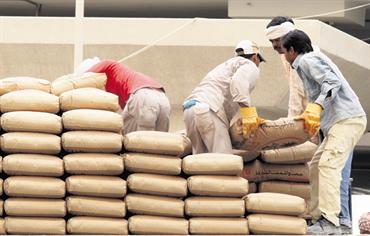
Saudi Arabia yesterday said it would continue with the ban on export of cement until producers agree to the demands and conditions set by the Ministry of Commerce. However, permission to export could be granted to only those companies accepting the conditions. Reacting to reports about an imminent end to a one-year ban on cement exports, Khaled Al Suleiman, the Undersecretary for Industrial Affairs at the Ministry of Commerce, said the 13 main cement manufacturers would be required to meet certain conditions and added these measures were necessary to ensure sufficient supply and price stability in the domestic market. "Exports of cement and steel will not resume before the manufacturers comply with the rules and meet the conditions set by the Ministry of Commerce. However, we are considering requests by three cement plants to export after meeting the ministry's conditions and terms… Actually the ministry has not totally banned export of cement and steel as has been rumored. What it has done was a reorganisation of its market as these are very important items," he said. Saudi, the largest cement and steel producer in the region, introduced restrictions on cement and steel exports in mid-2008 following a surge in prices resulting from supply bottlenecks. Speaking at a seminar in Dammam, Suleiman said cement product costs in Saudi are now nearly 30 per cent lower than the world average, adding the ministry had decided to enforce curbs on exports after discovering violations by some producers in the past two years. He said such violations had resulted in "a supply shortage and imbalance in market." One of the key conditions set by the ministry for cement exports include provision by manufacturers of what he called "information on supply chain" and other data on production and capacity. "We have also asked them to develop distribution networks, use quicker and less expensive railways to transport products, provide regular reports on pricing and ensure local market is well supplied," he said. "Cement manufacturers in the Kingdom should negotiate with the ministry on all those aspects before they are granted an export permission. We will study any request by each factory wishing to export separately and within a package of conditions and terms. As for reports that we have set SR10 fee per each exported cement bag, they are not true." Suleiman said the government would not interfere in setting cement prices and would leave prices to be determined by the market. "All we want is some transparency. We will only intervene in preventing separate price agreements, division of the market and random increases in profit margins." Independent estimates showed cement sales in Saudi stood at around 23.0 million tonnes during the first nine months of 2008, accounting for nearly 90 per cent of the total domestic production. Sales were projected to grow by around 13.7 per cent to 30.5 million tonnes for the entire 2008. The Kingdom's domestic consumption of cement is forecast to reach 37m tonnes by 2010. Keep up with the latest business news from the region with the Emirates Business 24|7 daily newsletter. To subscribe to the newsletter, please click here .