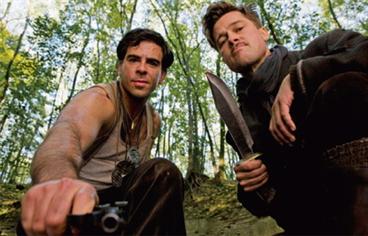
Quentin Tarantino's Pulp Fiction swept away the Palme d'Or in 1994's Festival de Cannes. His World War II action movie Inglourious Basterds did not even make a ripple there earlier this year. The film is by no means terrible, but those things we think of as being Tarantino-esque, the long stretches of wickedly funny dialogue, the humour in the violence and outsized characters strutting across the screen, are missing. The film gets its title but little else from Enzo Castellari's 1978 Second World War film. In Tarantino's version, a group of Jewish-American soldiers under the command of Brad Pitt's Aldo Raine terrorise Nazi soldiers in Occupied France, performing acts of savagery and corpse mutilations. How close they come to war crimes is unclear as Tarantino shows little more than a few scalpings that earn Aldo the nickname "Apache" from the Germans and one execution by a baseball bat. As a matter of fact, for a war movie there is little action. People talk and soldiers scheme. Otherwise, the action comes in short bursts such as the machine-gunning of a hiding family through a farmhouse floorboards and a shootout in a bistro. Tarantino reportedly took a decade to finish the script, and it looks like he never licked the problems. The Basterds are formed in 1941, then suddenly it's 1944 and they have established their reputation. But only one scene gives the flavour of what they do to deserve it. Unlike Tarantino's previous films, Basterds does not build to a climax through a series of ingenuous episodes, but rolls the dice on one major operation. The head of Germany's film business, Joseph Goebbels, is holding a premiere of a movie celebrating the exploits of the army's finest sharpshooter, Fredrick Zoller (Daniel Bruhl), in Paris. All the top Nazi brass will be in attendance, including Hitler. A British lieutenant (Michael Fassbender) parachutes behind enemy lines to organise the Basterds to blow up the cinema. Unbeknown to the Allies, however, cinema owner, Shosanna (Melanie Laurent), a Jew seeking revenge for the execution of her family, has the same general idea, only she wants to set the theatre on fire. Best of all, the head of security for the event is the villainous Nazi Colonel Hans Landa (Christoph Waltz), who killed her family. The manoeuvreing by both groups – the Basterds and Shosanna and her lover-assistant Marcel (Jacky Ido), – takes up most of the movie. Then Tarantino rewrites the end of Second World War. There are moments of Tarantino tension in the farmhouse when Colonel Landa interrogates the French farmer hiding a family in the bistro, where an SS officer grows suspicious of a Basterd's German accent and at the premiere, where Landa uncovers one of the plots. Otherwise the film lacks juicy sequences where actors deliver lines loaded with subtext and characters drip menace with wit. Tarantino never finds a way to introduce his sense of pulp fiction. Diane Kruger's role as a German actress is unnecessary. Bruhl has a key role, but Til Schweiger is little more than an extra. On the other hand, Tarantino wastes time on a scene in England, where the British officer receives his orders, simply for the opportunity to get Mike Myers into makeup and prosthetics. Even Pitt, sporting an overdone Southern accent, and Laurent, the film's two leads, don't get a chance to explore their characters. Tarantino has been quoted as saying of Inglourious Basterds , "This ain't your daddy's Second World War movie." He's right, because in your daddy's war movies, men and women often did undergo interesting transformations. Inglourious Basterds Stars Brad Pitt and Melanie Laurent. Rated 18 Keep up with the latest business news from the region with the Emirates Business 24|7 daily newsletter. To subscribe to the newsletter, please click here .