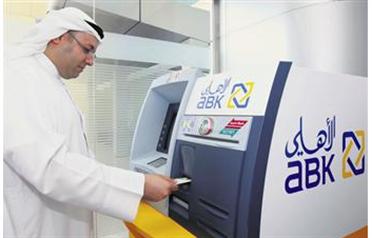
Kuwait's central bank will ask banks to undergo stress tests for the third time since the financial crisis began, its central bank governor said. Sheikh Salem Al Sabah said the central bank would ask local banks to conduct stress tests according to methodology he will determine. The governor said he is "more comfortable" with the economic situation in general than he was in the fourth quarter of last year. "I have no concern for the financial system in the presence of the financial stability decree law," Sheikh Salem told Al Rai newspaper. Local banks received in April requests from clients worth 620 million Kuwaiti dinars ($2.1 billion) he said, according to the paper. In October, the Opec member, which has been hit hard by the financial crisis, had to step in to save Gulf Bank, the only major bank in the Gulf Arab region requiring a government bailout, while several major Kuwaiti investment firms are struggling to meet debt requirements. Sheikh Salem said Kuwait's financial sector is more stable than in the fourth quarter but it is too early to say whether it has totally overcome the impact of a global crisis. Latest data on liquidity levels and earnings released by local banks are among indicators showing that the global financial crisis is now biting less, Sheikh Salem said. "It might be premature at the current time to assert that the local banking and financial sectors have totally overcame the aftermath... of the global financial and economic crisis," Sheikh Salem said. "Despite that, I can say that the situation of the banking and financial sectors might be currently closer to stability than... at the start of the fourth quarter of last year." In March, Kuwait's cabinet approved a $5.2bn economic stimulus package to enable banks to lend about 4bn dinars within two years of which the government would guarantee up to 50 per cent to encourage lending. "We are now in a much better position... especially that the financial stability law and its tools gave us more relief and comfort," Sheikh Salem said. "I confirm that for the time being I am more comfortable compared with the fourth quarter of last year." No investment firm has applied to benefit from the package yet, he added. "Some important local investment firms are still facing tough challenges to restructure...," Sheikh Salem said, without elaborating. Global Investment House, the country's biggest investment bank, has defaulted on most of its debt. Investment Dar, Kuwait's biggest investment firm complying with Islamic law, has said it is in talks with creditors for a revamp and may sell assets. Kuwaiti central bank yesterday said the Gulf state's oil revenue surged 44 per cent in 2008 to 22.67bn dinars ($77.74bn) as energy prices soared, accounting for 94 per cent of the Opec producer's total state revenue, central bank data showed. Kuwait's oil revenue rose from 15.75bn dinars in 2007 after crude prices rallied to a peak of almost $150 a barrel last July, according to data posted on the central bank's website in a quarterly bulletin. Total public expenditure by the world's fourth-largest oil exporter grew 34.9 per cent last year to 11.13bn dinars, including 921.3m dinars of investments in development projects, the central bank said. States across the world's biggest oil-exporting region accumulated massive surpluses as oil prices rose in recent years. But crude prices slumped to the mid-$30 a barrel range earlier this year, drastically cutting potential Gulf state revenues for this year and prompting most of the states to pursue deficit spending to support their economies through a global downturn. Keep up with the latest business news from the region with the Emirates Business 24|7 daily newsletter. To subscribe to the newsletter, please click here .