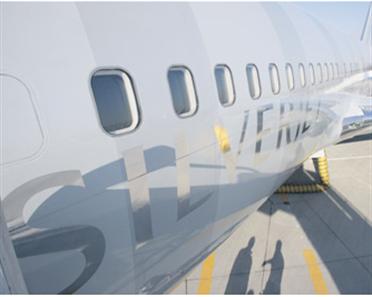
Single-class carriers have become a dying breed and analysts expect the world's last two survivors in this aviation segment to go the way of Eos Airlines and MAXjet Airways. The last four months saw two of the three start-up all-business class carriers go out of business. Two American all-business class carriers – Eos and MAXjet – folded, succumbing to escalating oil prices. Eos filed for bankruptcy on April 26 and MAXjet ceased operations on December 24, leaving jets on tarmacs and passengers stranded. That leaves Silverjet, the only remaining contender in the segment – besides French carrier L'Avion, which offers a premium-only service on trans-Atlantic routes – furiously flapping their wings to remain aloft. But for how long? "I believe Silverjet's time is limited, irrespective of current fuel issues. The all-business class airline will shut down. It does not have anything any sane airline or investor would want. All-business class is and always has been a dumb idea," Scott Hamilton, a Seattle-based aviation analyst with Leeham Company, told Emirates Business . The UK-based loss-making business class-only carrier, Silverjet, said on Wednesday it had secured $100 million (Dh367m) in investment from a UAE-based mystery investor in order to keep its planes flying. As part of the deal, the London Stock Exchange-listed airline will obtain $25m through debt and equity from the UAE investor, in return for a 28 per cent stake. A signed agreement includes "intent" by the unidentified investor to provide a further $75m. The carrier has had 86 per cent of its value erased by high fuel prices besides half-full planes. Future looks hazy Airlines have been struggling to control costs amid record oil prices. While South Africa's Nationwide Airlines halted operations on Wednesday owing to increasing fuel costs and flight suspensions, Eos, which flew between London and New York, last month became the fifth US carrier to file for bankruptcy protection since March 20. Clearly, escalating fuel prices and a deteriorating credit market are responsible for spelling doom for not just the all-business class airlines but for most loss-making carriers across the world. "Niche airlines cannot survive without serious capital injections, as is planned for Silverjet. Or they must be able to stay in their niche with no competition, like Paris-based L'Avion. Or they must have a huge customer base like Private Air has with Lufthansa. Without somebody to help cover the risk, they are doomed," said Addison Schonland, aviation consultant with California's Innovation Analysis Group (IAG). Echoing his view is Tim Coombs of Aviation Economics, which provides economic, financial, strategic and organisational consultancy services to the world's major aviation companies. "The future of Silverjet hangs in the balance of being able to raise more equity. In order to survive, the carrier requires a fairly urgent injection of equity," said the United Kingdom-based analyst. "The two carriers that have shut shop did so because they failed to make any profits. The single-class model has, therefore, not been able to provide any returns for shareholders. We will see a great deal of reluctance in setting up this kind of model in the future," he said. Survival strategy Silverjet, which started operations to Dubai in mid-November last year, said in January this year it is looking to create a Dubai franchise to serve markets in India, China and South Africa. It is also looking at potential new routes to the West Coast of the US, South Africa or India, according to its Chief Executive, Lawrence Hunt. "We are not profitable yet, but we are not far away. This cash injection really is to fund our expansion plans both in the UK and potentially in other territories," Hunt was quoted as saying by Bloomberg. In its statement, however, Silverjet said fuel price rises and tightening credit markets meant its working capital had deteriorated and the investment was urgently required to secure its future. "If the deal falls through, the airline will have to urgently secure alternative funding as its reserves are limited," it said. Virgin Atlantic, meanwhile, said on Thursday it is planning to scrap its premium services such as massages and facials it was so far offering to its upper class passengers. The UK carrier controlled by billionaire Sir Richard Branson said it will scrap its in-flight manicures and massages offered to premium passengers in favour of more beauty services at its lounges. A US-based domestic carrier, Midwest Airlines, on the other hand, has finally moved to a two-class model. "This is something Midwest should have done years ago," said Hamilton. The final landing Launched in 2005, MAXjet offered flights between the UK, New York, Las Vegas and Los Angeles but ultimately could not compete with airlines with deeper pockets such as British Airways and Lufthansa. Eos's main problem, on the other hand, was cash to keep it going. The privately held airline