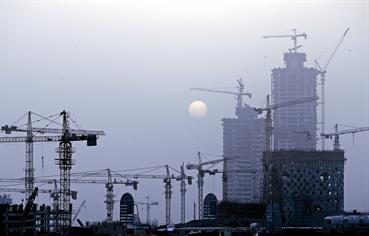
Mid-range core and shell residential construction prices dropped to as little as Dh350 per sq ft in 2009, according to an industry survey by Emirates Business . Moreover, margins have dropped by three-five per cent in the industry. A senior official said that it was a "strategic drop" based on the need for the contractor to feature it in his project portfolio and not just dictated by a drop in the prices of building materials. Four leading UAE contractors for the first time released price ranges for building types though on condition of anonymity (see average ranges based on building type and category). Building material prices are expected to remain stable in 2010, they said. The contractors emphasised these figures were solely related to shell and core construction costs (see pie-chart for percentage break-up of other construction costs for sub and super structure) and that additional costs within the project could add up to the final tendered prices based on whether the project was in the luxury category, high-, mid- or low-end range. Overall, construction prices per sq ft have dropped by 40 per cent, they agreed. Meanwhile, shell and core construction prices for office buildings dropped by 53 per cent per sq ft to Dh270 in 2009 from Dh580 per sq ft in 2008, hotels dropped by 31 per cent to Dh550 per sq ft in 2009 from Dh800 per sq ft in 2008 and malls by 37 per cent to Dh375 per sq ft in 2009 from Dh600 per sq ft in 2008. Arabtec Construction does not distinguish between areas when it comes to pricing, said its CEO Thomas Barry. "Our costs only increase when it is a high density area due to the difficulties in logistics such as finding lay down areas and so on," he said. "Again interior finishes affect the costs and we have built for lower and higher. There has been a drop in costs due to the reduction in price of reinforcement and concrete, which constitute 16 to 28 per cent of the value of the project," said Barry. "The shell and core construction costs include basements and car parks. When it comes to hospitals, things change. A maternity hospital design will have different specifications from say, a cardiac centre and hence costs can increase. Landscaping also changes costs." However, Saleh Muradweij, Executive Director at GTCC said that residential construction prices could stay high in prestigious locations. "Hotels could go higher depending on the fitouts. I know of a project where it went up to Dh10,000 due to the brand name. Also, universities costs could skyrocket depending on the specifications within a project, such as high-tech labs." Construction prices overall have decreased to 40 per cent from 2008 peak time due to various factors, according to Yousuf H Sharaf, Managing Director and board member of Sharaf Industries. "Overall manpower cost reduced by 10 per cent to 20 per cent in 2009 mainly due to change in cost of living and reduction in accommodation charges. The cost of labour accommodation reduced between 60 and 65 per cent," said Sharaf. "Cement and ready mix concrete price reduced by 25 per cent in 2009 compared to 2008 figures. Steel (rebar) cost reduced by 65 per cent in 2009 compares to peak rates in 2009. "Meanwhile, diesel prices have halved in 2009 compared to prices in 2008. The reduction in diesel prices had a great impact in reducing the prices of other associated supporting industries likes tiles, blocks, aluminium and cladding works," he said. Hassan Auji, General Manager, ACC Dubai, said: "There are no major differences in construction prices between Abu Dhabi and Dubai. On an average, prices have moved down between 25 and 30 per cent. "At one time, the prices of reinforcement shot up to Dh6,000 per tonne in 2008. Today, it stands around Dh2,000, which is almost one third. So this has an impact on the project costs. This year, the competition is stiffer due to supply and demand inequalities and developers and end users will benefit from this situation." He said this will lead to contractors reducing profit margins by several per cent to cope with the market. "Margins have dropped between three to five per cent. But this is what is called a strategic drop. "Today, price is not the only governing factor. It has also to do with how much you need the job within your project portfolio. Definitely, I will reduce my margin if I work for an iconic project so that I can get this in our reference and experience curve. "On the other hand, if you give me an ordinary building, I will try to be competitive but will not drop my margins too low since we need to make money in order to keep going for the future" he said. "Costs will also vary depending upon the architectural styles and whether it is a complex building design." If prices drop further in 2010, Auji said, it will lead to a grim scenario. "You cannot make money to survive in future and I hope that we do not need to drop it further than we have today," he said. Barry recently told this newspaper he saw contractors and sub-c