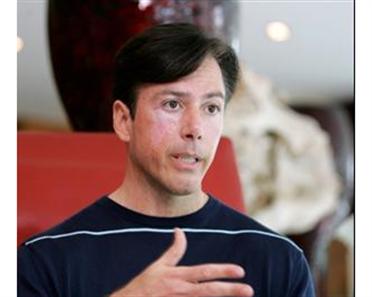
Amid the current climate of supply-side oil disruptions, Taqa Chief Executive Peter Barker-Homek said the price of fuel could reach $150 this year, with oil consumption showing no sign of slowing down. As demand for oil increases by more than half in 2015, the current commodity price pinch is set to continue for at least another two years as the world adapts to new forms of energy efficiency, he said. Changing the world's consumption habits and not waiting for oil prices to fall is the solution to the current food price crisis, said Barker-Homek. In light of record oil prices in recent weeks, where are the pressure points in the global economy? The world is at a perilously tight moment in the history of oil production. And that has mainly to do with the unexpected acceleration of the economies of the Gulf countries, North Africa, India and China. If you look at that population group as a whole, you come up with close to three billion people who are suddenly moving from emerging market status to developed world category. Today we are consuming about 88 million barrels of oil a day, by 2015 we could be consuming 130 million barrels a day. A good percentage of that is wasted on transportation. You then couple global demand growth with political unrest, for example strikes in Nigeria and the United Kingdom and other flash points around the world leading to political instability or potential military action. There is certainly an element of speculation in the oil price today and also an anxiety factor. Add all that to the economies that are emerging and you have to ask do they have "strategic petroleum" reserves. With the kind of development China and India are witnessing, not having strategic petroleum reserves could be a problem. Given all this, it is hard to see a world where oil prices would go back below $100 per barrel on a sustained basis. If you look at some of the disruptions that could manifest this year, we have indicated that $80 to $120 is right. If any of the disruptions – such as Nigeria and Forties strike or others of this nature – are prolonged, then you could see oil go up to $150. (BP had to shut down its United Kingdom North Sea Forties pipeline because of a strike at the Grangemouth refinery in Scotland). What is the next phase in the oil story? If the next decade is about anything then it is probably about efficiency. How do you take a global economy that is habitual in using energy one way into using renewables, recycling and conserving. High-priced oil and gas will drive the planet to look at alternative ways to construct buildings and how cities are laid out so that traffic can flow smoothly in and out. Plus, we will also have to change the number of petroleum grades countries are using. In the United States, every state has a bespoke specification for petrol, which creates a lot of inefficiency in how refineries and pipelines are run. The next 10 years are about efficiency that will create greater diversity in how primary energy is supplied, whether it is renewable, nuclear, coal, gas or hydro. How is Taqa responding to the sustained high price of oil? Taqa is a new player in the energy world; we are trying to create a global energy brand. Our guiding philosophy is that reliable, feed stock energy is what the world needs. So in our upstream business we re-invest and replace reserves to maintain production and on our side of our business we build power plants that meet and exceed world health organisation standards and also provide reliable and as clean as possible power to the cities we operate in. We provide more than 85 per cent of water and power needs of Abu Dhabi and its nearby areas. We provide more than 60 per cent of power the needs of Morocco and 80 per cent of Ghana. And we are building one of the world's largest gas storage fields in continental Europe to serve the continent and the UK. What impact does the current disruptions to the UK pipelines have on Taqa? One of the issues that UK workers are striking about is wages and safety, which is something we address everyday. The UK wants operators in the North Sea to have good relationships with labourers. We have got excellent relationships with our unions in the UK and in the Netherlands and worldwide. I would like to think that is because we respect workers' rights. The impact it has is something I have already communicated to our 3,300 employees worldwide. There is no separation between management and workers: we are all workers. We are all working towards one common goal, which is to provide reliable energy and excellent livelihood to workers. What do you think are the negative sides to high oil prices? There are always hurdles when prices rise, especially when high oil prices put pressure on other areas. The increase in food prices is one example, specifically price of crop seed and fertiliser costs. Thirty-three per cent of the planet lives in abject poverty, which is 1.9 billion people. Thirty-three nations today are