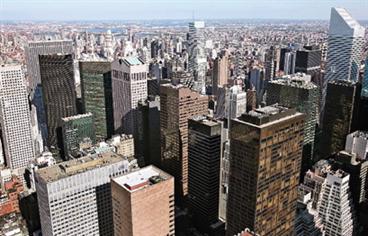
Asian property investors, including sovereign wealth funds with large war chests, are on a shopping spree for choice office buildings in global capitals, striking while there are bargains to be had. They have set their sights on property in central business districts or prime retail streets in London, New York and Sydney, as real estate prices in parts of Asia, including China and Singapore, rebound to close to pre-crisis levels. "Given the recent price corrections in British and American markets, Savills has seen a sharp increase in interest from North East Asian investors, with many seeing this as a historically unique opportunity to get into these markets at attractive prices," said Mark Vink, a senior analyst with the property consultant. South Korea's National Pension Service (NPS), managing $200 billion (Dh734.4bn) in assets, wants to invest up to $3bn in real estate assets this year in London as well as New York, Tokyo and Sydney, said Rockspring Property Investment Managers, which is working on behalf of the pension fund. China Investment Corporation (CIC) and Qatar Holding agreed in August to take a stake in Songbird Estates, the majority owner of London's Canary Wharf financial hub. In June, AIG agreed to sell two downtown Manhattan buildings, including its headquarters, to a consortium led by South Korea's Kumho Investment Bank. Lancer Square, an 80,000sq ft property with offices and retail space in London's upmarket West End, was bought by a privately funded Malaysian group, Belworth. The property sold for £40 million (Dh242.2m), said Edward Fairweather, a partner at property services firm Knight Frank. Asian buyers want Grade A office buildings in London's City financial district and the West End, as well as commercial buildings in midtown and downtown Manhattan, industry analysts said. Sung Heun-do, head of real estate at Woori Investment and Securities in Singapore, said Asian institutional investors tend to expect annual returns of eight to 10 per cent from overseas property deals, apart from any possible capital gains. "With property yields in places such as Hong Kong and Singapore relatively low, investors have spotted a chance to make double-digit returns and harness good capital growth from UK real estate over the next two years or so," said Shaun Gorvin, an investment director at BNP Paribas Real Estate in London. Prices of office buildings in London and Manhattan were down 14 per cent and 18 per cent, respectively, in January-June, according to data from Investment Property Databank. Average capital value in Sydney's commercial building district had fallen 22 per cent as of June from a year ago. Britain attracted $13.7bn in commercial property investment in January-June, while the US drew $16.2bn, said New York-based real estate market research firm Real Capital Analytics. The UK and the US alone accounted for around a quarter of the $116bn invested in global real estate in the first half of this year. Banks are also slowly resuming lending to property buyers, albeit at lower loan-to-value levels than about two years ago. Frank-Rainer Vaessen, President of Singapore-based property investor Pacific Star, said the gearing of real estate deals was down to 40 to 50 per cent from 60 per cent or above before the global credit crisis. Recovering property yields in some global capitals are also a plus point for investors. Prime commercial property yields in London narrowed to as low as four per cent at the market peak, before the boom turned to bust in June 2007, a full percentage point below what 10-year government bonds were yielding at the time. But with the shortage of stock and more demand, yields have recently moved up and are to close to seven per cent now. Market yields in Grade A office buildings in Sydney were an average 7.25 per cent in April to June, down 125 basis points from a year earlier, according to Savills, but remain comparatively low as sellers resist fire sales. The buying spree is not all a bed of roses. There are worries about whether it is the right time to buy property as the office vacancy rate and rents in major financial cities have been in a downward spiral since last year. Doubt also remains about the management capability of Asian buyers. Savills' Vink said a number of Asian investors have formed partnerships with domestic players to leverage off local expertise from the partners. "It is important that cross-border investors follow local customs and market practices when managing buildings outside their country of origin," said Darren Krakowiak, a director of Jones Lang LaSalle in Seoul. "Korea has an unusually high instance of internal management of real estate portfolios by landlords, as opposed to outsourcing, which may not be the optimal approach in most markets overseas." Keep up with the latest business news from the region with the Emirates Business 24|7 daily newsletter. To subscribe to the newsletter, please click here .