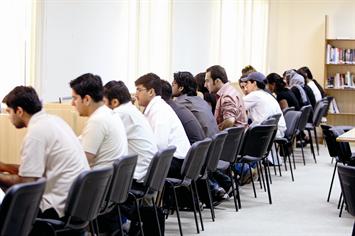
Youth in the Middle East may face a new job crisis that will damage their future prospects, according to a new report by the Middle East Youth Initiative, a joint project of the Wolfensohn Center for Development at Brookings and the Dubai School of Government. The report, entitled Missed by the Boom, Hurt by the Bust: Making Markets Work for Young People in the Middle East, is the first of its kind to assess the early risks faced by young people in the Middle East during the global economic downturn, calling on policymakers to safeguard the welfare of youth in the region with 10 specific policy recommendations. It outlines three major challenges confronting Middle Eastern economies. First, the recent period of high growth and the oil boom did not sufficiently resolve the region's education and employment problems, and countries are entering the slowdown with large pre-existing hurdles to overcome. Nearly 25 per cent of young people between the ages of 15 and 24 remain unemployed, compared to a world average of 14 per cent. In Jordan, 15- to 29-year-olds make up a staggering 73 per cent of the unemployed, and most new jobs have gone to migrant and older workers. Similarly in Egypt, despite high growth, young people face deteriorating job quality: more than 70 per cent of first-time job entrants finding jobs in the informal sector. A weakened global economy only threatens to push even more young workers into unemployment and low-quality jobs. James D Wolfensohn, former president of the World Bank and founder of the Wolfensohn Center for Development at Brookings, said: "The Middle East is facing a new economic reality, and young people risk bearing the brunt of this downturn. When societies fail to create hope and prosperity for their young, they place their future development in jeopardy. As leaders gather at the World Economic Forum on the Middle East, improving the welfare of young people and long-term human capital development should be placed at the top of the agenda." Second, the global economic slowdown is hitting the Middle East at a time when the youth share of the total population is at a historic high, with nearly 32 per cent of the population between the ages of 15 and 29. This means that a large number of new job seekers will continue to exert unprecedented pressure on the region's labour markets for years to come. Even before the economic crisis, high rates of youth joblessness were costing Egypt, Jordan, Lebanon, Qatar and Syria about $31.2 billion (Dh114.53bn), nearly seven per cent of annual gross domestic product. Without concerted action, these welfare losses could increase, contributing to declining living standards and heightened frustration among young people and their families. Navtej Dhillon, Director of the Middle East Youth Initiative and fellow at the Wolfensohn Center, said: "These are testing times for reformers in the Middle East. Economic discontent will shape political realities and public opinion across the region. The international community should ensure that reform efforts are not stalled by demonstrating its commitment to a strong regional development agenda." Thirdly, the report warns that current global economic insecurity may tempt governments in the region to increase public sector employment and job protection policies while delaying progress toward greater global integration. Such policies are expected to be counterproductive and harm young people. The path to economic recovery will require cultivating a skilled workforce, expanding the role of the private sector, and reducing the appeal of government employment. Tarik Yousef, Dean of the Dubai School of Government and nonresident senior fellow at the Wolfensohn Center, said: "For the Middle East, the drop in GDP growth comes at an exceptionally bad time, as millions of young people are entering the labour market. The scale of this challenge can only be addressed by countries forging greater cooperation on youth policies. This means greater investments in young people from the private sector, government, and civil society." The report presents 10 policy recommendations. Countries in the Middle East committing to fiscal stimulus should prioritise job creation for young people. Governments should engage in an open and transparent dialogue on the economic crisis with citizens, the private sector, and civil society. Additional recommendations include reforming public sector hiring practices and raising the value of informal jobs. Keep up with the latest business news from the region with the Emirates Business 24|7 daily newsletter. To subscribe to the newsletter, please click here .