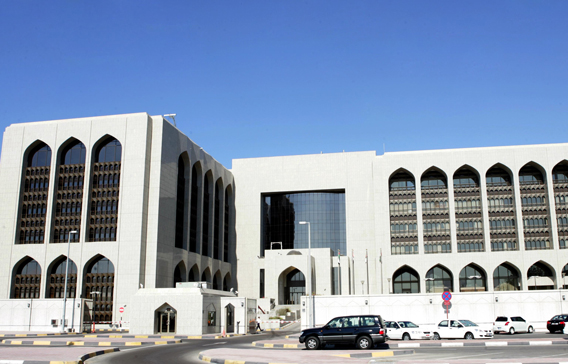
While hot money in the post-crisis era could prove to be dangerous for the pan-Arab economy, it is important to boost the flow of inter-Arab investments, said speakers yesterday at a two-day conference organised by the Arab Monetary Fund (AMF) in co-operation with the World Bank. UAE Central Bank Governor Sultan bin Nasser Al Suwaidi said at the opening session that speculative money rushing in and out the country could have a negative impact on local Arab economies. Al Suwaidi stressed on the need to supervise foreign investments coming into the Arab countries. They should be organised and made useful as long-term investment, he said. Al Suwaidi also highlighted the steps taken by the UAE Government to electronically transfer workers' salaries under the Wage Protection System. Director-General and Chairman of the AMF Board Jassim Al Mannai said the recent crisis has highlighted the urgent need to strengthen Arab financial mergers and to boost the flow of inter-Arab investments. Arab economies are today more dependent on such flows to finance development projects, he said. "Such flows to Arab countries considerably grew in the pre-crisis years. They went up from less than $20 billion (Dh73.46bn) a year – or some three per cent of the GDP of Arab countries in 2000 – to some $230bn, or around 15 per cent of the GDP in 2007," he said. In 2009, said Al Mannai, the flow volume was almost half of that in 2007. The Arab stock exchanges lost some $600bn by mid-2009 in one year, or half of their total market value, he said. Mansoor Dailame, Manager, Development Prospects Group, World Bank, said he expected the Middle East economies to achieve an average growth of four per cent this year and 4.3 per cent in 2011, against six per cent in developing countries and some 2.5 per cent in advanced economies. Dailame said the US dollar is benefiting from the financial turbulences in international economies, but the future of the currency might be risked in the long term because of the volume of debt in the UAE economy. AMF Fund Advisor Hazem Elbeblawi said the volume of inter-Arab flows dipped last year because of the drop in Arab labour remittances and in the levels of tourism growth. Nasser Saidi, Chief Economist at the Dubai International Financial Centre, said the Gulf and Arab countries currently witness large financial flows from China and several other Asian countries. Asian investments are the future for the Arab World after the trouble in European markets, he said, pointing out that Europe is now the second or third trading partner for many countries. "Undoubtedly, financial flows to Arab countries retreated in 2009 but there is a considerable improvement in flows, especially from Asia over the past short period," said Saidi. The UAE, he said, is capable of achieving economic growth this year at a rate of four per cent to 4.5 per cent and attributed this to trade with China and India, rise in oil price and stability of the economy. One of the lessons of the global crisis, he said, is to speed up the linkage of financial markets inside the UAE and link them to the wider Gulf market, too. Union of Arab Banks Secretary-General Dr Fouad Shaker told Emirates Business that UAE banks are the most stable in the region and have seen the most increase in capital adequacy. Most of the banks achieved some 15 per cent capital adequacy ratio, which might reach 20 per cent – a big percentage compared with Basel II requirements, he said. Bad debts, said Shaker, are not a real problem for the UAE or other Arab banks. Since 1986, when they set special criteria for such debt, the UAE and Gulf countries have been the best in the world when it comes to handling bad debt, he added. Shaker said Arab banks had been afraid of giving loans since the outbreak of the global crisis, but the "fear has clearly receded now and banks [have] entered the confidence phase and [are ready] to finance Arab economic sectors once again".