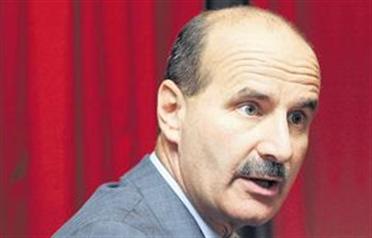
During the four years José María Figueres held the office of President of Costa Rica, his interaction with the Middle East was minimal. His foreign policy focused mainly on stronger alignment with Central America, and he had never visited this region. So when he says: "There are two regions of the world that are dear to my heart – Latin America and the Middle East", it sound somewhat, and wrongly, disingenuous. The Middle East? "Yes. I love this region. A year after my presidency, in 1999, Kofi Annan, then secretary general of the United Nations, asked me to chair a UN group on Information, Communications and Technology," he said. "At the time, Talala Abu Ghazaleh was my vice-chairman and he brought me to this region. Since then I average six to eight visits a year and am actively involved with different groups and organisations here," Figueres told Emirates Business. Among these are Abraaj Capital, Dubai Recycling Park, and the Arab Society for Intellectual Property. "I find this region one with tremendous potential but one that is also often misunderstood by the rest of the world," he said. "In my coming here, I always find that there are additional opportunities that can be leveraged in the region. This region is known the world over as a strategic exporter of oil. I see a tremendous opportunity for this part of the world to become an exporter of energy and energy technology which is much more than just oil," he said. For a decade, Figueres has championed a link between technology and sustainable development. It is an emerging necessity and one that offers lucrative business opportunities for those already in the race. A race he wants the Middle East to lead. "Imagine a Middle East where we would put together the most cutting-edge technologies in solar technology because of all the sun we have. Where we can put together programmes that make desalination plants much more efficient because we have them and operate them and the world is going to need much more desalination in the future," said Figueres. "Imagine a region where we become an example of adequate waste management and re-conversion of much of that into energy. Imagine, furthermore, a region that in the context of climate change – which will take humanity to reinvent the way we live, transport ourselves, work, interrelate – we redefine the way society lives in the future. "I'm referring to Masdar [a planned environmental-friendly city in Abu Dhabi, an initiative by the Government of Abu Dhabi through Mubadala Development Company]. There's a tremendous opportunity there to learn about becoming a society with zero emissions, extrapolating that and exporting the Masdar experience. "So what I would love to see in the future is that the Middle East has gone from exporting oil to investing wisely in its resources, into different types of energy and energy technologies and takes the lessons it has learnt at Masdar, which is unique to the world as nothing of its kind exists, and is exporting that to different parts of the world so that we can also have other cities and societies that become carbon neutral. Can all this be done? Absolutely." Speaking as Dubai's business elite trickle into the Capital Club ahead of his keynote address, Figueres lets his passion fill the room. He's animated now and nothing will throw him off. Not the curious stares, not the camera flashes and certainly not the fidgeting band waiting for us to finish our conversation. "While I was in office I had very few interactions with the Middle East," he said. "But today I'm doing all I can to bring the two regions together. "There's so much we can do in terms of tourism, co-investments, transfer of technologies, even in terms of resources. I would love to have 48 hours a day to concentrate on that and my other commitments," he said. Of the local effects of the global crises, Figueres said the UAE would come out stronger, better and faster and that the crisis had helped bring the region together. "There was a lot of internal competition in the past," he said. "Now we are thinking of ourselves as whole, which is a very important development. It is like Costa Rica not focusing only on itself but also becoming a part of Central America. In this way you are stronger, more agile and have more resources to leverage. "This region continues to have very strong capital inflows and if we learnt some lessons in this crisis, which I believe we have, towards the future we will be much more discriminating with respect to what gets financed. "The abundance of capital was allowing for everything to get financed and not everything was positive. So now we're going to be much more careful and more strategic," he said. Now based in Spain, where he is the CEO of the social investment initiative Concordia 21, Figueres wastes little time in introducing this unique programme. "At Concordia, we use parameters for investment that will be used in the private sector, in the business world but we're not necessari