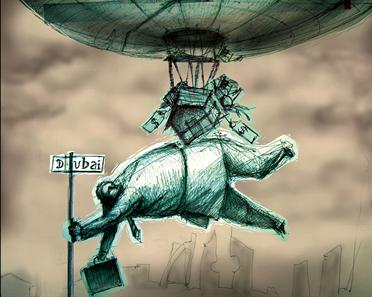
Living the dream has always been one of the draws of coming to the UAE – the weather, the lifestyle, saving money for the future and the expatriate way of life. But with soaring rent prices and bloated food costs it is fair to say fear of the cost of living is sweeping across the population. Not a day goes by without a report underlining the threat faced by an impending inflationary crisis in the UAE, and the menace is gathering momentum across the GCC. The issue is, and should be, at the forefront of the minds of expats settled in the UAE or for those considering the move. "I believe there is acute awareness of this issue. Look around you: everybody is talking about inflation. It seems that even expats in the higher-income brackets are feeling the pinch. Some are finding it difficult to sustain their lifestyle. We are definitely seeing the effects of a purchasing-power crunch," said Amer Halawi, director at The National Investor. "What is also certainly true is that the salary premium an expat would historically earn for enduring the local hardship is melting fast, as fast as the UAE is developing into an increasingly attractive destination." The threat of escalating inflation has been well documented. The UAE government's latest figures found inflation surged to a 19-year high of 9.3 per cent in 2006, and a recent Reuters' poll said 2008 would see a peak of 11.8 per cent. In Kuwait and Saudi Arabia this figure is also close to 10 per cent, while only Bahrain has a more modest inflation rate of about five per cent, Fitch Ratings said this week. "GCC inflation is at its highest in more than 30 years," the firm's report said. All this means that foreigners in the UAE are feeling the bite in their wallet when it comes to things like rent, food and fuel. Some are considering whether the drop in bang-for-your buck is really worth it anymore. Philippe Dauba-Pantanacce, senior economist for the Middle East and North Africa in Global Markets at Standard Chartered Bank, said: "It is obvious that if the inflation phenomenon continues the way it has been in the past year in the UAE, the loss of purchasing power that the expat community will incur will push them to reassess their decision to come here. In the region, inflation is the biggest macro economic risk, but for expats it has a major impact on the decision-making process for coming here." What to do then for the incumbent expat community and those about to settle here? Adam Hopewell, who works for the University of Abu Dhabi, made the jump last year and has experienced the full gamut of living costs that the UAE has to offer. He arrived from Boston, United States, nine months ago and was stationed in Ras Al Khaimah working for the Dubai Aerospace Enterprise. He had his rent and general living costs paid for. He then started work for the university as vice-president for commercial development at the Institute for Enterprise and Development and was not given as generous a corporate expense account. Living in Abu Dhabi, Hopewell said even with a vice-president's income he struggled to find affordable housing. So he now lives in Dubai Marina and suffers the daily commute. "I've lived in eight countries, and usually upon arriving one of my first thoughts would not be making a purchase of property. However, in an area that is as unstable in rent and inflation as this is, buying became one of the first things to think about. This is to protect myself against price rises in rent. I hear that rents have been locked down to seven per cent, but they make it up in other ways, such as charging Dh2,000 a month for a parking space. It seems safer to look into purchasing almost immediately," he said. Taking that first step on the property ladder is something every expat would love to achieve. But often it is not a realistic option. For those who can, the decision must be carefully considered, for just as property can provide a handy inflationary shield it has the potential to create major complications if inflation continues to sky-rocket unchecked. "If inflation is really a macro economic problem that is not well-addressed in the future it could produce an asset price bubble – which means the real estate market might correct in five years – then in the end you might not have protected yourself and could lose everything," said Dauba-Pantanacce. He emphasised that those renting can also be smart when it comes to inflation. "For an expat coming to the UAE, the first element of the inflation composite figure he will be subjected to is rent. If that person is going to start to look for an apartment in November but is only able to get one in January then already the prices will have jumped drastically. But for someone living here for a while, the problem is different because as a result of the rent caps you won't be subject to that inflation. If you've been in your apartment since last year, the maximum inflation that you could face is five per cent. So your personal inflation is