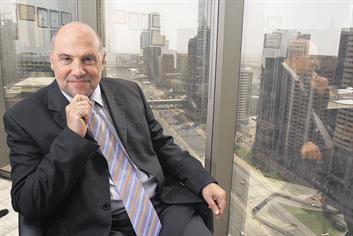
In time of different economic trends, issues, products, talents and services, which had been marginalised during a different economic period, are proving that they remain the driving force to keep the economy going at a steady and stable pace that would serve the majority segments of society. Fast moving consumer products are re-emerging on a wide range of advertising outlets. With companies better utilising their cost and spending, digital communication is picking up momentum. And there is more demand in the digital advertising area for original Arabic content rather than just translation. Whether in advertising or media or real estate, companies that are known for pursuing conservative and prudent policies in conducting their business will be the ones who will absorb economic shock in time of slowdown and can do it independently, said Ronald Rowes, Managing Director for the GCC, Memac Ogilvy, in an interview with Emirates Business. How do you define the economic period for advertising and communications sector? I prefer to call the current period as a different economic trend rather than a boom period or a slowdown. I cannot deny that these times are different from the way things had been in the past couple of years. The UAE officials have worked hard to put the country on the global stage and Dubai as an international city and these are potentials that could neither be ignored nor marginalised. What has been the change in trends over the past few months in the advertising and communication business? Firstly, fast moving consumer goods, such as personal care products, basic food items, electronic goods, are re-emerging as the major driving force in the advertising sector, whether advertisers, who had been focussing solely on real estate and finance sector over the past three years, like to or not. Secondly, the real estate sector has not been doing anything and to be honest I do not see much happening in the sector even on PR level. They have been so badly hit and their credibility so badly damaged that anything they say now, if they say it at all, will work against them. Real estate companies may do co-promotions with other companies in a more tactical approach just to find a way for someone to buy property rather than sell image. But this will be limited. Today, the real estate sector is suffering from two major issues: lack of credibility and liquidity. As an investor, I am not sure if the price will drop further so should I hold on or as an end user there is the problem of liquidity. The way gaps have been created in the society in the past couple of years with illogical rental and ownership rates have contributed to a negative impact, which was especially felt by advertising and public relations companies that focussed solely on this sector. What are the growth prospects for this year for those advertising companies that find themselves in the middle of the economic storm? Positive. I see a 40 per cent to 50 per cent growth in revenue in our PR operations due to our focus that has been diversified to large parts of the economy and due to the diversity in our use of technology and operations. For those companies that can face the storm, I see a 30 per cent growth in the PR sector in general. It would have been higher with the way things were going in the past couple of years due to the real estate and finance sectors. What rate of growth you expect in the advertising and communications business? For the advertising sector, I believe it will increase by 10 per cent to 15 per cent, which will be less than last year. But the mixture of driving forces will be totally different. Plus, we will see more project-based assignments rather than long-term retainer fee, where companies have a new product or service to launch and they want the sector's services for that particular purpose for a certain period of time at a fixed charge. Clients do not want to commit themselves for 12 months or 24 months. This should keep advertising companies busy and motivated even in these times. How do you evaluate the position of different media outlets in terms of getting their message out? Digital communications will grow at a faster pace in these times since it is a measurable cost and provides quick result. If you look at other mode of campaigns, they take longer time to get the concept. A brand cannot afford to be out of touch and contact with its customers and stakeholders. Companies are putting money behind PR to consolidate dialogues. So, the brand is not completely in the dark in terms of consumers or stakeholders. Brand assurances are received through a trusted third party. The PR carries the responsibility of informing senior management with a vision and evaluation to what is happening in any sector's activities. In the light of what is happening, they are expected to put their senior management in the picture. On the other hand, senior management staff should bear the responsibility and professionalism in getting to