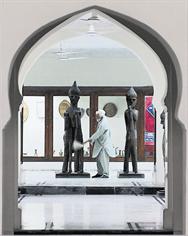
Archaeologists warn that the Taliban are destroying Pakistan's ancient Gandhara heritage and rich Buddhist legacy as pilgrimage and foreign research dry up in the country's northwest. "Militants are the enemies of culture," said Abdul Nasir Khan, curator of Taxila Museum, one Pakistan's premier archaeological collections. "It is very clear that if the situation carries on like this, it will destroy our culture and will destroy our cultural heritage." Taxila, about 20 kilometres south of Islamabad, is one of the nation's foremost archaeological attractions given its history as a centre of Buddhist learning from the 5th century BC to the second century. Violence is on the rise in Pakistan as Taliban gunmen and bombers strike with increasing frequency and intensity in the cities of the North West Frontier Province and around the capital Islamabad. "Even in Taxila, we don't feel safe. The local administration has warned us about a possible attack on this museum. We have taken some extra security precautions but they aren't sufficient and we lack funds," said Khan. In March 2001, Taliban militants in neighbouring Afghanistan blew up two 1,500-year-old Bamiyan Buddha statues in defiance of international appeals. The Islamist militia has since spread into Pakistan. Their opposition to music, art, dance, girls' education and idolatry makes archaeologists fear that Pakistani Buddhist relics are in the eye of the storm. Italian archaeologists were active in Pakistan's northwest Swat valley from 1956 until they reluctantly discontinued work in 2007 after Taliban fighters led by radical cleric Maulana Fazlullah rose up demanding sharia law. "It is not planned to carry on any research activity," said Luca Olivieri, co-director the Italian archaeological mission in Pakistan. After 17 years as curator in Swat, Khan took no risks. With the Taliban killing and bombing their way through the valley, the museum closed in 2008 and he evacuated the most priceless antiquities. That September, the Taliban twice tried to blow up 7th century Buddhist relics, damaging a site that had attracted pilgrims for centuries. Despite the summer offensive, which appears to have flushed out Taliban havens in Swat for now, Khan doubts life will soon return to normal. "I don't see any chance in the near future of re-opening the Swat museum." The situation is not much better further south. Peshawar, the troubled capital of northwest Pakistan known for its Buddhist heritage and archaeology, used to attract thousands of tourists but security fears and bomb attacks make it a no-go area for foreigners. Its museum is open, but one gate has been sealed and cement barricades outside the second allow only pedestrians to enter. Keep up with the latest business news from the region with the Emirates Business 24|7 daily newsletter. To subscribe to the newsletter, please click here .