Arab Editors: Digital transformation, credibility and sustainability will shape journalism’s future
Media leaders say success depends on adapting to digital platforms, protecting trust and building sustainable business models.
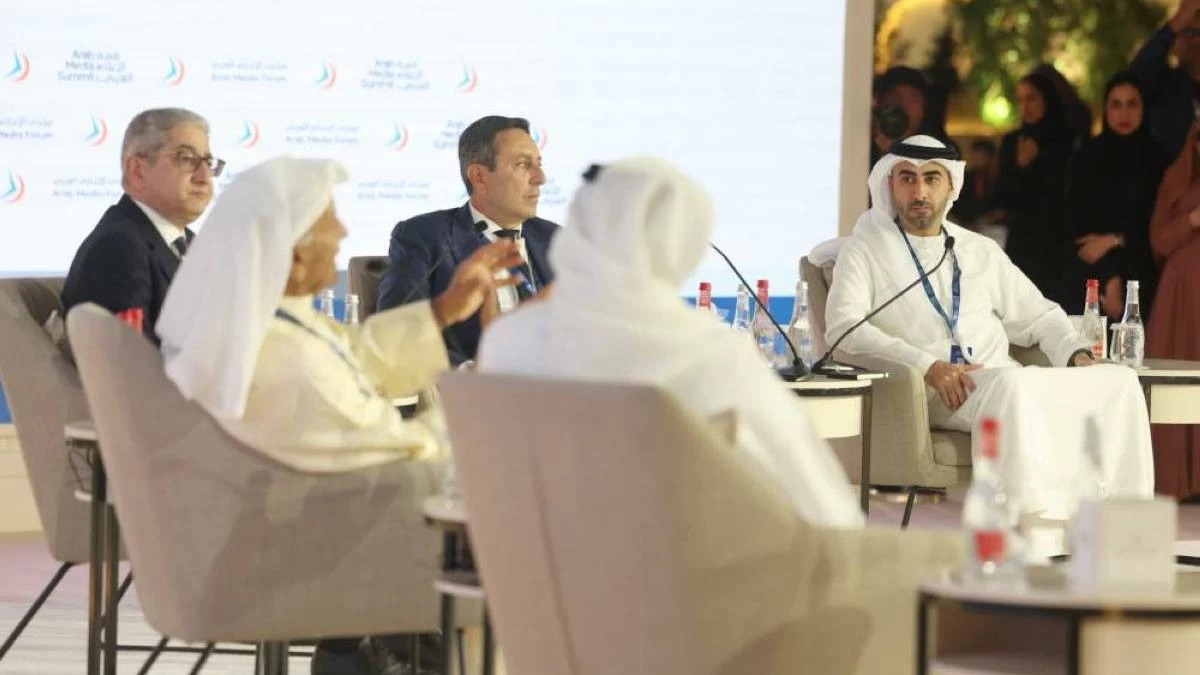
Editors of leading Arab newspapers said the future of journalism is no longer tied solely to print editions. Instead, it depends on the ability of media organisations to keep pace with digital transformation, develop content, maintain credibility and build sustainable financial models. They noted that these challenges come amid rapid changes in reading habits and advertising markets.
The views were shared during the session, "The Future of Arab Press as Seen by the Editors-in-Chief," held as part of the Arab Media Summit. The discussion was moderated by Ibrahim Shukrallah, Editor-in-Chief of Emirates Today. Participants included Hamed Bin Karam, Editor-in-Chief of Al Bayan; Waleed Al-Nusif, Editor-in-Chief of Kuwait's Al-Qabas; Majed Mounir, Editor-in-Chief of Egypt's Al-Ahram; and Raed Barqawi, Executive Editor-in-Chief of Al Khaleej.
Hamed Bin Karam, Editor-in-Chief of Al Bayan, said the future of journalism rests on three interconnected pillars: editorial excellence, technology and financial sustainability. He noted that the closure of a number of print newspapers in the region and around the world has made financial sustainability a core issue for media organisations. He added that major media institutions may require financial support from their boards or other entities while exploring new revenue models.
He said Gulf and Arab media organisations were relatively late in embracing technological transformation and capitalising on the opportunities offered by digital platforms and social media. This allowed institutions and individuals to capture a larger share of the advertising market, creating direct challenges for traditional newspapers. He stressed the need to redefine journalism so that journalists become influential regardless of whether they publish in print, on websites or through social media platforms.
The Al Bayan editor-in-chief said digital platforms provide more accurate data on audience interests, the most-read content and the time readers spend consuming material. These insights help media organisations tailor content to audience preferences, increase engagement and improve revenue opportunities. He noted that Al Bayan's digital platforms recorded more than one billion views from the start of the year to the end of last month, with an average reading time of two minutes and 40 seconds. He said such indicators provide stronger tools for engaging advertisers and demonstrating the value of digital content.
He said the closure of print newspapers across the region, including announcements ending print editions, reflects the scale of change facing the industry. He warned that failing to advance in digital publishing and audience engagement would reduce the influence of media organisations. He called for restructuring news organisations to align with the realities of the new media landscape. He noted that around 20% of Al Bayan's workforce is focused on digital operations, while about 80% remains dedicated to the print edition, which no longer generates the desired revenues. This, he said, requires redeploying human resources to areas that can create content and generate income.
Hamed Bin Karam said the future of journalism goes beyond the shift from print to screens. It also requires redefining the role of the journalist. Journalists must be able to create reliable and engaging content, understand their audiences and use technology and artificial intelligence without losing their professional skills. He added that young people entering the profession should not limit themselves to a single platform. Instead, they should strive to be influential journalists across print, digital and social media. He said future success will be defined by a journalist's impact rather than the platform on which content is published.
Digital transformation is no longer optional
Waleed Al-Nusif, Editor-in-Chief of Kuwait's Al-Qabas, said digital transformation has become essential for the survival of newspapers. He noted that any print newspaper without a digital platform faces significant challenges. He said Al-Qabas began its digital transformation journey in 2020 and that the move from print to digital happened faster than expected. The shift had a major impact on society, audience behaviour and advertising markets. Print circulation fell by 46% while online readership expanded across Kuwait, the Gulf and the wider Middle East.
He said the newspaper is working to maximise the strengths of its print heritage, particularly in verifying information and delivering deeper analysis. This helps compensate for the speed advantage enjoyed by digital platforms. He also noted that several Gulf newspapers have closed their print editions and moved entirely to digital publishing.
He stressed that the shift towards digital journalism is irreversible and that reliance on print will continue to decline. Newspapers that fail to strengthen their digital presence will face increasing challenges. He said the journalist of the future must be capable of competing in the digital environment while producing credible, professionally grounded and engaging content that meets audience expectations.
He added that the decline in print journalism extends beyond circulation to advertising revenues and financial returns. In the case of Al-Qabas, circulation declined by 59% while advertising revenue fell by 46%. He said these realities make the development of digital business models a necessity, although sustainable financial returns will take time to achieve.
Credibility is the strongest weapon
Majed Mounir, Editor-in-Chief of Egypt's Al-Ahram, said journalism today extends far beyond print. He argued that while the platform may change, the essence of journalism remains rooted in professionalism and credibility. He said print, digital platforms and social media should work together within a single strategy rather than being treated as separate channels.
Mounir said credibility remains the key differentiator between professional media organisations and unofficial platforms, particularly at a time when misleading and inaccurate information spreads rapidly. He noted that professional media organisations accept responsibility for correcting errors and issuing apologies when necessary, unlike many unofficial platforms.
He stressed that the speed of news circulation and the public's demand for instant information should not force media organisations to abandon professional standards. Over time, he said, audiences learn to distinguish between sources that maintain accuracy and those that repeatedly publish incorrect information.
He added: "Al-Ahram's experience of about 150 years is proof of the importance of adhering to strict editorial rules and policies, respecting the reader, and verifying every information before publishing it, whether through the pages of the newspaper or its digital platforms and social media sites." He stressed that maintaining credibility and building a close relationship with audiences are essential to the survival of media organisations. He warned against competing with influencers and unregulated accounts at the expense of professional journalistic values.
He also highlighted another challenge: the limited willingness of Arab audiences to pay for digital content. He said the journalist of the future will not necessarily be someone who knows everything. Rather, it will be a specialist capable of producing distinctive content suited to the platform on which it is published, while also being able to use artificial intelligence tools professionally.
Raed Barqawi, Executive Editor-in-Chief of Al Khaleej, said Al-Qabas represents a leading Arab example of successful digital transformation. He noted that success should not be measured solely by the number of followers. Instead, it should be judged by an organisation's ability to turn followers into an engaged audience that returns regularly.
He said the main challenge is achieving a balance between speed and credibility. Artificial intelligence has provided tools that help gather information and produce content more quickly. However, the real issue lies not with the technology itself, but with the people using it.
Barqawi stressed that journalists who lack the knowledge and ability to ask the right questions will gain little from research tools or artificial intelligence. He warned that excessive reliance on these technologies can harm content rather than improve it. AI, he said, should be used to enhance the capabilities of journalists and media organisations and help them reach wider audiences. It should not replace journalistic knowledge and experience. He added that artificial intelligence has emerged as a new challenge for media organisations, following the disruption caused by social media platforms in news distribution and audience engagement.
He concluded by stressing that journalists remain the foundation of any media organisation. If the content is strong, modern technology can expand its reach. If the content is weak, technology cannot save it. He said Arab media organisations face financial and technical challenges, but the most pressing issue is the shortage of qualified media professionals capable of adapting to the industry's rapid transformation.