From five planes and two patients to $4 billion in aid: How the UAE built its Gaza humanitarian operation
Operation Chivalrous Knight 3 began with a field hospital that didn't exist a month before it opened. Nearly three years later it accounts for 46% of all global humanitarian aid delivered to Gaza since 2023
Dubai: In the first days of December 2023, the Emirati field hospital in Gaza began opening its doors to the wounded. The story of the hospital at that time was not measured by the number of beds or operating rooms, but by two patients.
The first patient was Abdulkarim Wael, 17, who had been brought in with a broken ankle and an open wound to his knee after a heavy concrete block fell on him during the fighting. He required urgent surgery. Next came Osama Barhoum, 13, with an open fracture of his femur caused by shrapnel, also requiring surgery. They were the first two patients admitted to the Emirati hospital.
Less than a month prior, the hospital did not exist.
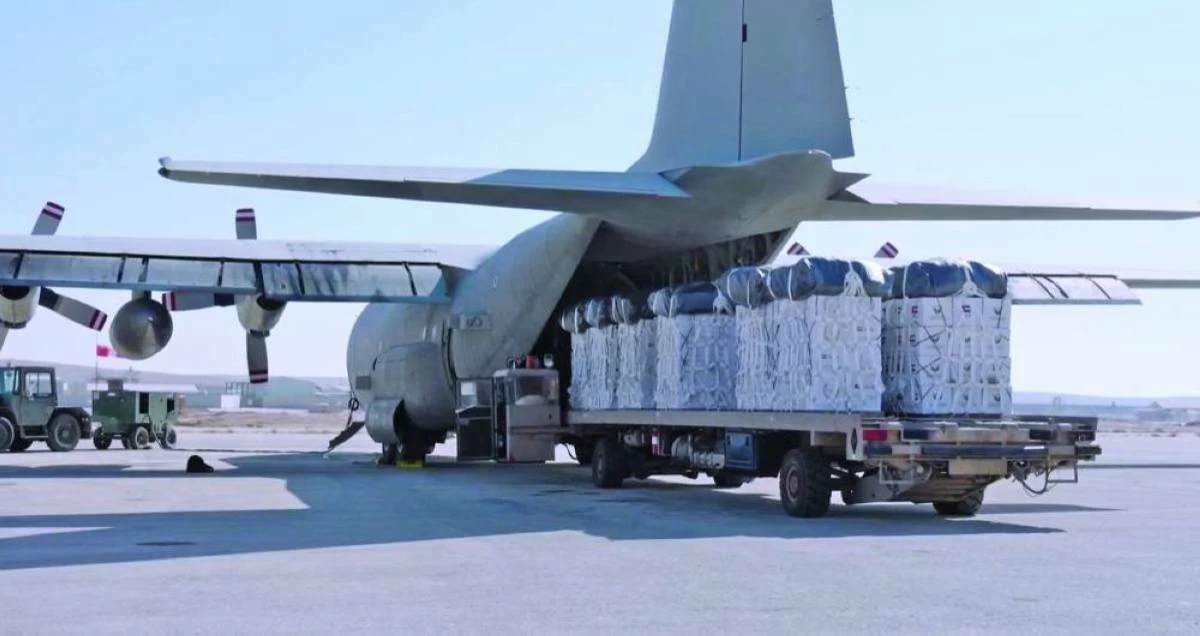
On November 6, 2023, five aircraft departed from Abu Dhabi International Airport carrying equipment and supplies necessary for the project's construction and operation, bound for El Arish, en route to the Gaza Strip. The previous day, President His Highness Sheikh Mohamed bin Zayed Al Nahyan had directed the commencement of the Operation Chivalrous Knight 3 humanitarian mission to support the Palestinian people in the Gaza Strip.
Between those five planes and the first two wounded people admitted to the hospital, the Emirati response had begun to shift from emergency aid imposed by the first hours of the war to a humanitarian operation that would expand, over nearly three years, to include food, water, treatment, medical evacuation, shelter and rehabilitation.
Before Operation Chivalrous Knight 3
It began on October 10, 2023, when President His Highness Sheikh Mohammed bin Zayed Al Nahyan ordered the provision of $20 million in urgent aid to Palestinians through the United Nations Relief and Works Agency for Palestine Refugees (UNRWA). Three days later, the UAE launched the Compassion for Gaza campaign.
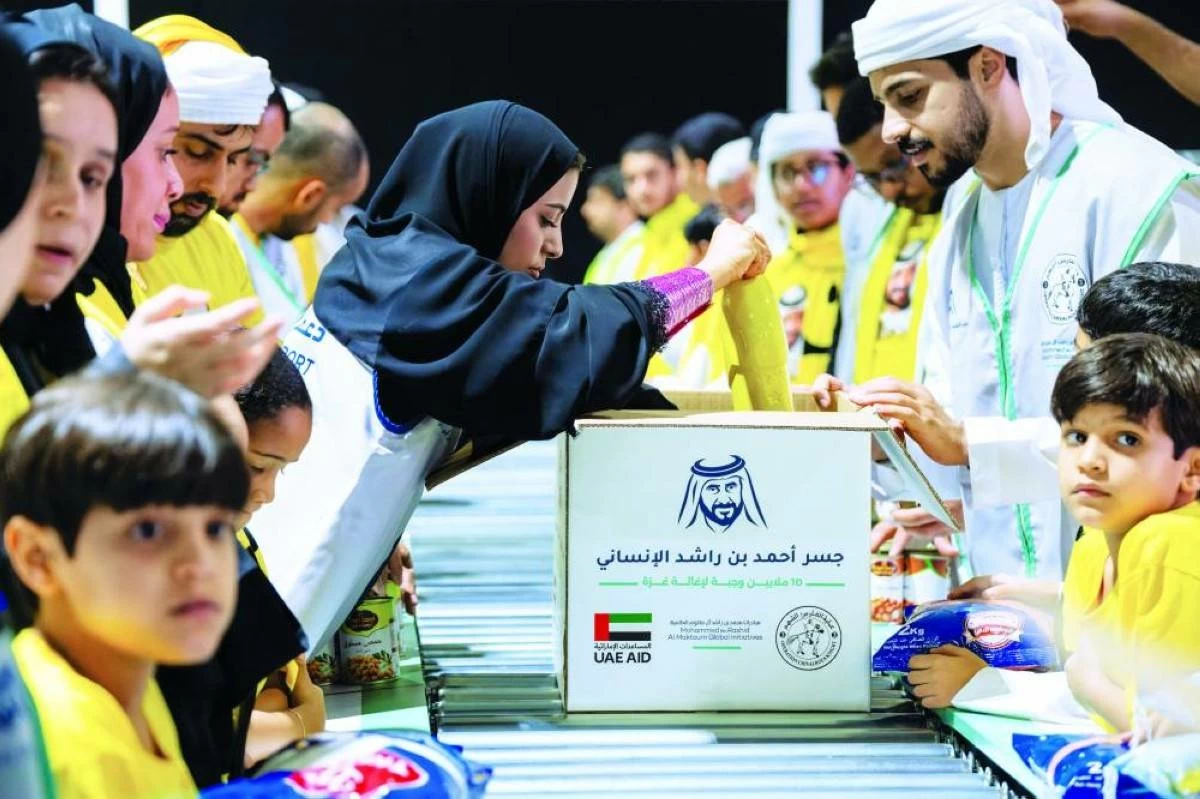
On October 15 of the same year, more than 4,500 volunteers gathered at the Abu Dhabi Ports Hall in Zayed Port. On that day alone, they prepared 13,000 relief packages, including food baskets and packages specifically for children, women, and mothers. The campaign would later expand to include more than 24,000 volunteers, resulting in the preparation of 71,000 relief packages through events held across the various emirates of the country.
In parallel, other Emirati institutions took action. His Highness Sheikh Mohammed bin Rashid Al Maktoum, Vice President, Prime Minister and Ruler of Dubai, directed the provision of Dh50 million in urgent aid through the Mohammed bin Rashid Al Maktoum Global Initiatives Foundation, while the wife of the Ruler of Sharjah, Her Highness Sheikha Jawaher bint Mohammed Al Qasimi, Chairperson of The Big Heart Foundation, directed the provision of Dh30 million in relief aid.
But the scale of the crisis raised a question far greater than simply sending food and medicine: What about those in the Gaza Strip for whom treatment was no longer possible?
On November 1, 2023, His Highness Sheikh Mohammed bin Zayed directed that 1,000 Palestinian children and their families from Gaza be hosted for medical treatment in UAE hospitals. This was followed on November 18 by another directive from His Highness to host 1,000 cancer patients of all ages for treatment in the UAE.
November 5: An operation the size of a crisis
With the launch of Operation Chivalrous Knight 3, the response entered a new phase. The field hospital was one of its first features. The operation then expanded by land, sea and air, with the continued flow of food, medical and relief supplies and shelter materials into the sector.
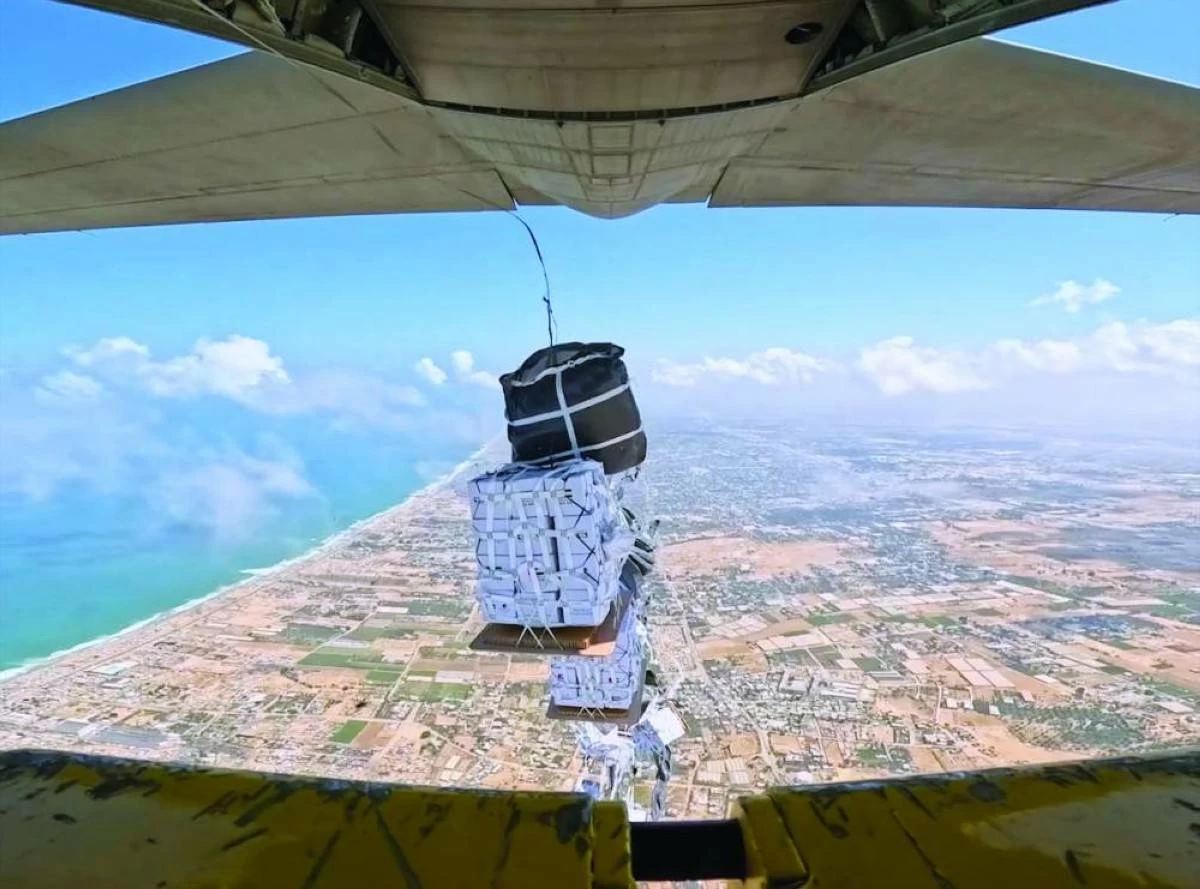
When land access to some areas became impossible, the Birds of Goodness campaign began airdropping aid on February 29, 2024. By August 2026, it had conducted 81 airdrops, delivering more than 4,000 tons of humanitarian aid to areas inaccessible by land.
In El Arish, the operation evolved into a logistical system that received, sorted, and prepared aid before transporting it to Gaza. Thousands of trucks moved by road, aid ships arrived by sea, and the air bridge continued to deliver supplies. There was no longer just one route to Gaza.
When water flowed through
As the war dragged on, the nature of the needs changed. It was no longer just about the arrival of a shipment of food or medicine, but about securing what the population needed every day: water, bread, and medical treatment.
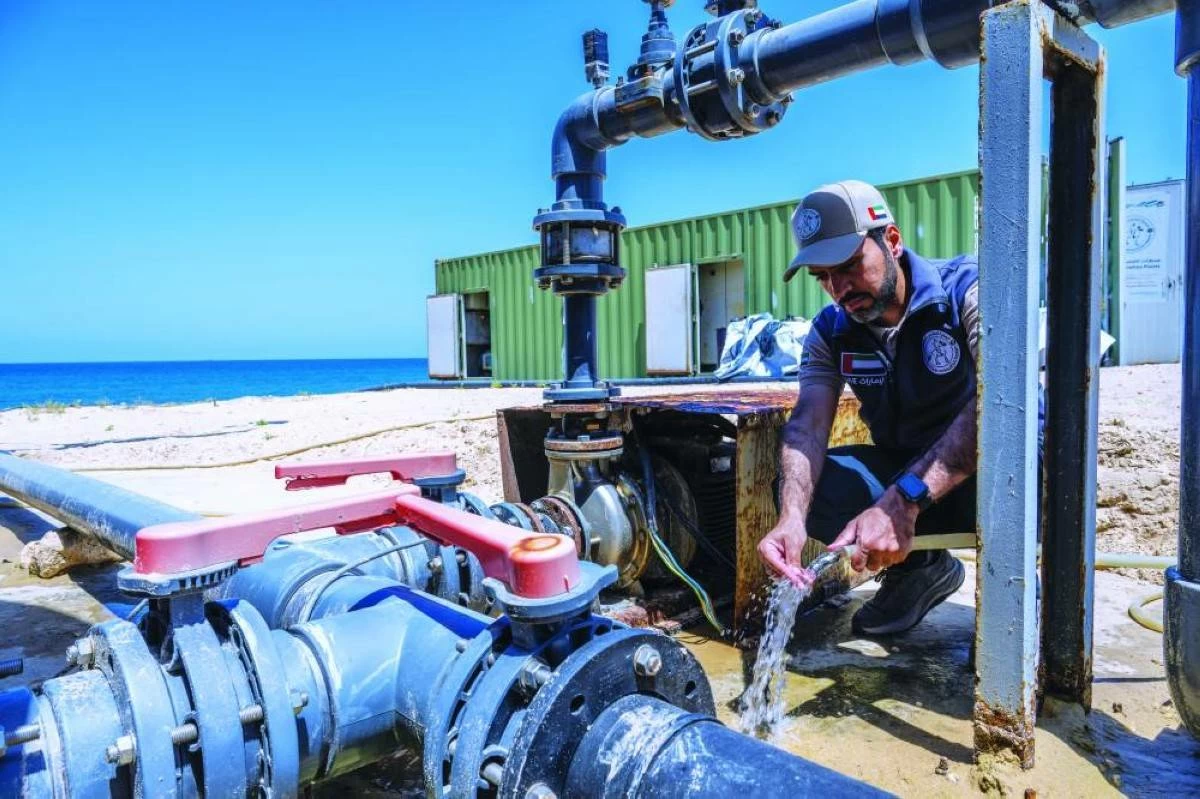
On December 31, 2023, the UAE inaugurated six desalination plants in Rafah, Egypt, with a total capacity of 1.2 million gallons per day at the time. As the project expanded, the plants now produce approximately 2 million gallons per day.
But the project didn't stop at the desalination plants. On August 29, 2025, the Operation Chivalrous Knight 3 project announced the commencement of pumping desalinated water through a pipeline from the Emirati plants in Egypt to southern Gaza. The 7.5km pipeline has a capacity of approximately 2 million gallons per day and serves more than 1 million people. It is also connected to the Al-Buraq reservoir in Khan Younis, which has a capacity of 5,000 cubic metres.
Here the picture of aid changed again. At first, it arrived in boxes, on planes, and in trucks. Then it began to reach Gaza via a pipeline.
Besides desalination and the pipeline, water projects included drilling and maintaining wells, supporting water and sewage distribution networks, and providing tanks and reservoirs.
Bread and daily meals
On the food front, the response took a similar form. In February 2024, the UAE established five automated bakeries to meet the daily needs of more than 72,000 people, in addition to supplying flour to existing bakeries within Gaza. Over time, the food security system expanded to include the operation and support of bakeries, field kitchens, and charitable soup kitchens.
By 2025, the UAE was supporting more than 50 soup kitchens providing hot meals daily. During Ramadan, the Emirates Red Crescent implemented programmes that included distributing 13 million iftar meals, supplying the needs of 44 soup kitchens throughout the month, and supporting a number of bakeries.
Thus, the process expanded from providing food supplies to supporting the capacity to produce bread and meals within the sector itself.
Treatment: Another front in the war
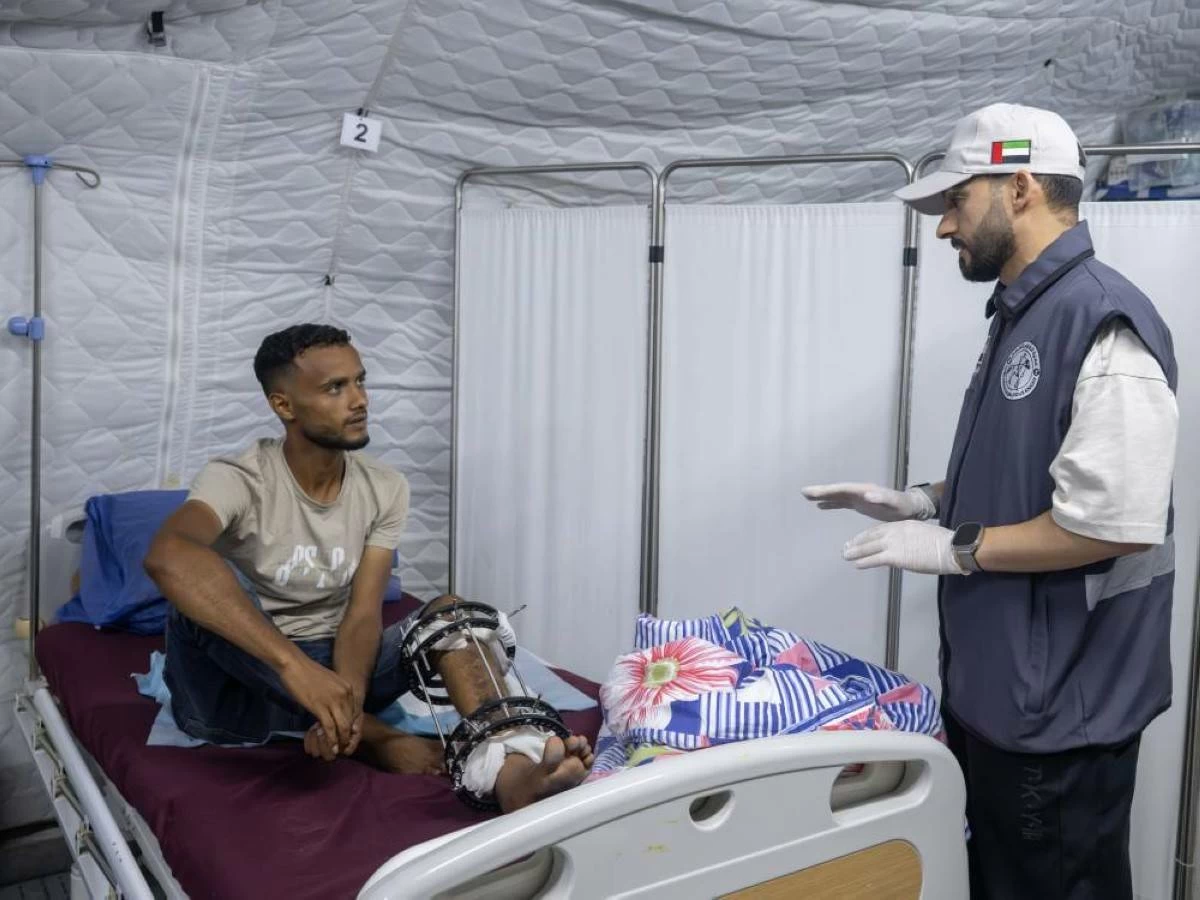
From the outset, the health sector was one of the most extensive areas of the UAE's response. In addition to the field hospital inside Gaza, in February 2024 a floating Emirati hospital set sail to the city of El Arish, with a capacity of 100 beds, equipped with operating rooms, intensive care, radiology, laboratory and pharmacy, in addition to medical evacuation capabilities.
Over time, the two hospitals continued to receive patients, perform surgeries, and provide specialised care. By October 5, 2026, the Emirati floating hospital had provided 35,030 medical services to patients and injured individuals from the Gaza Strip.
Simultaneously, another medical evacuation was underway outside of Gaza.
Medical evacuations to the UAE continued in cooperation with the World Health Organisation, transporting children, the wounded, cancer patients, and their companions. By December 2025, the UAE had evacuated approximately three thousand patients and their companions for treatment within the country.
However, some injuries required more than just wound closure. In February 2024, a prosthetic limb centre opened at the field hospital inside Gaza. Rehabilitation programs then expanded, including the ‘Step of Hope’ programme at the UAE Floating Hospital, which had served 198 amputees by September 2026.
This was another shift in the meaning of relief: from rescuing the injured to helping them regain movement.
In the summer of 2024, a new health threat emerged. After the first case of polio was recorded in Gaza in 25 years, His Highness Sheikh Mohammed bin Zayed directed the provision of $5 million (Dh18.3 million) to support an emergency vaccination campaign in cooperation with the World Health Organisation, UNICEF and UNRWA.
The campaign targeted children under the age of 10, and was later followed by a comprehensive vaccination campaign that reached more than 640,000 children in the Gaza Strip.
In a war where the focus was on injuries, bombings, and medicine shortages, protecting hundreds of thousands of children from a disease that had been absent from Gaza for a quarter of a century became part of the humanitarian response itself.
Support that goes beyond
Although Operation Chivalrous Knight 3 remained the backbone of Emirati humanitarian work in Gaza, support was not limited to it.
In January 2024, the Mohammed bin Rashid Al Maktoum Global Initiatives Foundation pledged $10 million (Dh36.7 million) to support the health sector in Gaza in cooperation with the World Health Organisation, and then provided $11.7 million (Dh42.9 million) in direct food aid in cooperation with the World Food Programme, benefiting 1 million people.
In February of the same year, the UAE allocated $5 million (Dh18.3 million) to support the extensive efforts of the UN Humanitarian Coordinators and Reconstruction Coordinators in Gaza. In April 2024, it contributed $15 million (Dh55 million) to the Amalthea Fund, which supports the humanitarian maritime corridor from Cyprus to Gaza.
In September 2024, Dubai Humanitarian also transported an urgent shipment of 71.6 tonnes of essential medical supplies, as part of the UAE’s support efforts through international humanitarian organisations and institutions.
The bigger picture
Nearly three years on, it is difficult to see the distance between the first Compassion for Gaza packages and what the response has become through a single initiative or number one.
On September 26, 2026, the value of Emirati humanitarian aid provided since the launch of Operation Chivalrous Knight 3 exceeded $4 billion (Dh14.6 billion), representing 46% of global humanitarian aid provided to Gaza since 2023.
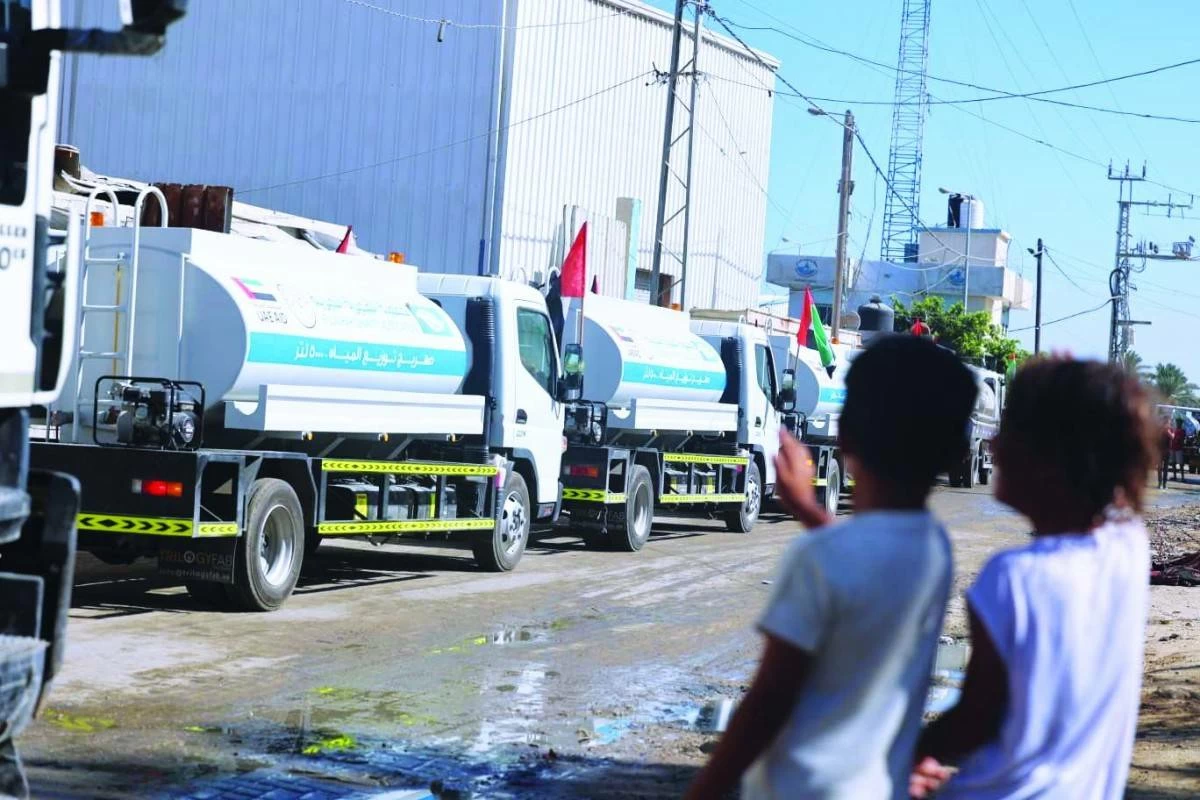
By that date, aid had been transported via 796 aircraft, 25 ships, and more than 14,000 trucks, in addition to 81 airdrops.
The convoys continued to enter. In the latest tally published on October 4, 2026, the total number of trucks that entered the Gaza Strip as part of Operation Chivalrous Knight 3 reached 14,442, while the volume of aid, according to published figures, exceeded 136,000 tonnes.
But these figures, as large as they are, do not tell the whole story.
It began with urgent financial aid, volunteers filling donation boxes, and planes carrying parts for a hospital that didn't exist. Then there was a hospital inside Gaza, another in El Arish, ships, trucks, and planes, airdrops when land access was impossible, desalination plants and a water pipeline, bakeries and soup kitchens, vaccines, prosthetic limbs, and the evacuation of patients to hospitals in the UAE.
Between the first wounded person received by the Emirati hospital and the thousands of trucks that crossed into the sector, the size, tools and needs changed many times.
The idea that linked all those stages remained one: that a person, amidst war, should find water to drink, bread to eat, medicine to treat him, and another way to live.