Colours from a story of absence: When memory recalls an artist

In Al Samoudi’s work, we find a distinctive relationship between modernity and memory.

By Abdul Hamid Ahmad Published: 2026-09-12T13:58:00+04:00 5 min read
Colours from a story of absence: When memory recalls an artist

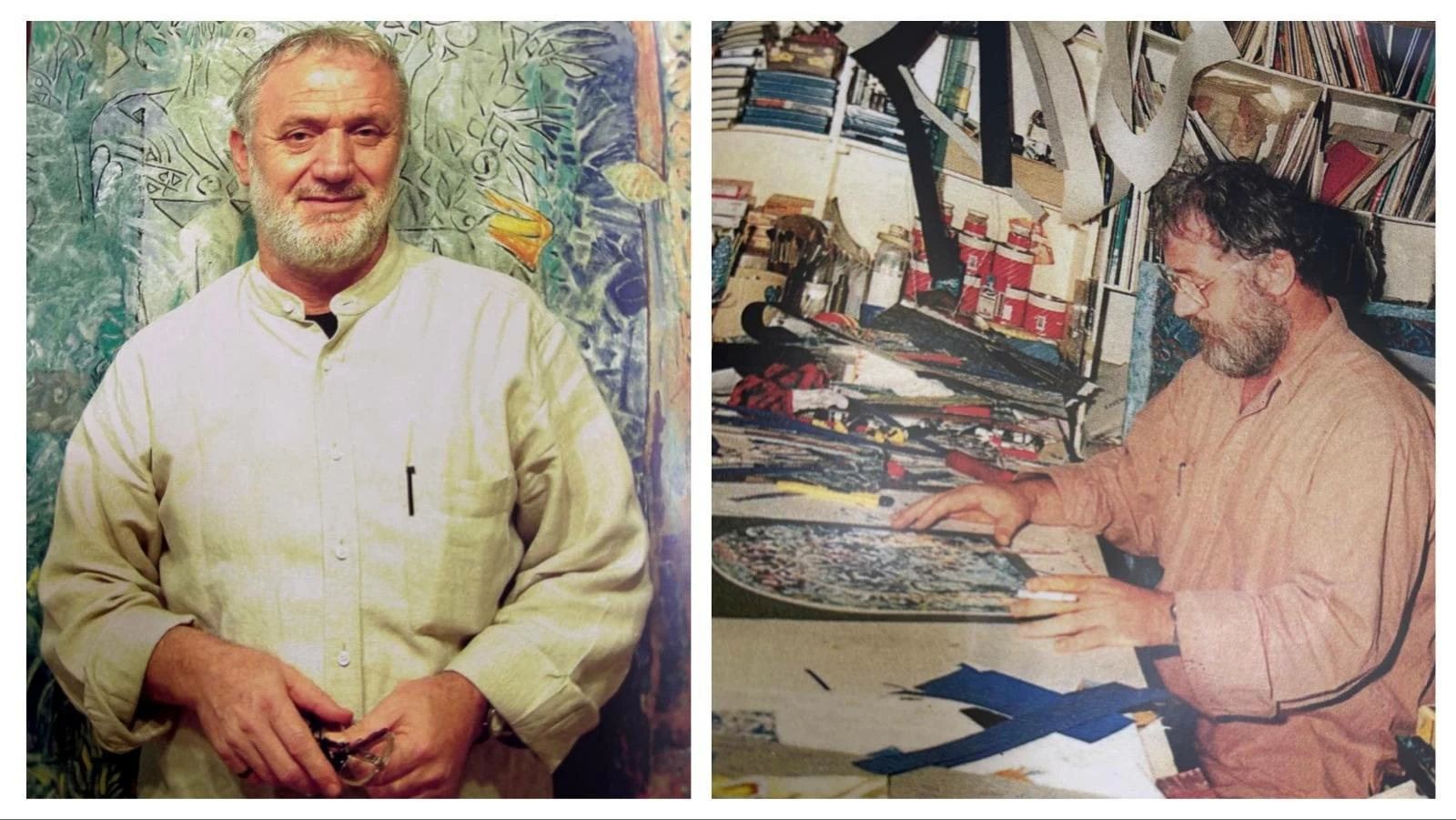
Some exhibitions bring an artist back to the exhibition hall, while others bring him back to memory. The retrospective exhibition of the visual artist Abdul Latif Al-Samoudi, organised by the Sultan Bin Ali Al Owais Cultural Foundation in Dubai to mark twenty years since his death, belongs to the second kind. It does not simply display the work of an artist who has been absent from the scene for years; it gives us an opportunity to pause before an artistic journey that had its place in an important period in the history of visual art in the UAE.

Born in Hama , Syria , Al-Samoudi came to the UAE at a time when the visual arts movement, and the cultural scene in general, were still searching for their identity and building their institutions. The 1980s were a formative period for art, literature, theatre and the visual arts. Al-Samoudi’s presence was part of that cultural movement. For this reason, looking at his work today should not be limited to the question: What did Al-Samoudi paint? It should go beyond that to another question: What did his presence, and that of his generation, represent in an artistic life that was taking shape at the time?

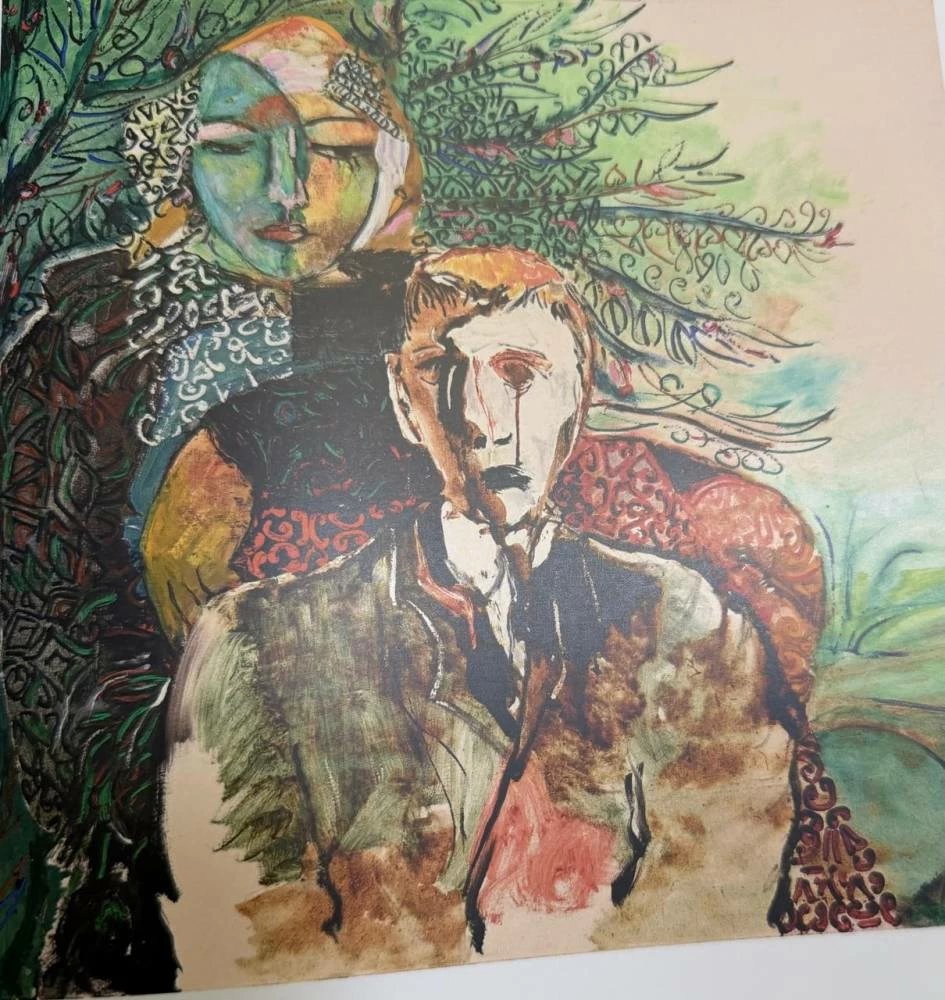
In Al-Samoudi’s work, we find a distinctive relationship between modernity and memory. For him, the painting was not merely a space for colours and forms. It was also a field for recalling elements from the environment, culture and Arab memory, and reconstructing them in a modern visual language. This is what gives his work a value that extends beyond the time in which it was produced. His art does not choose between the past and modernity; instead, it searches for a point where the two can meet.

This is also where the importance of bringing his work back into view today can be understood. A painting that belonged to its own time becomes, years later, more than a work of art. It becomes a record of how that period thought, of the questions that occupied artists, and of their relationship with their surroundings, their heritage and the changes taking place around them.

Among the notable works in the exhibition is “Hama 1982,” which is being shown for the first time. It is a work connected to the memory of a city and to an experience lived by the artist. The presence of such a work in a retrospective adds another dimension to the experience: art can preserve what everyday memory may fail to retain, transforming a personal experience into a visual memory open to generations that did not live through that moment.

But the importance of the Al-Samoudi exhibition is not about Al-Samoudi alone.

We need to rediscover the artists who came before us because culture does not begin again with every generation. What we see today in terms of artistic activity, institutions, exhibitions and creative experiences is the result of a long process of accumulation, shaped by people whose presence in the public memory may no longer reflect the role they played in their time.

When we reread the work of these artists, we are not doing so simply out of nostalgia. We are trying to understand how our artistic taste was formed, how the visual arts movement reached where it is today, what it inherited from earlier experiences, and what it eventually moved beyond.

This reading becomes even more important when we turn to the testimonies of artists and critics who knew Al-Samoudi’s work and wrote about it. The artist and critic Ismail Al-Rifai saw in his work a broad space for imagination and contemplation, where symbols and references multiply without imposing a single, closed meaning on the viewer.

Talal Mualla, who wrote about Al-Samoudi’s experience, connects part of his visual world to his interest in ancient languages, systems of communication and civilisational symbols—elements that helped shape some of his visual vocabulary.

Hisham Al-Mazloum, meanwhile, draws attention to another aspect of Al-Samoudi’s work: his ability to bring together miniatures, ornamentation and abstraction, and the role he gave colour in constructing the painting and giving it dimensions that went beyond its immediate form.

These testimonies do not offer us a single image of Al-Samoudi. Instead, they reveal different aspects of his artistic experience: his relationship with symbols, the sources of his visual vocabulary, and his method of constructing the painting. This is precisely what an artistic experience needs twenty years after the death of its creator: not to be reduced to a quick definition, but to be reread from more than one perspective.

Perhaps this is the most important reason for bringing back artists who contributed to building our artistic memory. We do not rediscover them simply because we want to fill a gap in the history books, nor because the past deserves nostalgia alone. We rediscover them because the present itself becomes clearer when we understand its roots.

An artist who came before us does not leave us his works alone. He leaves us a part of the time in which he lived, the questions he confronted, the choices he made, and the path he helped pave for those who came after him.

For this reason, a retrospective exhibition should not be the end of the story, but its beginning. Rediscovering a true artist requires documenting his work, studying his experience, publishing it and making it accessible to new generations, so that artistic memory does not become merely a collection of names we know without knowing what they left behind.

Al-Samoudi is one of those names that deserves to be reread.

Twenty years after his death, it seems that the “story of absence” is not about absence alone. It tells us that some artists can return through their work, and that time, however far it takes us, cannot erase a genuine artistic legacy.

---

Abdul Hamid Ahmad is a UAE Writer and Columnist