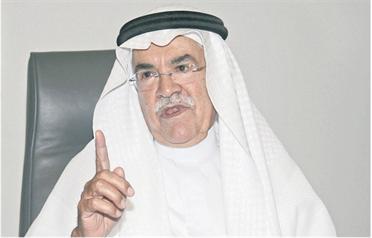
The Wall Street Journal has been criticised for describing Saudi oil minister Ali Al Naimi as the "Tsar" who fully controls the oil market and can influence prices. Nicolas Sarkis, Director-General of the Paris-based Arab Petroleum Research Centre (APRC), described the remarks as ridiculous and embarrassing on the grounds Naimi is not the sole power in the market and cannot impose his will on his fellow ministers in Opec. Writing in the latest monthly issue of the APRC's bulletin, Sarkis said the oil market does not need a Tsar but transparency and democracy. He recalled that former Saudi oil minister Sheikh Ahmed Zaki Al Yamani had been branded Tsar by the media when he was in Opec during the 1980s. "Today, it is his successor, Mr Ali Al Naimi, to which the very serious Wall Street Journal has just ascribed this pompous title… in view of his modesty and his sense of proportion, the Saudi oil minister will certainly not have appreciated the fact that the Wall Street Journal considered it appropriate to give him a title that is as ridiculous as it is embarrassing," said Sarkis, whose centre acts as an advisor to the Organisation of Arab Petroleum Exporting Countries. "It is embarrassing vis-à-vis the authorities and citizens of his country, firstly, because it implies that Mr Al Naimi is the sole architect of Saudi oil policy… it is also embarrassing in relation to his counterparts in Opec, to the extent that it implies that he imposes his will in terms of oil production and pricing. And at the level of international public opinion, it fosters the illusion that the development of the oil market depends on the goodwill of one top decision-maker or a small number of officials in producing countries." But Sarkis admitted that Naimi, like his predecessors, had committed serious mistakes that hurt the market and sharply depressed prices. He said during 1985-1986, Yamani was the principal protagonist in the "price war", which resulted in the price of Opec's reference crude plunging by 49.1 per cent from $27.01 in 1985 to $13.53 a barrel in 1986. At the Opec conference in Jakarta in November 1997, Al Naimi was the principal advocate for an increase in production at a time when the Asian financial crisis had just begun to weigh on the oil market. The result, said Sarkis, was a collapse in Opec countries' average selling prices. Keep up with the latest business news from the region with the Emirates Business 24|7 daily newsletter. To subscribe to the newsletter, please click here .