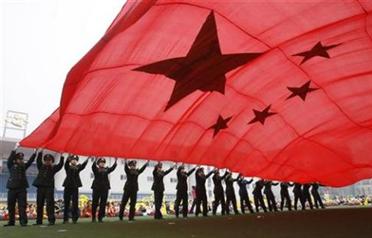
Chinese leaders have told their diplomats to seek greater political and economic influence, changing tack from the low profile they relied on for decades to allay foreign concerns about the country's growing might. China's new status found voice in last year's Beijing Olympics was bolstered by its role in fighting the global financial crisis and will be cemented on Thursday with the 60th birthday of the People's Republic. President Hu Jintao earlier this year publicly urged ambassadors to give China a more powerful international presence. His speech marked a firm step away from former leader Deng Xiaoping's slogan "conceal brilliance, cultivate obscurity," which China has followed for 20 years, downplaying its economic renaissance and keeping a modest international profile. "Work hard to make our country more politically influential, more economically competitive, build a more congenial image and make it more morally inspiring," Hu told the July meeting. The new-found confidence comes at a time when there are both calls from abroad for Beijing to play a more active international role, and fear in the West of how it could alter the world order. But while a more assertive China is likely to be a permanent feature on the global stage, the government has little appetite for outright confrontation and there are limits to its overseas ambitions, which are outweighed by homegrown challenges. The domestic pressures that dog China's ruling Communist party include a yawning rich-poor gap, sluggish consumption, widespread corruption and massive environmental degradation. This unsteady combination of rising international standing and enduring domestic worries means that, even on the cusp of the "new China's" 60th anniversary, a longstanding ambivalence about superpower status will not soon go away. "I see China as a country that remains very preoccupied with domestic problems and sees its greatest challenges and threats within China," said Susan Shirk, a professor at the University of California, San Diego, and former senior U.S. diplomat. "Because they are so preoccupied with domestic issues, they do feel they want to avoid diplomatic conflicts at all costs, and are doing everything they can to avoid clashes. Still a learner? International relations experts said Hu has been consolidating a trend that naturally flows from decades of booming economic growth, and his July speech built on earlier calls for a more active international role. "(This speech) does not mean that Beijing is getting more ambitious," said Zhu Feng, Deputy Director of the Center for International and Strategic Studies at Peking University. "Is there any policy alternative for China, apart from increasing our international clout? But we are still a learner, still have to learn a lot to become a great power." Keep up with the latest business news from the region with the Emirates Business 24|7 daily newsletter. To subscribe to the newsletter, please click here .