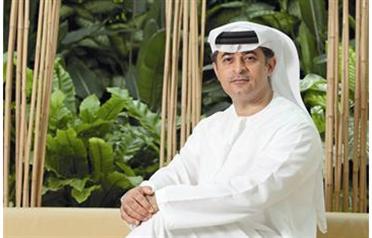
A senior official at Sharaf Industries said that joint ventures are the way forward in the competitive market and the company is eyeing strategic partners in Qatar and India. "I am negotiating with South Korean and Japanese companies," said Yousuf H Sharaf, Managing Director and board member of Sharaf Industries. "We are also studying the idea of an IPO and are looking at September or October to reach solid ground." He told Emirates Business that he expects further contracts from the Meydan project . Can you give us a group overview of Sharaf Industries? Shipping is the core business of the group. We evolved from that to establishing Sharaf Industries in 2005. And today it has an annual turnover of $500 million (Dh1.8 billion). The idea was to have companies that complement each other (see box one). This will give us more strength as a contractor when we tender for a project. We are not at the mercy of the market but have the logistics under control. Sharaf Industries is a holding company to manage our industrial interests – namely manufacturing, contracting division and hospitality, malls and hotels division. Which are the companies that have been hit by the slowdown? Have there been any redundancies? All companies in the market have been affected by the slowdown simply because projects have been postponed or cancelled. This is no secret. As part of reorganising the company, we have had redundancies, especially in the construction division. In other businesses, we are trying to maintain ourselves with creative strategies such as restructuring the organisation, charting new responsibilities of people and so on and so forth. In this scenario, do you expect new contracts? Our revenues have dropped by 20 per cent compared to last year but it is expected in the current condition. However, Sharaf Foundations is becoming a successful company because we managed to capture some major contracts in the Meydan project, one of the most active projects in Dubai. We landed quite significant contracts in terms of executing canals and a number of tunnels. We are also negotiating with them for various other deals. We also have a readymix plant on site at Meydan and had got the land to set up our own batching plant. It is a very key location for us. Additionally, Somec-Sharaf has received some major works with the Metro stations from the RTA. How do you perceive the current market conditions in the construction industry? With a lower number of projects and too many contractors, the competition will start and contractors will do whatever it will take to capture the business. But this is will create a correction in the market. Unfortunately, smaller players will not be able to stay around while bigger companies will survive. I see this as a transition period. But we do not have any worries. We are ready and prepared for that. Do you have an issue with payments? We are like everyone else. We are in the queue. But I am sure that the payments will come. Are you looking at markets outside the UAE? We have to think out of the box. We are exploring India, of course. The infrastructure jobs there are enormous. I believe there is a shortage for specialised foundations companies and we are looking for partners in India to work on the mega projects that will come up. The other potential market is Qatar. We already have existing offices due to our shipping business with the networking and logistics in place and can draw on that experience. We do not have any commitments from India as of yet but are looking at strategic partners who will be in with us for the long term whether it is for power plants or others. We are also targeting the Qatar-Bahrain Causeway, which is a project that is spread over five years. What are the challenges that you see in the construction industry? You have to be on the job everyday and the challenges are in the small details that come up everyday, such as delay of cement on site. With the slowdown and redundancies, people will be sitting idle. This is a time to understand your competitors. If a price-cutting war starts, then all will lose. It is better to sit and talk. That is the kind of strategy that we have developed with certain companies. Another strategy is to lower our risk. Why would I go for huge projects that I am not really capable to do? Hence I am negotiating with certain strategic partners from Korean and Japanese companies who are specialised in some jobs. We plan to go with them from a project to project basis. This will strengthen the company and lower the risks and could also help us to create alliances for future projects. What has been the response? We have to be open but selective, of course. We have to get together and share in mutual understanding. Else, we will all be alone. Are banks difficult with lending. They are conservative because of the issues in the market. The loans take longer for projects in terms of evaluation but I would do the same if I were in their shoes. Of course, we