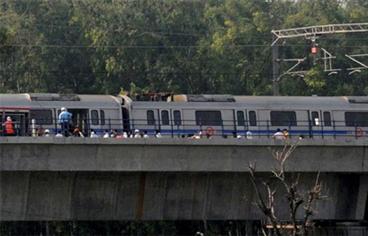
As Metro culture catches the imagination of Dubai residents, Emirates Business takes a look at successful metros around the world. We begin this series with a look at Delhi Metro, which is a shining example of how progress and development can go hand in hand with care for environment and conservation efforts. Although the idea of building a rapid mass transport system for the capital of India was first formalised in the Delhi Master Plan of 1960, actual construction of Delhi Metro began in 1998. Delhi Metro Rail Corporation (DMRC) was established in 1995 and was given the responsibility of both building and operating the metro. Delhi Metro is being built in four phases, with the first phase having been completed at a cost of Rs10,571 crores ($2.3bn, Dh8.44bn) and Phase II already in an advanced stage of construction. Delhi Metro tra?ins run on electricity with power being supplied through overhead catenary. It has won numerous awards for its environment-friendly practices from many renowned organisations such as the United Nations and the International Organisation for Standardisation. In fact, Delhi Metro, which is divided into three lines – Red, Blue and Yellow – has become the first metro in the world to be awarded an ISO 14001 certificate for its environment-friendly construction. One of the environment-friendly measures taken by DMRC in the second phase of construction is its rainwater harvesting programme, wherein most of the metro stations on the Blue Line will save rainwater to meet water shortage. Large optimally-designed catchment areas have been built on the roofs of many stations for this purpose. DMRC officials felt that rainwater harvesting would also help preserve the water table around the corporation's properties. The Delhi Metro, which is one of the five commercially successful metros of the world, is also the first railway project in the world to be registered for carbon credits by the United Nations. Delhi Metro has prevented more than 90,000 tonnes of carbon dioxide from being released into the atmosphere by reducing its power requirement, thus contributing to the fight against global warming. The certification report was given by Germany-based validation organisation TUV NORD on February 22, 2009. It conducted an audit on behalf of United Nations Framework Convention on Climate Change (UNFCCC) and found that DMRC stopped the emission of 90,004 tonnes of carbon dioxide from 2004 to 2007 through the adoption of regenerative braking system in its trains. Whenever the Delhi Metro trains apply brakes, three phase traction motors installed on these trains act as generators to produce electrical energy, which goes back into the overhead electricity lines. This regenerated electrical energy is then used by other trains in the same service line, thus reducing electricity requirement by about 30 per cent. The DMRC saved 1,12,500 megawatt hours of power through this regenerative braking between 2004 and 2007, significantly bringing down carbon emissions. It is estimated that 39,000 tonnes of carbon was prevented from being emitted into the atmosphere in 2008 and this figure is expected to increase to more than 100,000 tonnes per year once Phase II of Delhi Metro is fully operational. The good news is that the DMRC will further invest in environment-friendly pursuits from the money it will make by selling its carbon credits. Delhi Metro can claim 400,000 carbon credits for a 10-year crediting period beginning December 2007. The money raised from the sale of these carbon credits will be used to develop technology to reduce emission of green house gases and train operators for optimum regeneration. Delhi Metro is zipping along the green track as it will also recycle construction waste when it connects more parts of east and south Delhi in the second phase of the project. It plans to set up recycling plants, which will process the waste generated during construction. After recycling, DMRC will either use it for its own purpose or sell it to other agencies. DMRC's Chief Public Relations Officer Anuj Dayal, said: "During Phase I of our project, we realised that we generated a lot of construction waste such as plastic, steel and scrap. If we have recycling plants, these can be utilised again. We will either it or sell it." Apart from being such an environment-friendly project, the Delhi Metro is also a shining example of the success of the public sector in India. For most part of the construction of the mammoth MRTS (mass rapid transit system), the DMRC has been ahead of its schedule and within the budget. Its subway system was completed in 2005 well within its budget and almost three years ahead of schedule. DMRC Managing Director Elattuvalapil Sreedharan said: "Delhi Metro is a stunning example of how a government project can be done properly. It's been a good example for the politicians of what the professionals can do if they are given a free hand." Delhi Metro is one of the few subway systems in t