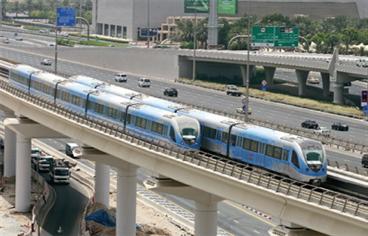
ECONOMY As the GCC's first and only urban transport system takes shape and expands, the benefits to the emirate's and the nation's economy are crystal clear. "Instead of looking at the sharp cost over-runs the Dubai Metro has witnessed as a negative, try to see it from the sovereign investment perspective," one analyst told Emirates Business. At a time when every single nation in the world is struggling to kick-start its economy through government spending, Dubai has proved that it has the vision and the foresight to use all the means at its disposal to battle the downturn. The increased spend on the Metro is part of a continuous government plan to use its resources to ensure that GDP growth does not become negative. As the project goes into its second and third phases, the economy is assured of a continuous stream of investment. "Regional and global confidence in the emirate's ability to combat and overcome the global economic downturn has increased significantly from its refusal to stop investing in the future," the analyst said. REAL ESTATE The Metro is expected to play a decisive role in choosing where residents want to live. This in turn will determine the localities where values and rents are expected to increase. Industry executives have already said an average premium of five per cent is commanded by properties closer to Metro stations. The Red Line is a huge attraction to certain communities such as Jumeirah Lakes Tower and Dubai Marina. Property management firms say residential inventory in close proximity to the Metro has become easier to market. "For example," one agent said, "in Executive Towers, Tower M is nearest to the Business Bay station. This has become a unique selling point. At the moment this hasn't driven prices up in Tower M but it has made it more desirable to a potential buyer. Going forward, these properties will definitely command a premium as compared to properties, which do not have Metro connectivity. If the Metro is a success, then of course properties near to a station will fetch a premium, like in any other city." RETAIL Dubai is synonymous with shopping. Why should Dubai Metro be any different? With some train stations located inside or adjacent to major shopping malls, the emirate's retail industry is holding its breath for a quick shot in the arm when the trains begin rolling for the public on Thursday. And the first Metro-operational weekend being just a day beyond that means the first customers for the malls will also begin to trundle in. But it is not just the malls – which have by and large seen a drop-off in footfall and spending over the past 18 months – that are getting their cheer-leading outfits ready. Several small and large retail chains, coffee shops and caféterias are looking forward to customers at the stations and the walkways that lead to the stations. Some malls that are not close to Metro stations are even considering operating their own feeder buses to and from the nearest stop. The Metro is also expected to add to the attractiveness of events and fixtures such as the Dubai Shopping Festival, Dubai Summer Surprises and Global Village. TRANSPORT The heavily subsidised Dubai Metro transport system is sustainable, business experts told Emirates Business. MR Raghu, Senior Vice-President, Research, Kuwait Financial Centre said: "Most of Gulf economies are operating under the welfare mode. It is the government's aim to provide affordable facilities to its citizens and residents and Dubai Metro is operating under the same scheme," he said. "Also don't forget that there has been a generation of wealth in the last five to seven years," he said, "While some have been lost, wealth is starting to flow again in the region so I think the welfare model is here to stay. Dubai Metro will be sustainable." Most state transportation projects are subsidised but the amount of fees RTA is charging – one of the lowest in the world – makes Dubai Metro unique, says Victorino Abejero, Deputy Director for Conformity Assessment Department at Emirates Standardisation and Metrology Authority. A plan to make taxis available at all stations for the full duration of the trains' operating hours has already been drawn up. INFRASTRUCTURE When property globally went into a nosedive, Dubai had no choice but to suffer the backlash. As a corollary effect, the construction and infrastructure sectors too declined. The Dubai Metro and its ancillaries are expected to spur these struggling sectors. The construction of overbridges, roads, flyovers and interchanges that feed into the Metro will accelerate. The construction of parking complexes will add to the buoyancy that the project will impart to construction and infrastructure. HOSPITALITY As the Metro enhances Dubai's competitiveness, it will also provide a fillip to the hospitality sector. Recent research has shown that the average size of Dubai's hotels is the largest in the world. "This level of room inventory traditionally relies on two ma