Treated sewage can help cut desalinated water use by 25%
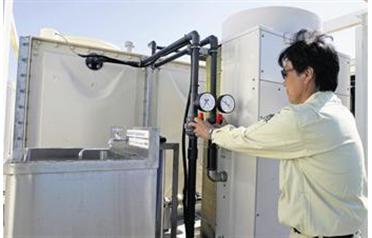
Almost 25 per cent of water produced by desalination can be reduced by effective use of treated sewerage water, experts have said.
Billions are spent across the GCC on desalination plants and according to the experts, several million gallons of desalinated water can be diverted away from use in district cooling and industrial cooling and even restricted irrigation by using treated sewerage water.
Speaking during a recent conference on new technologies in wastewater collection and treatment, experts said advanced systems such as membrane technology and reverse osmosis plants have come a long way in making effluents user-friendly. The purpose of the conference was to educate participants from various municipalities and other developments about new technologies.
Mohanned Awad, Business Development Director of Corodex, said: "The ground water level across the GCC is fast eroding and is a precious natural resource. All efforts need to be made to preserve the ground water level and if possible add to the reserves. With the advanced technology we are able to do so and also at a much faster rate."
According to Environment Agency-Abu Dhabi an analysis of all water produced shows that 79 per cent is groundwater, abstracted from boreholes and shallow hand dug wells. The remaining 17 per cent is produced from desalination of seawater and from 23 sewage treatment plants. According to the agency, although a large proportion of all domestic and industrial wastewater is treated and re-used, it only forms about four per cent of all water produced.
"Even cost-wise, using potable quality treated sewage for non-potable purposes makes sense. To produce a cubic metre of desalinated water would cost about $1.5 [Dh5.51], whereas treatment of sewage using advanced membrane technology would cost only about 30 cents per cubic metre," said Awad.
The annual growth for desalination plants in the GCC is said to be increasing at around eight per cent.
Across the GCC it is estimated that several billions will be spent only on desalination projects. Saudi Arabia, with a daily production of about 440 million gallons, is the world's largest producer of desalinated water, followed by the UAE. The GCC countries have over half of the 11,000 desalination plants in the world.
In the UAE alone desalination capacity will have to double to over 5,000 million gallons a day (g/d) to meet the projected demand by 2015. Reports also indicate that Dubai faces the biggest new-build programme, with desalination capacity forecast to triple in size to 800 million g/d by 2015. In absolute terms, the highest new investment requirements will be in Saudi Arabia, where about 1,000 million g/d of new capacity will be required. Based on 2007 unit costs, the GCC will require $20 billion for desalination.
Statistics show the GCC countries have an urbanisation level of about 85 per cent. UAE is the world's second largest consumer of water per capita after the United States with an average daily domestic consumption of 353 litres (80 gallons) per person compared to 425 litres in the US. "These factors make it absolutely necessary for us to concentrate on reusing the resource. At least 25 per cent of desalinated water is used for district cooling and industrial cooling, irrigating landscapes and various other uses. We can easily supplement this with treated sewerage water. The membrane bioreactor will enable sewerage water to be treated and reused for non-potable purposes," said Awad.
A new technology, vacuum sewerage system, is being adopted in several developments in the UAE such as The Palm Jumeirah, Al Raha Gardens in Abu Dhabi and the Formula 1 track on Yas Island in Abu Dhabi. Andreas Bayerlein of Germany-based Roediger Vacuum said the new technology can help save significant amount of cost compared to the more conventional gravity system.
Keep up with the latest business news from the region with the Emirates Business 24|7 daily newsletter. To subscribe to the newsletter, please click here.