Residential rents see a double-digit decline
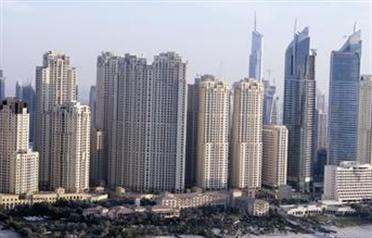
Rents for apartments and villas fell 23 per cent and 34 per cent, respectively, in the first quarter of 2009 compared to fourth quarter of 2008, according to a property consultancy firm.
"The decline in rents is a relief for many tenants who previously paid up to half their salaries in rent. Better payment options of up to 12 cheques, grace periods and benefits such as one month free rent are also signs that the market is changing from being landlord to tenant driven," Asteco said in its quarterly report.
"Unit owners have realised that they can no longer expect double-digit yields, thus they have to compete for the shrinking tenant pool as people leave and supply increases."
In the first quarter of 2009, average rents for studios, one-bedroom, two-bedroom and three-bedroom apartments fell to Dh61,500, Dh93,000, Dh132,500 and Dh185,000 respectively.
Two-bedroom villas were available for Dh160,000, three-bedroom Dh207,000, four-bedroom Dh264,000 and five-bedroom were available for Dh326,000.
Developments such as Jumeirah Beach Residence have seen an increase in interest due primarily to the abundance of shops and restaurants on The Walk.
Apartment sales prices fell by 39 per cent since the fourth quarter 2008, the report said.
However, finished units or those nearing completion in established locations, such as Dubai Marina have started to stabilise as rates reach launch price levels.
As a result, transaction activity has begun to increase as investors take advantage of the numerous opportunistic deals, but cash buyers are currently dominating the market. Asteco said there has been little movement in off-plan sales, irrespective of price levels as developers re-assess their commitments.
Dubai Marina, Jumeirah Lake Towers, Discovery Gardens and Emirates Living are evolving as the preferred areas to reside due to the completed infrastructure and convenience of leisure and retail facilities nearby.
"Initiatives announced by the Real Estate Regulatory Agency (Rera) and the government such as the Rera register, Strata law, on-line progress reports on projects and Federal residency visa law, represent important steps towards increasing transparency in the real estate market. This will, if properly implemented, boost investor confidence," the report said.
EFG-Hermes said in March that its residential pricing index for Dubai had seen a 13.5 per cent cumulative decline in prices since October 2008. In old Dubai (Bur Dubai, Deira, Festival City and Mirdiff), EFG-Hermes observed price corrections of 23 per cent; new Dubai (beyond Business Bay to Emirates Hills) dropped 42 per cent, while outer new Dubai (Jebel Ali-focused areas) declined 36 per cent.
Rera said in February that it estimates 29,319 residential units to have been delivered in 2008 and an expected 31,003 and 43,880 units to enter the market in 2009 and 2010. However, it believes 20 per cent of residential units in 2009 may not enter the market on time, while 40 per cent of 2010 units may be delayed.
Villa sales prices fell by 43 per cent since fourth quarter of 2008.
Price per square foot basis for villas are generally lower priced than apartments; thus making the price point per unit less affordable, especially when the initial down-payment presents a major hurdle on the back of tight lending conditions.
Asteco also said, those who have not been adversely affected by the economic downturn, have now the opportunity to upgrade to larger units or relocate from older buildings to newer ones. Additionally, people who previously left Dubai for the more affordable Northern Emirates are now beginning to return.
Keep up with the latest business news from the region with the Emirates Business 24|7 daily newsletter. To subscribe to the newsletter, please click here.