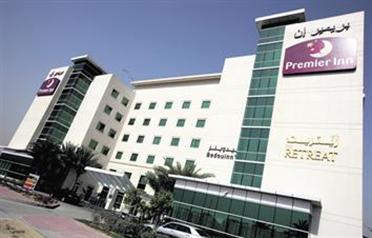
The Dubai-led trend in facilitating quality mid-market and budget accommodation is expected to expand to other regional centres, a senior research analyst said. Robert O'Hanlon, Tourism, Hospitality and Leisure Partner at Deloitte Middle East, told Emirates Business : "Dubai has significant new openings scheduled to take place in the coming 18 months. We expect to see a greater focus on catering for the mid market and even budget travellers as these two sectors are growing areas globally and have historically not had the same prominence as the luxury properties." "The activities of existing and new budget airlines, such as "fly Dubai" which is scheduled to commence operations soon, will support the development of the mid market and budget sectors," he added. O'Hanlon predicts that growth in budget and premium hotel options will ensure the Middle East navigates the global tourism downturn, which saw regional revenue per available room rates (RevPar) drop by more than 10 per cent from November 2008 to January 2009. "Gulf countries have signalled they are willing to invest in long-term, sustainable tourism developments which appeal to a global audience. The hotel industry is viewed by these players as the decisive driver in the development of their business and tourism sectors," said O'Hanlon. "The region's underlying wealth and the appreciation of quality ensure there will always be a call for premium accommodation; while mid-market and budget operators are well placed to gain ground over competitors if current economic conditions persist beyond 2009," he said. O'Hanlon, who will be a keynote speaker at the forthcoming Arabian Travel Market to be held between May 5 and 8 said "Individual markets in the Middle East are changing the mix of their offerings to reflect the ongoing changes in supply, as new hotels open, and the changes in demand as the type and quantity of travellers change." He observed, "Whilst in Abu Dhabi there is ongoing activity to develop the premium sector there is a greater level of mid market interest in other markets, such as Saudi Arabia." The Middle East – buoyed by an 11.3 per cent increase in visitors (up to 52.9 million for 2008) – turned in strong overall revenue per available room (RevPar) growth of 18.3 per cent to average out at $148, placing it ahead of Europe for the first time, O'Hanlon said. Although most regions were reporting double-digit growth in hotel performance in the first six months of last year, the credit crunch bite and deepening recession eventually saw significant declines in RevPar growth, with North America down 1.6 per cent and Europe and Asia Pacific registering growth of less than two percent for 2008. "In the Middle East, occupancy rates ranged from 70.9 per cent in October to 60.8 per cent in to January 2009. Whilst these remain high by global standards, they reflect a drop compared to the previous year. This decline mirrors both the lower global demand and the increased supply during 2008," he said. In 2008, Asia Pacific showed an overall occupancy rate of 65.5 per cent, Europe 65.7 per cent, the Middle East 68.8 per cent, and the US 60.4 per cent. All these regions, apart from Middle East, which was up 1.2 per cent, experienced occupancy declines." "Significant investments made in the Middle East's tourism industry during the last decade will help it recover from the current economic downturn quicker than other areas,'" he said. He pointed out that the challenges of global economic fall-out and dollar-pegged destinations becoming more expensive for UK and European travellers – the region's traditional source markets – can be mitigated by new and existing hotel brands providing value for money, whatever their target demographic. O'Hanlon also issued an ultimatum to the region's hospitality industry, stating if it was to weather the current storm, it needed to remain committed to providing quality value and services. "Apart from utilising the opportunities created by a recessionary environment, hotels must continue implementing steps that create value in the long run. They must resist the pressure to slash rates and provide a lesser-quality service," he said.