Travelport focused on Mideast growth
Travelport is one of the world's largest networks of travel brands and content and a leading provider of travel technologies, solutions and services.
The firm operates through two global distribution systems (GDS) – Worldspan and Galileo – which are used in travel agency offices around the world.
Despite the global decline in air travel, Travelport recently ramped up operations in the region – and in this exclusive interview with Emirates Business Rabih Saab, Vice-President, Middle East, explains why.
Travelport has made a huge investment in the Middle East. With a general drop in traffic and the resultant decline in yield, when do you expect to see a return on your investment?
As a leading GDS provider with almost two decades of leadership in the Middle East, the fundamentals of our business are strong and we continue to provide value in our offering. Last year we announced further investment in the region and confirmed our long-term commitment because we still believe in the region's growth potential despite the recent economic downturn. The investment has been used to build up our resources and technology and we are confident it will help lay the foundation for success, and as a result we will be ready and able to reap the benefits when market conditions improve. Unless people stop flying completely we will remain profitable because there is consistent demand from both the airlines and travel agents for our products and services. In February 2009 alone there were nearly 5.4 million air travel segments booked through GDS systems in the Middle East, which was only a slight decline over the figures we saw in 2008.
You have relaunched the Galileo computer reservations system in the Middle East. What are the new features of this platform?
The Galileo platform still offers many of the user-friendly features that travel agents have become familiar with. However, we are continually enhancing its performance and functionality with new content and tools aimed at making booking and managing travel easier. One of these new features is Viewtrip, a product that allows any traveller who booked through Galileo to view their itinerary online. Another is e-tracker, a web-based solution that enables agents to record and check all electronic tickets issued on the Galileo system. We are also offering products such as Galileo Fee Manager, an important solution for agents operating in a zero-commission environment. However, perhaps the most noticeable change for Galileo users in the Middle East is the way in which it is delivered. We have significantly boosted our local services for travel agents through our new direct operation, which opened for business at the beginning of the year and now offers comprehensive technology training, including a 24-hour global help desk and virtual training to all of our Galileo-connected customers.
What about the Worldspan system – are there any new features on this platform?
Travelport offers travel agents in the UAE the Worldspan system through a separate agreement with a local distributor called Stargate Cyber Active. Worldspan is a leader in the e-commerce space and offers products such as Go! – a new platform that uses browser-based technology. Worldspan also offers industry-first technologies such as XML Pro, which leverages the internet to connect with third-party applications, and e-Pricing, a low-fare search technology that is also being rolled out to Galileo users.
How important is the Middle East in your growth strategy?
There is no doubt the Middle East is one of Travelport's most important regions and is playing a key role in our global growth strategy. The fact that we have made such a significant investment is a clear demonstration of how committed we are to this fast-growing region.
In less than a year we have opened five new offices in the UAE, Saudi Arabia and Egypt, recruited more than 100 new employees to our regional team and signed new distributor agreements in Yemen, Oman, Bahrain, Qatar, Kuwait, Jordan, Syria and Lebanon. Galileo has been the leading GDS provider in the Middle East for nearly two decades and some of our most loyal and long-standing customers are based here. This is why we have stepped up our activities and are developing our capabilities to better serve their needs.
Where do you see Travelport being in five years' time?
As a global organisation we have a strategy in place to both grow our core business, focusing on profitable regions such as the Middle East, as well as looking at new business opportunities and ground-breaking new products to offer our customers. Ultimately we want to stay at the forefront of the GDS industry and help our customers grow their businesses. We are constantly looking ahead to see the bigger picture and where the industry is heading as we want to remain relevant and reflect the changing marketplace.
Do you see any new trends emerging in the industry, particularly in travel spend and management?
While there has been a global decline in passenger traffic, both inbound and outbound travel from the UAE is growing at a faster rate than in most other regions. People are still going on vacation and executives are still travelling to meet customers. However, what we have noticed is that nearly everyone is on the lookout for a bargain and eager to cut their travel costs in what are more challenging economic times. As a result we are witnessing a consistent class downgrade in travel bookings as people curb the amount they spend on airfares. Therefore passengers who normally fly first are now flying business, and those who used to fly business are now booking economy. Airlines are responding by cutting fares and adding incentives in order to stimulate demand.
You'll see that there are a lot of attractive holiday packages available right now and some great deals to be had, especially in the long-haul segment. In terms of travel management, agencies are increasingly looking for ways to increase their efficiency and productivity as many are now operating in a zero-commission environment. This has prompted us to develop smart products that can help them do just that.
What steps has Travelport taken to deal with the challenges of 2009?
We are part of the global travel industry and are facing the same challenges as everyone else. We are definitely not resting on our laurels and understand that we have a tough year ahead.
As a responsible organisation we have taken steps to reduce operating expenditure where we can without it having any detrimental effect on serving our customers. While we have to be prudent in our expenditure, our new structure means that we need to invest in technology and resources to build up our operations in the region. It is important we continue to focus on growth and innovation this year so that when the dust settles we are well-positioned for success.
In many parts of the Middle East you have set up your own marketing operation. Do you see it as an advantage?
By setting up direct operations we have brought the sales and marketing functions in the UAE, Saudi Arabia and Egypt under our umbrella. This is a great advantage as it means that we are able to communicate directly with travel agents. It has enabled us to reach our customers more effectively and become more in tune with their needs. Our marketing department in Dubai is also now equipped to provide increased support to our distributors across the region.
What new features are you introducing this year?
We are rolling out a number of tools designed to address the changing landscape of the travel industry and meet some of the new challenges agents face, including our cost-saving e-Pricing solution that will help agents find the lowest possible fares on the market and Rapid Reprice, the industry's first automated tool to manage refunds and exchanges. We are also developing a whole new suite of products to help agents compete more effectively, including a new-generation platform called Universal Desktop, which is set to reinvent GDS and change the landscape of the industry.
Do you expect to see growth in the Middle East market?
While there is no question that the Middle East travel industry has been hit by the global economic crisis, we are actually the only region in the world experiencing an increase in demand.
Although it is not close to the double-digit growth we have witnessed in the past, I would say we are better positioned here than perhaps any other global market to weather the storm. We believe that there is a lot of opportunity in the Middle East.
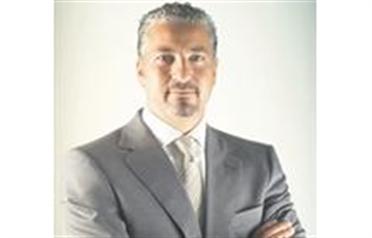
PROFILE: Rabih Saab VP, Middle East, Travelport GDS
Saab is responsible for managing Travelport's operations in the region and setting sales, marketing and product strategies.
Prior to joining Travelport in 2005, he held a number of senior roles in high-profile organisations in the Middle East, including Chantelle, Japan Tobacco International and Procter and Gamble.
Saab was born in Lebanon and graduated in business administration at the American University in Beirut. He is based at Travelport's regional headquarters in Dubai and has lived in the emirate since 1992.