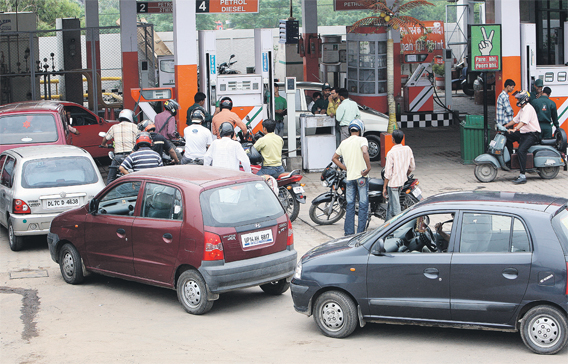
India could decide to hike domestic fuel prices once headline inflation begins to soften because doing it now would risk pushing consumer prices higher, a top government advisor said yesterday. Submitting fuel to full market pricing would bolster India's fiscal health because fuel accounts for a quarter of its estimated subsidy bill of Rs1.2 trillion (Dh94bn). It would also help state-run energy retailers such as Indian Oil, Bharat Petroleum and Hindustan Petroleum operate profitably. "Perhaps the timing of the decision could coincide with the period when the overall inflation is showing some softening," said C Rangarajan, Chairman of the Prime Minister's Economic Advisory Council. A panel led by Finance Minister Pranab Mukherjee on Monday postponed a decision on reforming fuel pricing after two key ministers from small coalition partners failed to attend, a clear signal of their reluctance to be associated with a policy that may improve finances at the cost of votes. The government is seen biding its time until it gets a better sense of the strength of the oncoming summer monsoon, which could ease the impact of inflation on consumers already burdened by higher food bills. Rangarajan, a former head of the Reserve Bank of India, said he expects the May headline inflation number to stay below the 10 per cent level and eventually ease to around six per cent by end-March 2011. The wholesale price index, the central bank's most closely watched gauge of inflation, probably rose an annual 9.56 per cent in May, staying close to 9.59 per cent in April, according to a poll.